

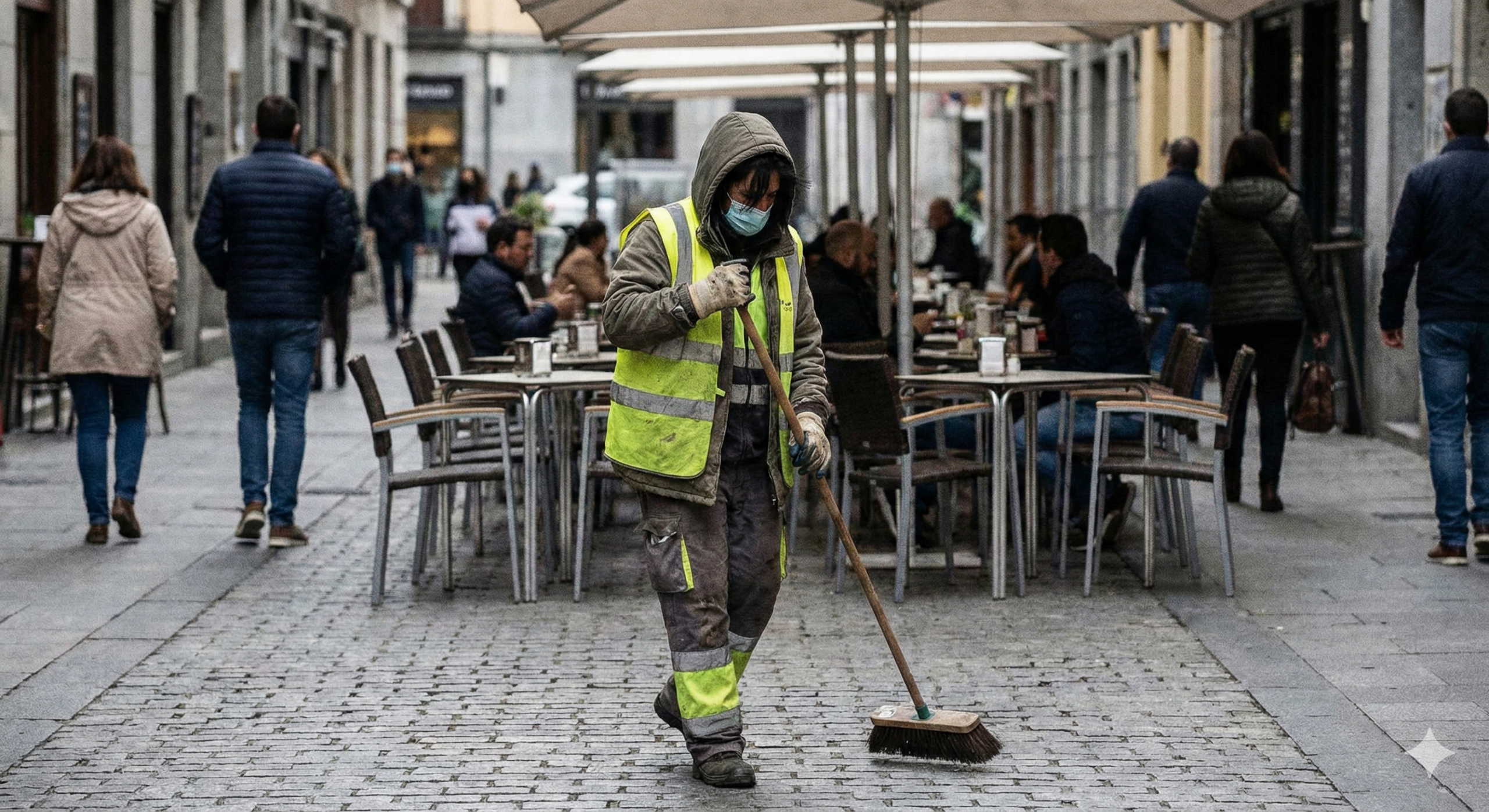
SPAIN is set to launch a massive regularisation process for hundreds of thousands of undocumented migrants.
Bucking the European trend of tightening borders, Pedro Sanchez’s coalition government has triggered an urgent Royal Decree to grant residency and work permits to an estimated 500,000 people currently living in the shadows.
Under the new rules, migrants looking to apply must prove they have lived in Spain for at least five months at the time of application, have arrived before December 31, 2025, and have a clean criminal record.
While the government estimates around half a million people will benefit, a new report by the Funcas think-tank suggests the true figure of irregular residents is closer to 840,000.
READ MORE: Measles scare in Spain as cases doubled last year – and were virtually zero in 2023

This population has multiplied eightfold since 2017.
Crucially, the data debunks the common perception that irregular migrants arrive primarily on small boats from Africa.
According to Funcas, the vast majority arrive by plane from Latin America as tourists and simply overstay their visas.
Nationals from Colombia (290,000), Peru (110,000) and Honduras (90,000) make up the bulk of the numbers, with African nationals accounting for just 6% of the total.
The move is part of a high-stakes political survival deal struck between Sanchez’s socialists (PSOE) and the far-left Podemos party.
READ MORE: Irish dance is on the up in Spain as new national association launches – would you give it a whirl?
Sanchez needs the four votes of Podemos to pass crucial decrees on pensions and transport today.
By using a Royal Decree, the government sidesteps the need for a full vote in Congress, bypassing a certain veto from the right-wing Partido Popular (PP), Vox, and the Catalan separatist party Junts.
The decision has sparked fierce backlash from the opposition.
Xavier Garcia Albiol, the PP Mayor of Badalona (Barcelona) who recently evicted a building of immigrant squatters into streets at the height of winter, branded the move ‘surrender and chaos’.
“Do you know that an irregular immigrant who has been in Spain for a year, if arrested 10 times for robbery… will be rewarded today with residency?” he wrote on social media.
“It is not migration policy: it is total irresponsibility.”
Others warn of the wider implications for the European Union.
Eva Poptcheva, a specialist in EU affairs, warned that residency in Spain grants free movement across the Schengen zone.
She noted that regularisation triggers rights to family reunification, allowing beneficiaries to bring dependents to Europe.
There are also deep concerns about the ‘pull effect’ benefiting human trafficking mafias.
READ MORE: Spain deports five passengers to UK after storms divert Gibraltar flight to Malaga
Journalist and Africa specialist Alfonso Masoliver argued that mass regularisations send a message that if you can enter illegally, you will eventually be allowed to stay.
“The immediate consequence is a pull effect that benefits the mafias that take people to the Canaries, with all the horror and death that entails,” he said.
However, supporters argue the measure is economic common sense.
Ignasi Guardans, a former politician and lawyer, pointed out that bringing these workers out of the black market turns them into taxpayers.
“If they work as irregular immigrants… they are not paying taxes,” he said.
READ MORE: LIFE IN SPAIN: Lola Flores embodied the soul of Andalucia – but she was possessed by a demon
“That they will pay them if this goes ahead is a possible argument in favour of the measure.”
Journalist Angel Villarino also dismissed theories that the move was designed to buy votes for the Left.
He noted that citizenship and voting rights take nearly a decade to acquire, and that Latin American voters often lean towards the Right.
It marks the largest regularisation since Jose Luis Rodriguez Zapatero’s PSOE government granted papers to nearly 600,000 people in 2005.
Click here to read more Spain News from The Olive Press.