ALICANTE TRAGEDY, 2017
On 28 January, 2017 (as reported in the Olive Press) an 18-year-old girl walked into her parents’ bedroom in Alicante to find that her family had been wiped out – by falling clothes!
Her father (49), mother (50) and younger sister (12) had all suffocated when tonnes of accumulated clothing, stored in boxes, fell on them while they slept.
The family lived in a flat on Alicante’s Avenida Alcoi. Neighbours had noticed the hoarding of clothes – visible from the street – and had warned the family of the fire risk that storing so much unneeded ropa presented.
Alicante – medics arrive to remove the three bodies from the scene
Experts said, in the wake of the tragedy, that the couple suffered from “Diogenes Syndrome” – a psychological condition whose symptoms include the pointless collection of junk, the abandonment of domestic order, and social isolation.
Perhaps you should turn your attention to that wardrobe in the corner, when you start your spring cleaning!
WRITER IS BORN – AND DIES
The Spanish novelist, Vicente Blasco Ibañez, died on 28 January, 1928 – having been born on 29 January, 61 years earlier!
If you are looking for an English author with whom to compare him, he is the exact contemporary of John Galsworthy (“The Forsyte Saga”).
Several of the novels of Blasco Ibañez – a native of Valencia – were turned into ‘blockbuster’ series for Spanish TV.
READ MORE: Spain is set to legalise half a million illegal workers – but how many arrived on small boats?

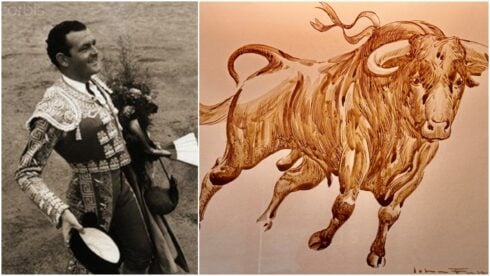
“Blood and Sand”, 1941 – Tyrone Power shows Rita Hayworth some of his best moves
Indeed, he is best-known in the English-speaking world for his 1908 novel, “Blood and Sand”, which has been adapted by Hollywood no fewer than four times!
The 1941 movie version, starring Tyrone Power and Rita Hayworth, was a hit largely because Hemingway had popularised bullfighting through his writings.
However, if you read the original, Blasco Ibañez is strongly anti-taurino (bullfighting).
One interesting footnote: “Blood and Sand” describes the matadors arriving at the bullring in an open, horse-drawn carriage.
Prosaically, today’s bullfighters show up in a minivan with their names painted on the side in gaudy lettering – except in Ronda, where the horse-drawn carriage has been retained to this day.
READ MORE: Irish dance is on the up in Spain as new national association launches – would you give it a whirl?
“¡A MI, LA LEGIÓN!
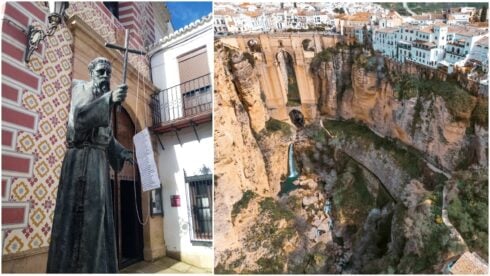
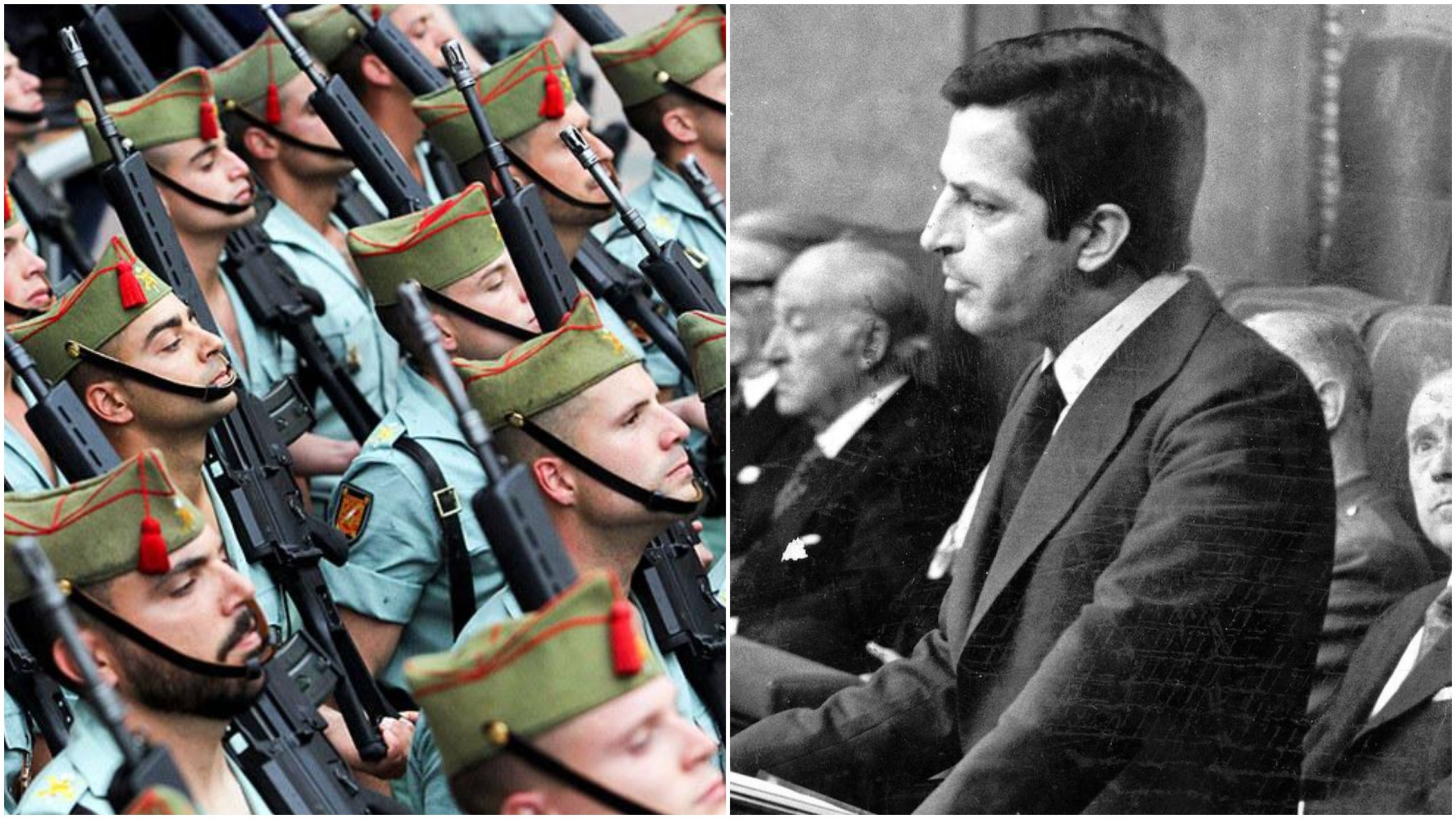
Ronda also features in the story of Spain’s elite military unit, “La Legión”. By Royal Decree on 28 January, 1920, the Spanish Foreign Legion was born.
As the name suggests, the regiment was based originally on the better-known French model. In the first quarter of the 20th century, Spain had a Morocco problem.
Empires were all the rage a century ago, and Spain was trying to conquer north-west Africa. But it was heavy going.
The Spanish army of the day was full of time-servers who liked the salary and strutting around in uniform, but weren’t so keen on getting shot at. The tribesmen of Morocco kept defeating them.
An officer by the name of Millán Astray had the idea of recruiting a mixture of Spanish and foreign soldiers, whose philosophy would be to win, or to die trying. He discussed it with a young general named Francisco Franco (whatever happened to him?) and the “Legión” was born, with its own anthem – “We Are the Boyfriends of Death”.
Today, the foreign bit has been dropped, but the regiment (based in Ronda) remains the Spanish Army’s spearhead unit.
READ MORE: Spain deports five passengers to UK after storms divert Gibraltar flight to Malaga
TWO RESIGNATIONS
1930 – Primo de Rivera, dictator of Spain, submits his resignation to the king.
We tend to think of Franco as “Spain’s Dictator”, but he had a predecessor. Miguel Primo de Rivera was an Andalucian aristocrat who rose to prominence as an able administrator in the army.
By the mid-1920s Spain’s economy was in chaos, and Primo de Rivera seemed like the ’strong man’ who could fix things.
Adolfo Suárez tenders his resignation
However, his impulsive, erratic rule – fuelled by heavy drinking – made matters worse. By the time he resigned (28 January) he was a broken man: he died six weeks later.
1981 – Adolfo Suárez tenders his resignation to the king.
History will be kind to Adolfo Suárez. He was the man of the moment, the ideal replacement Franco left the scene.
Not only did Suárez write the democratic constitution under which we all live today, but this handsome, charismatic man from Ávila was the only national figure who could command enough national respect to lead Spain into its new era.
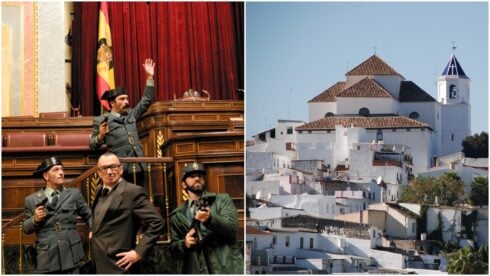
Dogged by his inability to quell ETA (the Basque separatists) and dissension within his own party, he stepped down as Prime Minister on 29 January.
Click here to read more La Cultura News from The Olive Press.