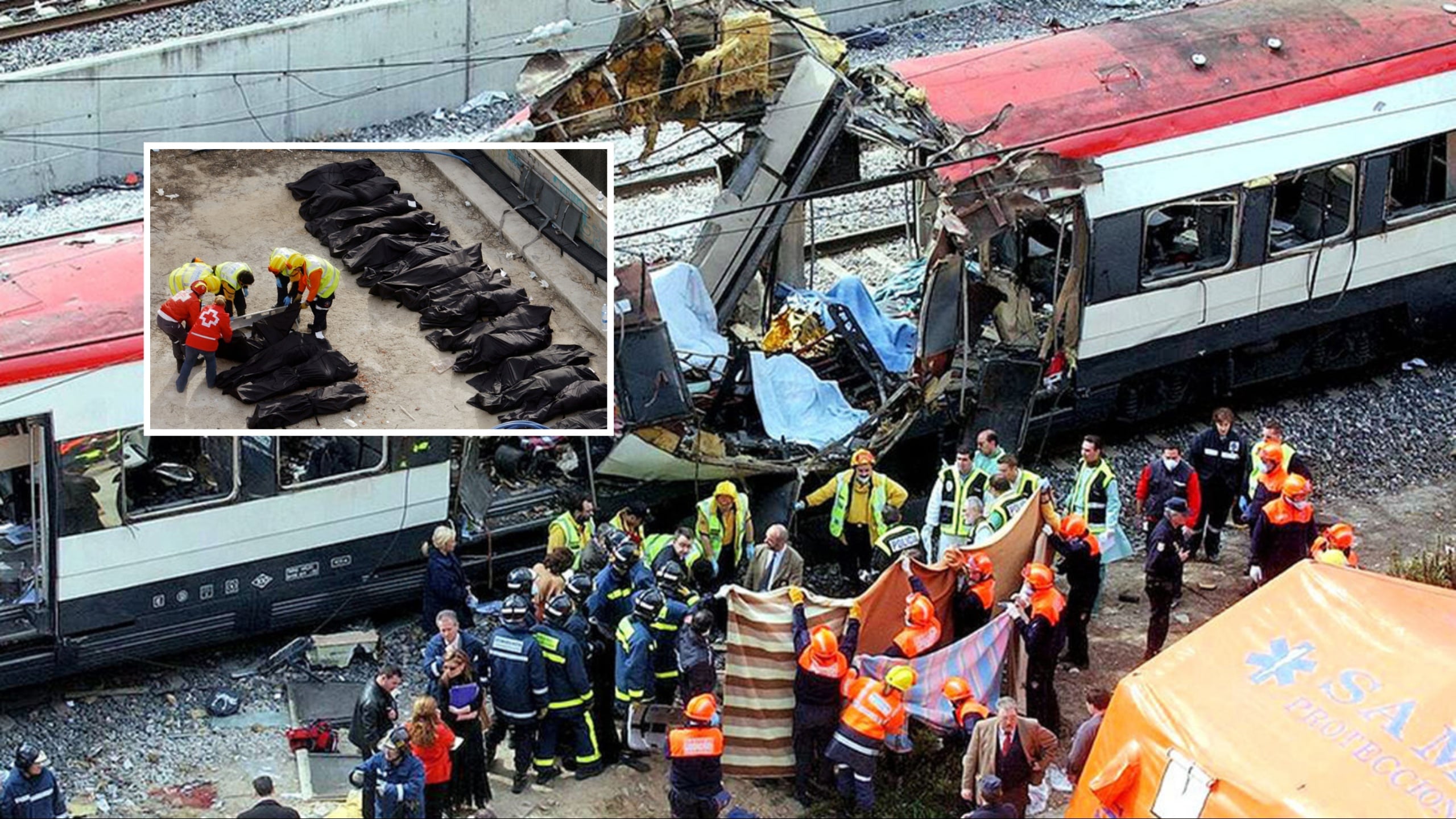
AT 7am on March 11, 2004, twelve men boarded commuter trains at Alcalá de Henares, a town 32km east of Madrid.
Each was carrying a backpack. None would leave the train with it.
Ten bombs detonated across four trains during the Madrid morning rush hour, killing 193 people and injuring an estimated 2,500 others.
It was the worst terrorist attack in Spain’s history — and the attack that Spaniards call 11M.
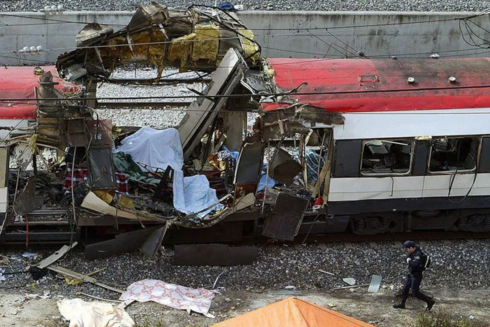
Over the 40-minute journey into the capital, each man had placed his mochila on a seat and stepped off at a suburban stop.
In the packed commuter carriages, nobody noticed the abandoned luggage.
The target was Atocha — Madrid’s oldest and largest rail terminus, the city’s equivalent of London Waterloo, through which tens of thousands of workers pass every morning.
There was no military or government building in the plan. The object was purely to kill and maim as many defenceless people as possible.
Twenty-two years on, this anniversary carries particular weight.
We are living again through American military intervention in the Middle East, and the logic of jihadist reprisal has not changed. The bombers struck because Spain had backed the 2003 invasion of Iraq.

They were not interested in the distinctions of policy between NATO allies, or in the differences between Madrid and Washington.
Open European societies are soft targets — and Spain, one of the least violent countries on the continent, has always been especially exposed.
It is one of the gifts of living here. In extremis, it is also the vulnerability.
The group behind the attack came from Morocco and Tunisia. They had obtained their explosives through an unlikely route: a retired miner who still had access to his former workplace’s gelignite store.
Their planning was methodical and cold. Each man carried an identical backpack. Each knew precisely which stop to leave at. Twelve men on four trains carrying ten bombs.
They had also chosen their date with apparent deliberateness. March 11, 2004 fell precisely 911 days after the attacks on New York and Washington.
Whether this was symbolic or coincidental has never been definitively established — but the detail has fuelled conspiracy theories ever since.
Spain was three days away from a General Election. The conservative Partido Popular government, which had backed the Iraq War, feared the political damage of an acknowledged Islamist attack.

In an episode that still embarrasses, ministers attempted to attribute the bombing to ETA, the Basque separatist organisation. No evidence ever linked ETA — or any Spanish, Basque or Catalan group — to the attack. The PP lost the election.
Al-Qaeda claimed responsibility almost immediately, but investigators were sceptical.
The specific cell that issued the statement was considered unreliable and may have had no direct involvement in the operation at all.
Three weeks after the bombings, police traced the terrorists’ base to a flat in Leganés, in Madrid’s southern suburbs.
Armed officers moved in on the evening of April 3. Most of the group’s leaders were not there, but two were cornered on the premises. They detonated a bomb, killing themselves and one police officer.
Twenty-nine individuals were eventually charged with offences ranging from forgery to murder. Twenty-one were convicted, receiving between them a total running into thousands of years in prison.
The last victim of March 11 died in 2014 — a full decade after the attack, and ten years into a coma from which he never woke.
Click here to read more La Cultura News from The Olive Press.