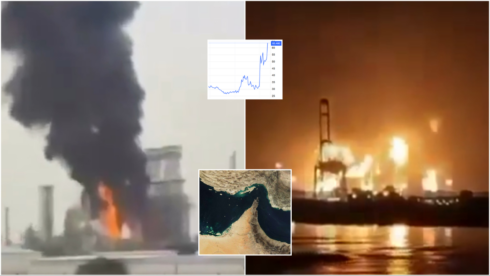
EXPATS looking forward to their summer getaways may face a looming headache after jet fuel prices suddenly doubled across Europe.
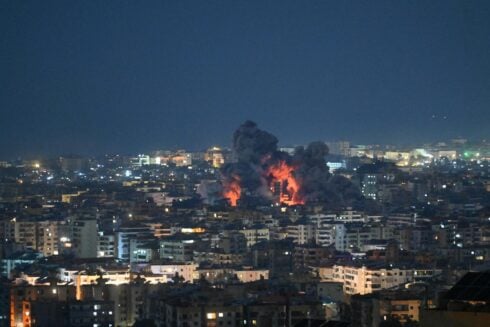
The aviation sector is under mounting pressure as costs have surged in a matter of weeks in the wake of the war in the Middle East.
Data from fuel price index General Index shows the cost of jet fuel in northwest Europe has soared from roughly €640 per metric tonne to more than €1,470.
This is forcing airlines to begin cancelling flights, in turn raising fears of major disruption ahead of the peak summer season.
READ MORE: Energy shock fears mount after Iranian attack on vital Qatar plant sends gas prices soaring by 25%
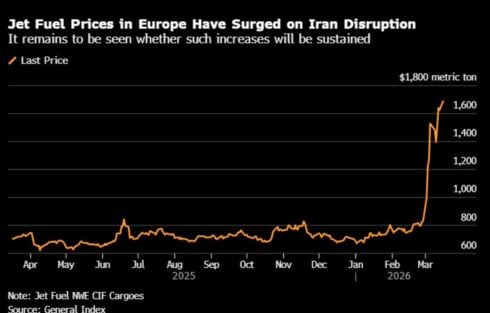
Travellers in Spain are already being warned to expect ticket price hikes in the coming weeks as the crisis has already triggered concrete action from major carriers.
Scandinavian airline SAS has cancelled around 100 flights in recent days. Reports suggest the figure could rise to as many as 1,000 cancellations in April as cost pressures intensify.
The airline claimed it was ‘consolidating capacity’ on routes with alternative connections to maintain stability for passengers, warning further cuts could follow if prices remain high.
However, the Norwegian pilots union has disputed this, accusing SAS of using the crisis as a ‘smokescreen’ for ongoing staffing shortages following a long-running labour dispute.
The impact is also being felt globally, with Air New Zealand suspending around 5% of its flight schedule until early May due to the surge in costs.
Across the industry, airlines are scrambling to protect their margins.
Air France-KLM has begun increasing long-haul fares by around €50 on some routes.
Meanwhile, major groups such as IAG – owner of Iberia and British Airways – and low-cost giant Ryanair are relying on fuel hedging strategies to soften the immediate blow.

If the situation continues into the summer, the next step will be the trimming of weaker routes, particularly regional UK-Spain connections or flights with multiple daily departures.
While high-demand expat hotspots like Malaga, Alicante and Palma are expected to be resilient, secondary routes could face reductions if airlines look to consolidate capacity.
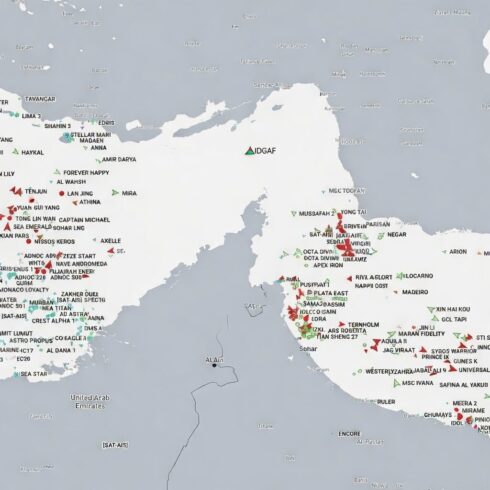
The spike is being driven by escalating tensions in the Middle East and fears over supply through key shipping routes.
For now, airlines operating heavily in Spain, including Iberia, Vueling and Air Europa, have not announced widespread cancellations directly linked to fuel costs.
But analysts warn the country will not be immune if the current trend continues.
Airlines typically respond to sudden fuel shocks in three stages: first absorbing costs, then raising fares, and ultimately cutting less profitable routes if high prices persist.
With fuel costs now surging at pace, the sector appears to be entering the second phase.
Much will now depend on how long the disruption to global oil supply lasts – whether the Strait of Hormuz can be reopened and if peace can return to the Middle East.
If prices stabilise, airlines may avoid widespread cancellations. But if the surge continues, more routes connected to Spain could soon be on the chopping block.
Click here to read more Travel News from The Olive Press.