
IT was the first night of this year’s Carnaval del Toro festival in Ciudad Rodrigo when a bull charged at Eustaquio Martin, piercing the upper part of his ribcage.
The 71-year-old suffered ‘uncontrollable and catastrophic’ bleeding and ‘died less than a minute’ after ‘he entered the infirmary in agony’, revealed local doctor Enrique Crespo.
This Valentine’s Day death prompted the town hall to announce with some apparent pride that ‘nobody had died’ at the town’s carnival since 1986.
While this may be the case in Ciudad Rodrigo, hundreds of victims have died at bull-centred events around Spain since then.
Extraordinary as it may sound, some 23 people died alone in 2022 with the gorings spread across half the country.
Since then at least 28 people have lost their lives at bull-centred celebrations, whether it be a large-scale spectacle or a smaller village festival.
The oldest death was of an 80-year-old man while the youngest was just 18.
And in the last five years alone there have been over 1000 people seriously injured, including a 12-year-old seriously hurt.
The tide however, may be turning, as after the bloodiest year on recent record (2022) insurers, perhaps understandably, began withdrawing cover of the festivals.
It began after 1000 people were injured and two died during Valencia’s controversial ‘bous al carrer’ festivities in 2023. The previous year a shocking seven had died in the region.
The authorities got together to modify the regulations governing bullfighting events and strengthen security.
But even then, these measures were not enough as in 2024 an alarming 458 people were injured, while another person died.
While deaths are seemingly on the decline, bull events are still leaving many with devastating injuries and heartbreaking losses.
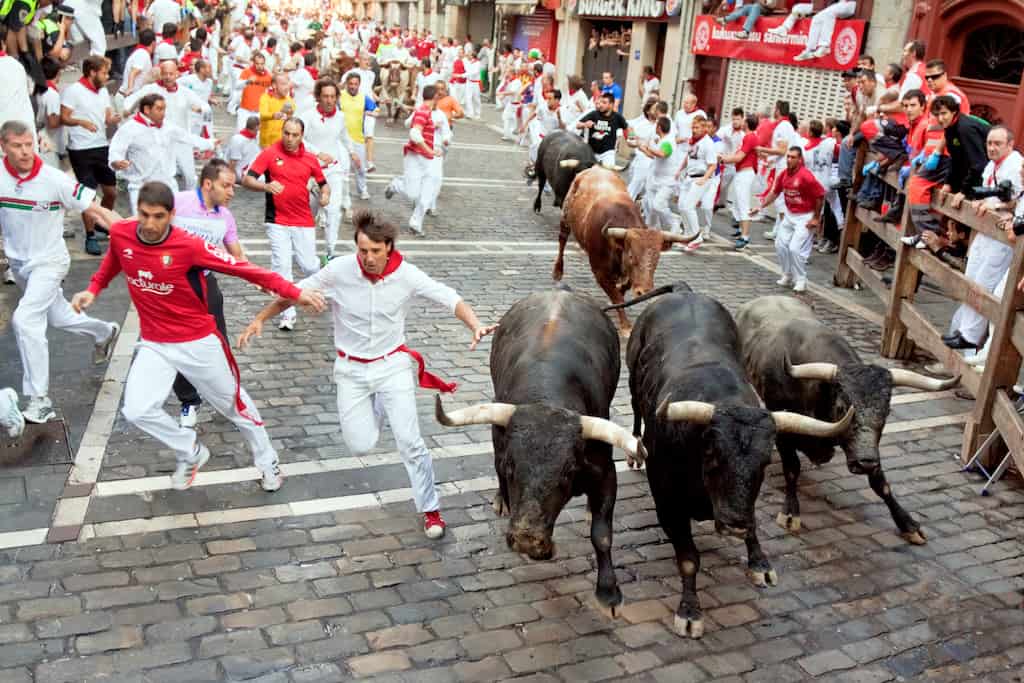
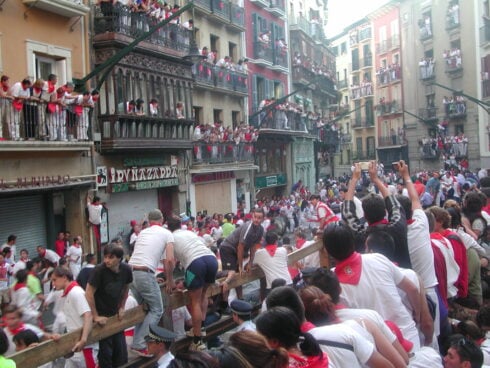
And oddly, it is not the globally famous festivals, such as Running of the Bulls (San Fermin) in Pamplona where the bedlam mounts up.
Most of these deaths and injuries occur in smaller towns organised with fewer resources.
The majority of Valencia’s ‘bous al carrer’ celebrations take place in villages involving bulls circling a fenced off square for up to 30 minutes at a time. And the longer the duration the less vigilant the security is.
The history of bullrunning dates back to the 1500s at the famous San Fermin festival, in Pamplona, which can first trace its roots to the 12th century.
Moving the bulls early in the morning was the most efficient way to get the animals into town centres for bullfights later in the day.
Herdsmen ran alongside the bulls and then later young men started running in front of them to display courage.
Over time, what began as a practical necessity became a ritual with the run garnering increased attention after American writer Ernest Hemingway described the festival in his 1926 book, The Sun Also Rises.
Today, a century on from its publication the festival attracts nearly 1.5 million visitors annually, transforming Pamplona into one of Spain’s busiest festivals.
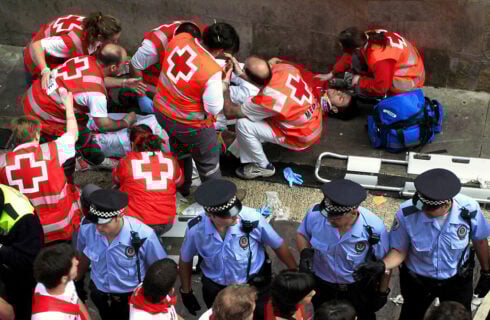
Hotels are fully booked months in advance, local businesses thrive with the number of visitors and international TV networks broadcast the run.
Unbelievably, perhaps given the number of visitors and runners (up to 4,000 a day), there have only been 16 deaths since records began in 1910.
It should be noted however that up to 50 people are rushed to hospital by ambulance each year, many with life threatening injuries.
The number of deaths and injuries at the bull events in general highlights the tension between tradition, tragedy and safety.
With the celebrations deeply rooted in Spanish history and culture, many argue that their preservation and continuation is vital.
For these supporters, the festivals are vital to regional identity and the local economies.
So, as summer approaches and the peak season draws near, a pressing question lingers: should tradition ever truly outweigh the dangers involved?
Click here to read more La Cultura News from The Olive Press.