SPAIN has offered to share jet fuel with EU allies as the war involving Iran disrupts global supplies and raises fears of shortages across Europe ahead of the summer travel season.
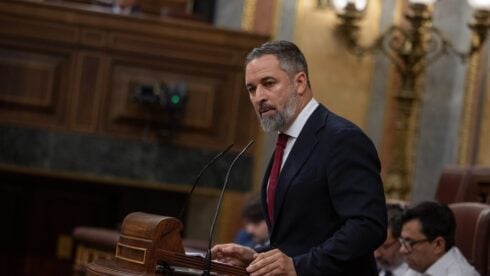
Energy Minister Sara Aagesen said on Monday that Spain would ‘participate actively’ in any EU plan to share fuel stocks or introduce joint purchasing.
The proposal comes as airlines warn that flights across Europe could begin to be cancelled from late May due to a lack of jet fuel.
The supply crisis has been triggered by conflict affecting key shipping routes, with disruption in the Strait of Hormuz cutting off a major source of fuel.

| Pool Moncloa / Jose Manuel Álvarez. 2024.11.28
The EU relies on the Gulf for nearly 75% of its jet fuel imports, leaving it highly exposed to the current situation.
Aagesen said a joint EU purchasing platform could increase buying power and help bring prices down for member states.
‘Spain has always demonstrated its commitment to solidarity and working together,’ she said.
She added that the European Commission is expected to consider such measures as pressure grows on supplies.
Spain is in a stronger position than many EU countries thanks to its extensive refinery network and diversified supply routes from the Americas and North Africa.
The country operates eight highly efficient refineries, upgraded through major investments between 2008 and 2012, allowing them to process a wide range of crude oil types.
In response to the current crisis, some Spanish refineries have increased production by up to 60% compared to normal levels.
Spain has also acted as a net exporter of petroleum products since 2012, including kerosene, petrol and diesel.
In early 2026, it was already exporting kerosene to countries including the United States, France and Portugal.
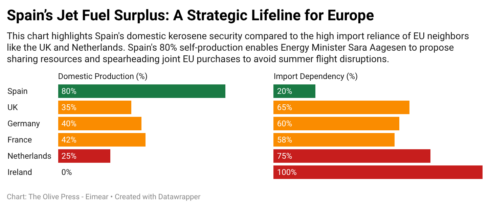
The country also maintains strategic oil reserves covering around 90 days, providing an additional buffer during supply disruptions.
This means Spain can cover roughly 80% of its own fuel needs, putting it in a far stronger position than many of its European neighbours.
By contrast, most EU countries rely heavily on imports passing through the Strait of Hormuz, leaving them vulnerable to ongoing disruption.
Experts have warned that some regions in Europe may have as little as six weeks of jet fuel supply remaining without alternative sources.
This gap in supply is what allows Spain to step in and potentially support other EU countries through a shared purchasing and distribution system.
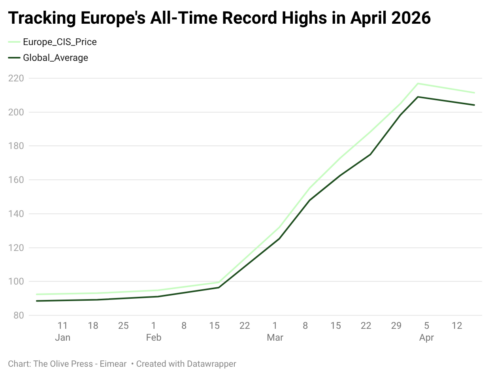
Jet fuel prices hit record highs last month and remain close to $175 per barrel, nearly double what they were before the conflict began.
Europe is now receiving increased shipments of jet fuel from the United States and Nigeria.
US exports are expected to reach between 164,000 and 174,000 barrels per day in April, close to record levels.
Imports from Nigeria have also surged to as much as 96,000 barrels per day, boosted by the growing role of the Dangote refinery, Africa’s largest.
Despite these increased inflows, stock levels remain under pressure, with inventories at the Amsterdam-Rotterdam-Antwerp hub falling to their lowest point in four years.
International Air Transport Association chief Willie Walsh warned last week that without urgent action, shortages could begin to affect flights across Europe by the end of May.
Click here to read more Spain News from The Olive Press.