
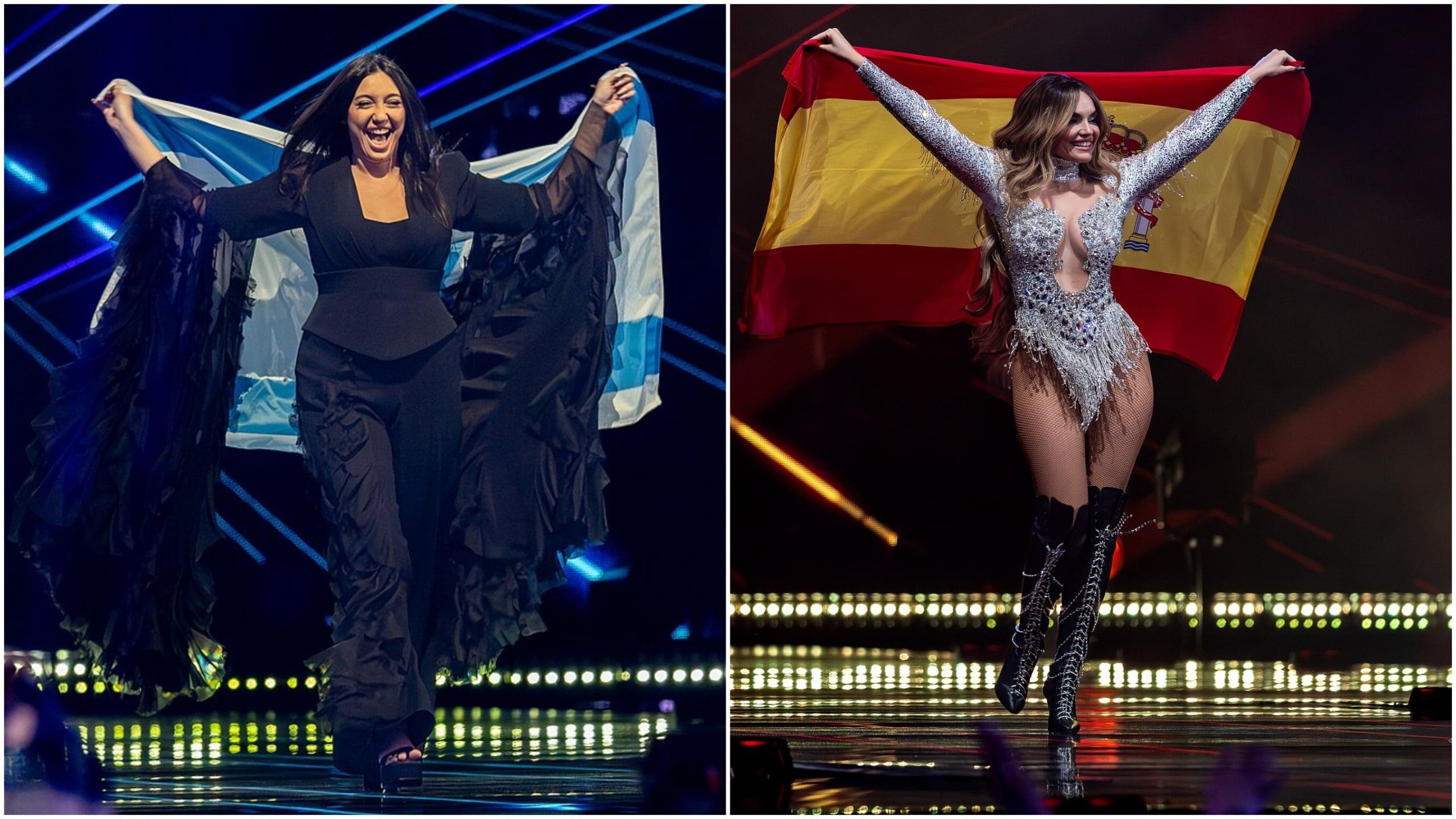
SPAIN’S public broadcaster will not air Eurovision, joining Ireland and Slovenia in protesting the contest over Gaza.
RTVE bosses confirmed the broadcaster will not air the Eurovision final in Vienna on 16 May, nor the semi-finals on 12 and 14 May.
The decision marks the first time Eurovision will not be shown on Spanish television since the country debuted in the contest in 1961.
RTVE joins Irish and Slovenian national broadcasters, RTE and RTV, in choosing not to air the event over concerns around Israel’s participation.
Spain also joins a wider group of countries, including the Netherlands and Iceland, that have protested Israel’s participation by refusing to send participants.
Last year, RTVE warned it would boycott the next Eurovision unless Israel was barred from the contest over the war in Gaza.
But in December, the European Broadcasting Union (EBU), Eurovision’s organisers and producers, voted to allow Israel to compete in the contest’s 70th edition.
Following the decision, RTVE secretary general Alfonso Morales said: “The situation in Gaza, despite the ceasefire and the approval of the peace process, and Israel’s use of the contest for political purposes, make it increasingly difficult to maintain Eurovision as a neutral cultural event.”
Spain’s government has supported the decision with Culture Minister Ernest Urtasun describing the move as ‘brave’.
Israel’s participation in last year’s Eurovision, held in Basel, Switzerland, also sparked widespread controversy.
Pro-Palestinian protestors wore Palestinian flags and smeared themselves in fake blood to symbolise killings in Gaza.
During Israeli singer Yuval Raphael’s performance, two protestors stormed the stage and attempted to throw paint at him, but instead hit a Eurovision crew member.
Despite the controversy, Raphael came second in the contest and several public broadcasters, including RTVE, queried the final result.
RTVE asked the EBU for an audit to clarify how the Spanish televote was distributed after Spain handed the maximum twelve points to Israel.
Last year, Spanish Prime Minister Pedro Sanchez joined the debate over Israel’s participation, accusing the EBU of upholding a ‘double standard’ by allowing the country to compete.
Sanchez pointed to Russia’s expulsion from Eurovision following its 2022 invasion of Ukraine, arguing Israel should be treated the same way.
“Nobody was up in arms when the Russian invasion of Ukraine began three years ago and Russia couldn’t take part in Eurovision,” Sanchez said.
“Therefore Israel shouldn’t compete either, because what we cannot allow is double standards in culture,” the Prime Minister continues.
The 2026 edition of Eurovision marks the first time Spain has not taken part in the contest since 1961.
RTVE will instead air La casa de la musica during the grand final, a programme featuring performances by artists from Benidorm Fest, the competition used in previous years to select Spain’s Eurovision entry.
Click here to read more Entertainment News from The Olive Press.