
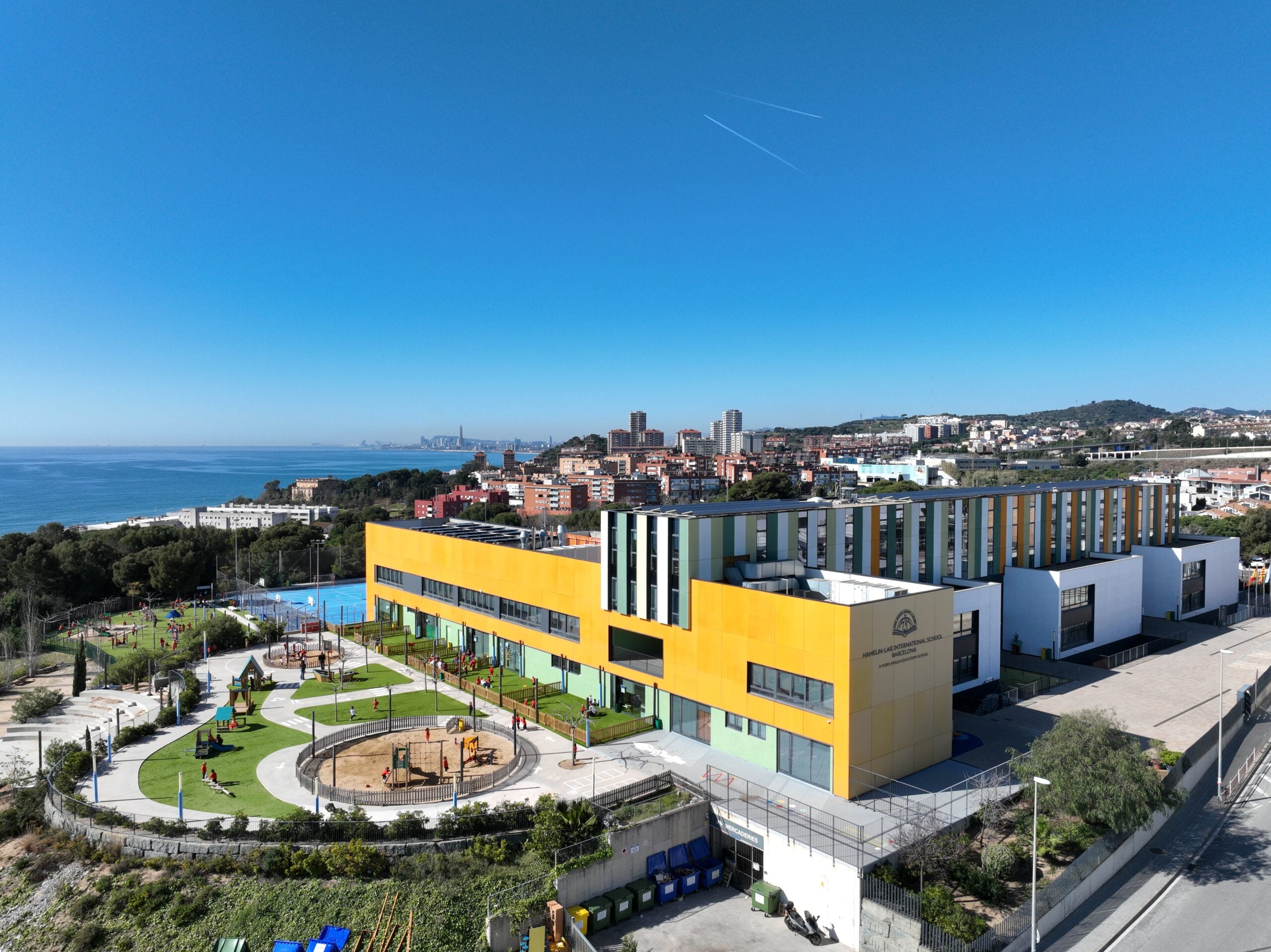
EVERY year on International Day of Families, Barcelona’s Hamelin-Laie International School celebrates the multicultural families who have crossed borders to build a life in Spain — and the challenges they face when they arrive.
Each year on May 15, families of every shape, size and background are celebrated across the world, and this year was no different.
International Day of Families, established by the United Nations General Assembly in 1993, was created to recognise the family as the fundamental unit of society — in all its forms.
Single parents and extended clans, traditional households and blended families, communities rooted in one culture and those woven from many.
But for one particular kind of family, the day carries a resonance that goes beyond celebration.
READ MORE: Man who lost his arm on an Estepona buggy tour wins compensation after seven-year legal fight
For the millions of families who have crossed borders — packing up their lives, their children and their sense of home to start again somewhere new — it is also a moment to acknowledge something that rarely gets named: that building a family life across cultures is genuinely hard.
The United Nations estimated 281 million people were living outside their country of birth as of 2020, a significant proportion of them raising children far from their cultural origins.

Spain alone is home to almost ten million registered foreign residents.
For many, the questions that come with that decision are much deeper than just logistics.
The question of identity runs through everything.
READ MORE: Spain launches €35 billion military upgrade — its biggest rearmament drive in decades
Which language do children speak at the dinner table? Which traditions do they keep? How do parents embed their family in a new country without losing the culture they came from?
For the tens of thousands of expat families who have made Spain their home, these are not abstract questions. They are daily ones.

And for many of those families in Barcelona, Hamelin-Laie International School has become the answer.
Among its distinctions, Hamelin-Laie was the first trilingual school in Spain.
Over more than 30 years, the institution has evolved into one of Barcelona’s leading international schools, now serving a community drawn from more than 55 nationalities.
Central to its philosophy today is a principle that has grown more relevant as international mobility has accelerated: that students should be equipped to understand, value and carry both their home country and their host country.
From nursery through the early years of primary school, teaching is delivered in three languages — English, Catalan and Spanish.
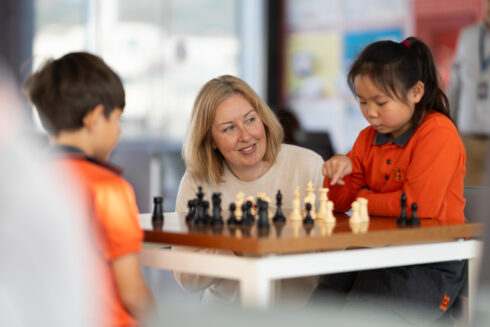
From Year 4, pupils begin studying French, German, Russian and Mandarin, building a linguistic portfolio that reflects the breadth of the community it serves.
For students aged 16 to 18, that framework extends to academic choice. Pupils can opt for the International Baccalaureate or the Spanish Bachillerato Nacional, providing pathways to universities in Spain and beyond.
READ MORE: Class sizes to be cut in Andalucia to ‘benefit teachers and children’s education’
Average class sizes run between 15 and 24 — a figure that supports the individual attention international families, often navigating an unfamiliar education system for the first time, consistently identify as a priority.
Beyond the curriculum, the school offers an extensive extra-curricular programme: taekwondo, ballet, football, robotics and one-to-one music tuition among them, a range that reflects the diversity of its community as much as its academic ambitions.
As International Day of Families approaches, Hamelin-Laie’s position is straightforward.
The challenges facing multicultural families adapting to life in a new country are real and frequently underestimated.
The school exists to help families — and the children at the heart of them — feel at home, wherever home happens to be.
For more information telephone on (+34) 935 55 67 17 or visit the website – www.hamelinschool.com
Click here to read more Barcelona News from The Olive Press.