IT’S no wonder many foreigners are bewildered by Spanish ham.
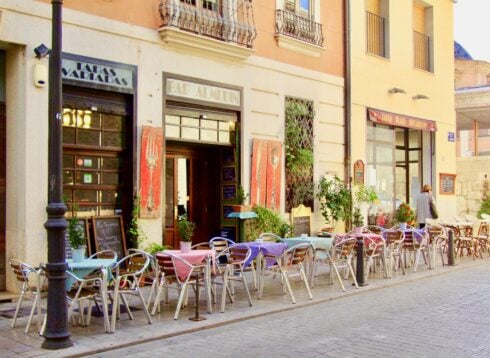
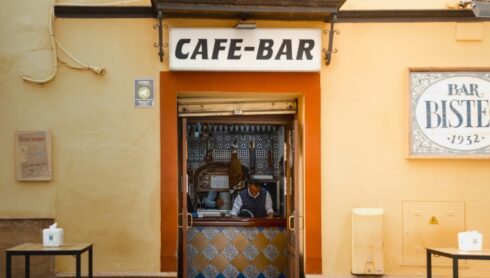
A plate can cost five times as much in Pedro’s bar than Antonio’s restaurant in the same square – what on earth is going on?
Well, jamon in Spain is all about breed, upbringing, curing and preparation. And it is a very big business.
The basic difference in qualities of ham can be summarised as black-label ham (100% fed on acorns and raised in the open air), red-label (‘Iberian ham’, 75% thoroughbred and also raised outdoors): green-label pork (free-range pigs, fed on grain) and white-label (effectively, battery pigs bred in sheds and never fed on acorns).
And it’s a fact that top of the range Jamon Iberico de Bellota is up to five times more expensive than the cheapest Jamon Serrano.
They do, of course, have ordinary pigs in Spain, same as everywhere else.
But they also have Iberian pigs, the royal family of the porkers, referred to as ‘black-footed’ (de pata negra) and these pigs live off acorns.
This so-called ‘jamón de belota’ (or acorn ham) is the veritable Rolls-Royce of ham.
These thoroughbred animals are uniquely adapted to the ‘dehesa’ or prairie as you might know it in America. But the word doesn’t quite capture it.
These huge expanses in the south and west of Spain are meadows with oak trees dotted about – the Spanish evergreen oak, Quercus ilex, also known as encinas, or holm oaks.
For thousands of years, these formerly wild pigs have lived under these oaks feeding off their acorns.
UPBRINGING
It was at some point that humans came along and started cultivating the pigs, noticing how their meat tasted subtly and sweetly of acorns.
Indeed, it was famous English author Laurie Lee, who pointed out in his book As I Walked Out One Midsummer Morning that when he arrived in the Sierra Morena mountains bordering Andalucia and Extremadura, the jamon started tasting sweet.
Uniquely, these pigs infiltrate fat into their muscles in the final stage of life. It’s known as ‘marbling’. Hence the rich taste, but it’s also good for your health (more of which later).
The very best ham comes from black-foot pigs which have eaten nothing but acorns for weeks.
And just as the finest wines have an ‘appellation controllée’, so the best hams have a PDO (Protected Designation of Origin): with well-known examples being Jamon de Huelva, Los Pedroches from north Cordoba, and Dehesa de Extremadura.
It is during the key period of the year, known as the ‘montanera’, (which can last from October to February) that each animal needs to be carefully monitored.
The number of pigs in each area – and even each animal’s weigh-gain per day – must be recorded in order to qualify as the best quality ham denomination.
As the Olive Press noted on a visit to a giant 340 hectare estate with 155 Iberian pigs, near Ronda, last year, the owner knew many of his pigs by name and kept a careful check on each one’s weight and health.
Explaining why he can only keep between 150 and 200 pigs, Jose, at LanGenal explained: “There are only enough acorns and chestnuts to go around and the rules are strict.
“Luckily we also have other delicacies for them such as wild olives that are out in abundance. They are spoiled for choice”
CURING
It is talking to true farmers like Jose that you’ll be filled in to why Spain has such a historic connection to pork.
They’ll tell you how as recently as 20 years ago most country families slaughtered a pig to survive the winter.
It was called the ‘matanza’ and while that may sound grim, it was an annual right of passage late in the Autumn that usually lasted for two days. Sometimes more.
They rarely take place any more, unless you are in the wilds of Castile or Extremadura. Blame the politicians for that.
And this is a shame as the multi-day event brought communities together to do the butchering, seasoning, curing, and then the making of sausages like chorizo, salchichón, and morcilla.
Everyone in the village (in the old days) had a special talent vis-à-vis a dead pig.
Some were good at dismantling the carcass, others at using the intestines (seriously!) as sausage-skins.
But the ham we’re talking about here is a different kettle of fish. No breeder of Pata Negra is going to entrust his valuable pork to such village barbarism.
Salting and curing – and even slaughtering – is done scientifically nowadays.
The length of time the meat spends ‘curing’ determines its taste.
By law, the very best ham must mature for at least three years before it can be served: Iberian ham of the middle grade (grain-fed) needs two years: Serrano (basic ham) must ‘cure’ for at least 210 days.
In the case of Jose at LanGenal he normally sends his pigs away to Trevelez, high up in the Sierra Nevada mountains of Granada, where the ham air dries in salt for four years before it comes back to him to sell.
READ MORE: ‘Tourists go HAM!’ Moment a ‘jamon’ museum in Spain pokes fun at ‘anti-tourism’ movement
“It means a huge investment is needed here and the waiting time before cashing in on my product is usually about five years or more,” he told the Olive Press.
PREPARATION
Some people are put off, because they think the ham is eaten raw. Don’t be.
In the first place, the long curing process is very similar to cooking, but without destroying the ham’s health-giving qualities.
Cured ham contains some very subtle fats which are not only nourishing – they help your digestive system extract other benefits from the meat!
And does the word ‘cebo’ matter, when you see it on a label? Only insofar as it is your guarantee.
A ‘jamón de cebo’ is a certificated ham which complies with all the standards, and comes from pigs which are at least 50% ‘de pura cepa’ (thoroughbred).
As for what to drink with your ham, purists say that the good stuff should be washed down with sherry.
In particular fino and manzanilla, which are aged under a ‘flor’ of yeast, and have a flavour ideal for high-quality ham.
Pata Negra facts
- Each pig must have at least a hectare of dehesa to itself
- With most encina trees being around 300 years old – it’s unlikely any new investments into jamon iberico farming are happening in our lifetime!
- ‘Marbling’ is the secret of the flavour and health benefit of jamon. It creates a lot of the protein called leptin, which regulates fat in our bodies, and stops us getting obese. In short, jamónhelps us to control our weight while extracting maximum nourishment – and it tastes delicious, too!
- Most pigs spend at least part of the year free range (the percentage of their time is strictly regulated): moving about keeps down their epidermal fat (like us, pigs have a tendency to collect ‘bad fat’ just under the skin)
- A change in US law in 2005 permitted Spanish-slaughtered pork to enter America: this has led to enormous demand (and a constant price-hike!)
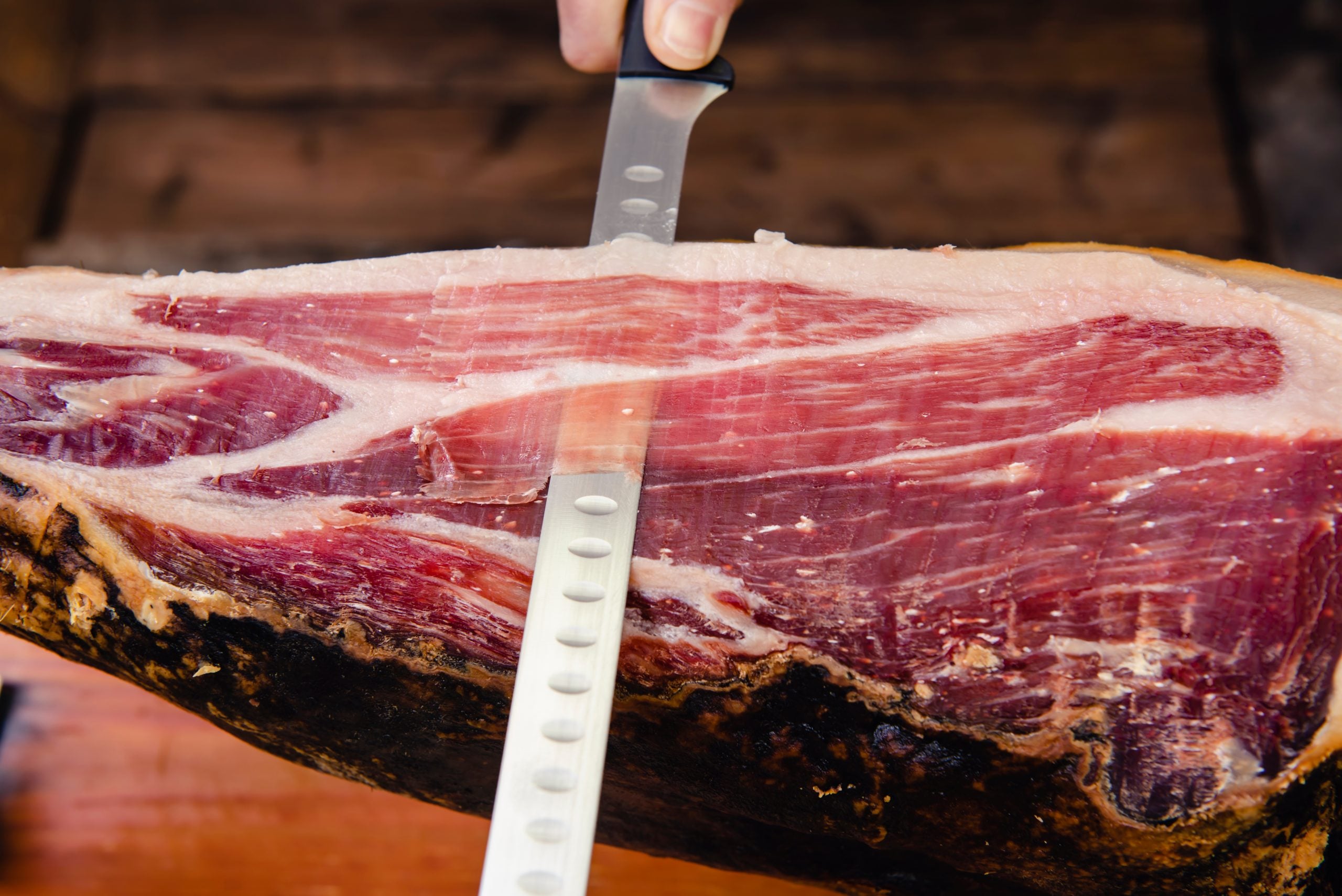
PS: If anyone tempts you to buy a ham-cutting knife, the Olive Press’ serious advice is, don’t be tempted.
At best, cutting those gossamer-thin, translucent slices takes years of practice: you’ll probably end up carving indigestible chunks!
And those knives are frighteningly sharp: at worst, you’ll be off to the Outpatients for a few stitches.
Click here to read more Spain News from The Olive Press.