
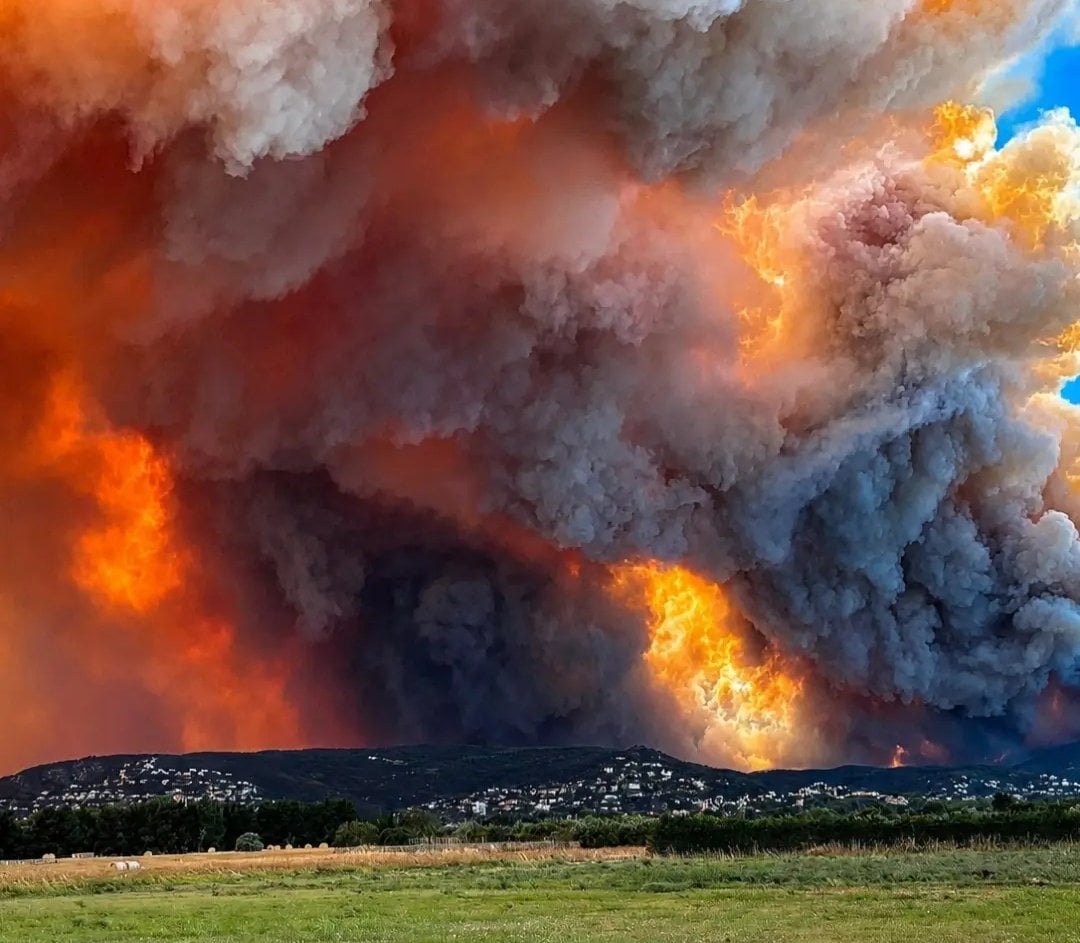
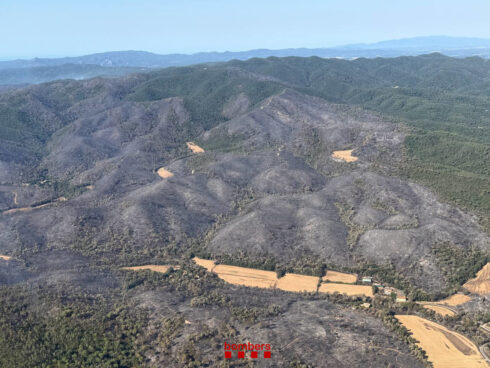
A WORKER spent two nights in a jail cell after he sparked a devastating wildfire on the Costa Brava that incinerated 22 sq km of protected parkland.
While the worker, 60, was charged and released released, the company that employed him, and the Catalan government that hired that company, have faced nothing more than an internal inquiry that carries no fines and no penalties.
The blaze started on Friday morning beside a rural road linking the medieval town of Calonge i Sant Antoni overlooking the sea to La Bisbal d’Emporda in Girona province.
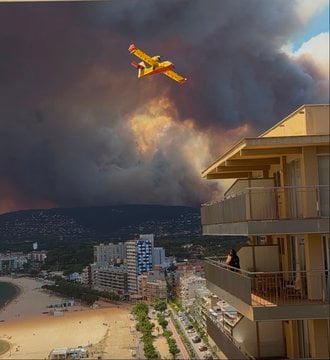
La Bisbal d’Emporda is a market town about 20km inland from the Costa Brava resorts of Palamos and Platja d’Aro.
The worker was using an angle grinder on a maintenance job when a spark from the tool set fire to dry roadside vegetation, according to Agents Rurals, Catalonia’s forestry rangers.
Catalonia’s Pla Alfa wildfire alert system was on Level 3 that day — the second-highest of four levels, and one that bans this kind of machinery work outdoors.
The Generalitat, the Catalan government, initially said the worker had instead been repositioning a road sign.
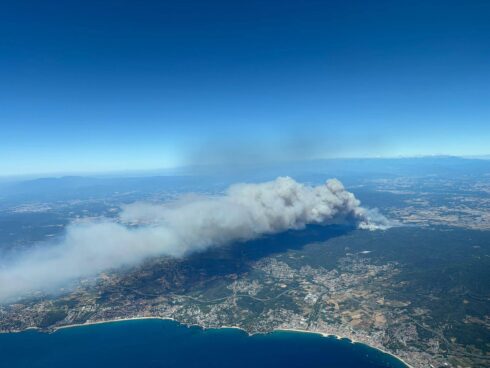
Meteocat, Catalonia’s weather service, recorded 32.5C and 34% humidity at the nearest station that morning, with winds gusting up to 50km/h.
A far more severe heatwave, with highs of up to 42C across Catalonia, did not arrive until two days later – once the blaze was well underway.
Officials feared at the height of the emergency that the fire could grow to cover 80 sq km of the Gavarres, a range of wooded hills separating the Costa Brava coast from inland Girona.
Mossos d’Esquadra, Catalonia’s police force, arrested the worker that evening.
He spent two nights in custody before the investigating court in La Bisbal freed him with charges on Sunday.
He remains under investigation for a forest-fire offence and must appear in court whenever he is summoned.
His lawyer, Marta Bassols, said he had been working alone at the time, called Spain’s 112 emergency line himself when the fire broke out, and tried to put it out before officers arrived.
“From minute zero my client has collaborated so that all of this can be clarified,” she told the Spanish news agency EFE.
Bassols described him as ‘very affected’ by events, and said he has spent years working for companies that maintain Spain’s roads.
The worker was contracted through a joint venture between two firms, Aquaterra Servicios Infraestructuras and Construcciones Rubau.
READ MORE: Nearly 200 evacuated as wildfire sweeps through Andalucia nature reserve

That joint venture was hired by the Generalitat’s Department of Territory — the regional ministry that runs roads and infrastructure — to maintain roads across Girona province.
Construcciones Rubau alone has been awarded €63.1 million in public contracts across 50 separate deals, according to Menjometre, an independent tracker of Catalan public spending.
Relative to its size, that places the firm among the most reliant on government contracts of any company Menjometre tracks — a concentration the platform’s own methodology says does not by itself imply wrongdoing.
The Department of Territory has asked the joint venture for a full timeline of events and details of what instructions the worker was given before the job began.
No fines or sanctions have followed.
In a post on X, Salvador Illa, the president of the Catalan government, thanked Mossos d’Esquadra and Agents Rurals for their work.
He said the high fire risk that day left ‘no room for carelessness.’
He did not address whether the company, or his own government, bore any responsibility for letting the job go ahead under a Level 3 alert.
Asked directly about the company’s role, Illa said only that it ‘is collaborating’ with the investigation, according to the Catalan outlet Nacio.
Criminal defence lawyer Carles Monguilod told Catalunya Radio the legal exposure runs far wider than the man holding the grinder.
“Criminal liability, if there is any, will be personal to the worker, but civil liability would belong to whoever hired him,” he said.
Monguilod explained that if the worker or the two firms cannot cover compensation claims, responsibility can move up the chain — potentially reaching the Generalitat itself, since it was the Department of Territory that commissioned the work in the first place.
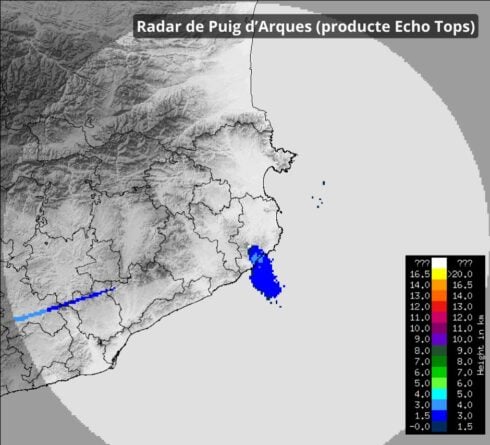
The fire has destroyed eight houses outright and damaged eight more, according to Bombers, Catalonia’s fire service, with other buildings and vehicles also affected.
Up to 45,000 people across a dozen towns were ordered to shelter indoors at the peak of the emergency on Friday.
That fell to around 9,700 people still confined by that evening, across seven municipalities on the Costa Brava’s southern flank: Calonge i Sant Antoni, Castell d’Aro, Platja d’Aro i s’Agaro, Cruilles, Monells i Sant Sadurni de l’Heura, Forallac, La Bisbal d’Emporda, Llagostera and Santa Cristina d’Aro — all towns and resorts within a short drive of the coast.
More than 100 residents were evacuated from the Vall Repos housing estate in Santa Cristina d’Aro.
About 70 children sheltering at a holiday camp in Romanya de la Selva, a hillside village in the same stretch of the Gavarres, were also moved to safety.
Quim Gubau, president of the Consorci de les Gavarres — the association representing the private owners of more than 300 sq km of woodland in the massif — told the Catalan daily ARA the damage to farmhouses and land was severe.
“We haven’t had a fire of more than 10 sq km since the 1980s,” he said.
Click here to read more Catalunya News from The Olive Press.