

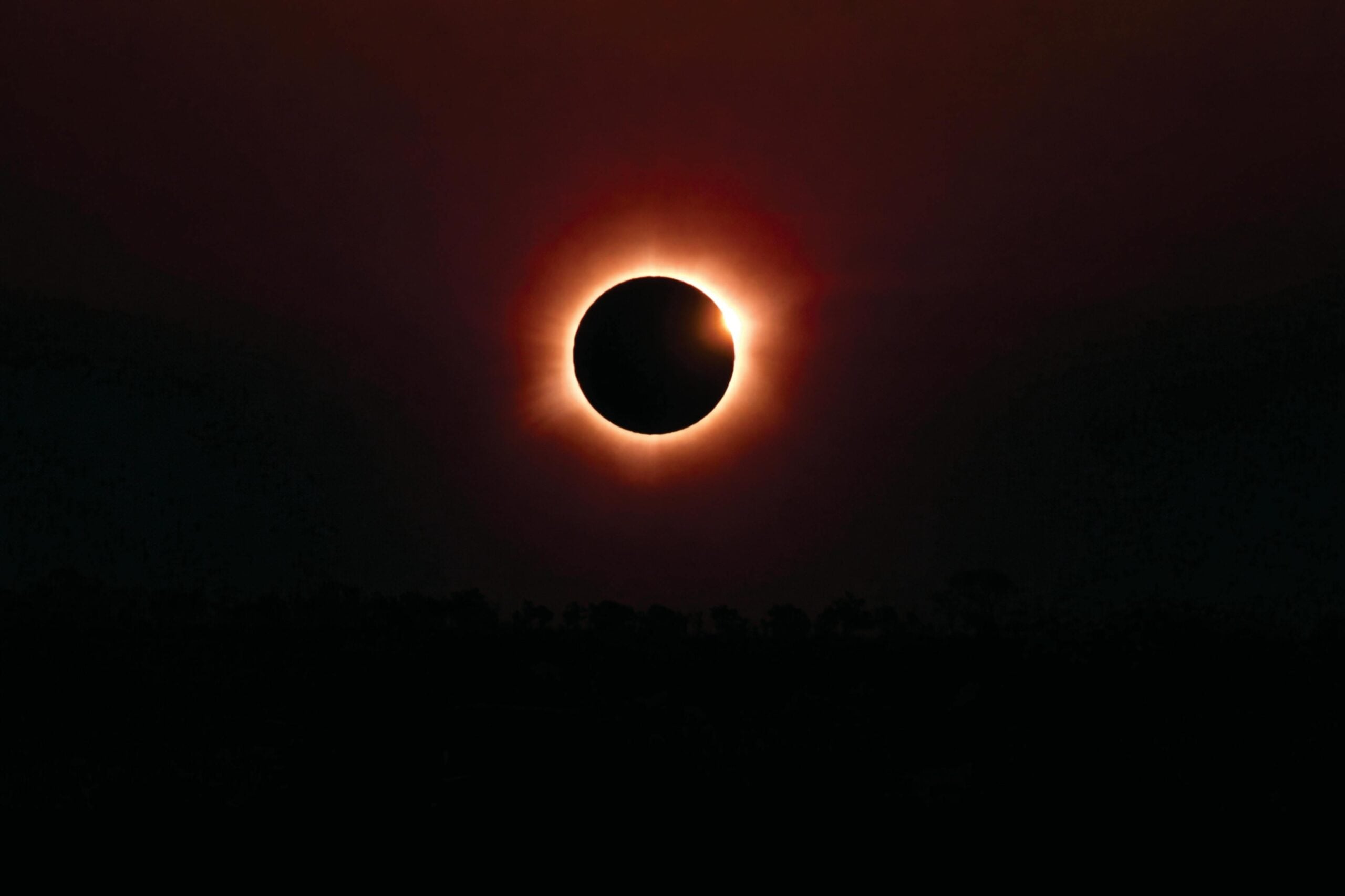
SCIENTISTS in Catalunya have launched a massive citizen science experiment to study for the first time how a total solar eclipse affects the human body.
The initiative, known as Project Solaris and led by the Catalan government, will collect biometric data from the smartwatches of 5,000 volunteers before, during and after the total solar eclipse on August 12.
Researchers at the Vall d’Hebron Research Institute (VHIR) will then analyse the data to find out what happens when thousands of people experience the eclipse at the same time.
They will also examine how the emotions triggered by the event affect heart rate and breathing.
Maria Jesus Cruz Carmona, head of VHIR’s Pneumology Research Group, said: “A solar eclipse is a phenomenon that inspires awe.
“Through this citizen science study, we will be able to assess how that translates into people’s physiological responses.
“It’s a very unusual situation. Suddenly it becomes dark, the temperature drops, and thousands of people experience it together as a unique event.
“We believe all of these factors will have a physiological impact, and that’s exactly what we want to study.”
She added: “It’s a pioneering project because it’s the first time research of this kind has combined scientific investigation with citizen participation.
“We hope to see a very high level of participation because the more people who take part, the more representative and valuable the results will be.”
Catalunya’s research minister, Nuria Montserrat, said volunteers can sign up by downloading a dedicated app from the Institut d’Estudis Espacials de Catalunya (IEEC) website.
Striking studies into the effects of total solar eclipses on animals have previously found that birds stop singing and return to their nests, while some insects interrupt their normal behaviour.
Plants also respond to the phenomenon, with flowers temporarily closing.
Now, the Catalan government’s study aims to discover whether a total solar eclipse causes measurable changes in the human body, based on the idea that intense emotions trigger physical responses.
Researchers expect the study’s first findings to be ready by the end of September.
The August eclipse – the first total solar eclipse visible from mainland Spain in more than 120 years – has already sparked nationwide excitement, with eclipse chasers racing to book hotels and holiday rentals near the best viewing spots.
It will also mark the start of an exceptionally rare run of three major solar eclipses visible from Spain between 2026 and 2028.
A total solar eclipse occurs when the moon passes directly between the sun and the Earth, completely blocking the sun’s disc and plunging parts of the planet into daytime darkness.
For a few minutes, observers can see the sun’s outer atmosphere, known as the corona, glowing around the moon.
The dramatic effect can only be experienced from the path of totality – a narrow strip of land where the moon fully covers the sun.
Outside this area, people see only a partial eclipse, with daylight remaining and the corona hidden from view.
This year, the path of totality – up to 300 kilometres wide – will sweep across northern and eastern Spain.
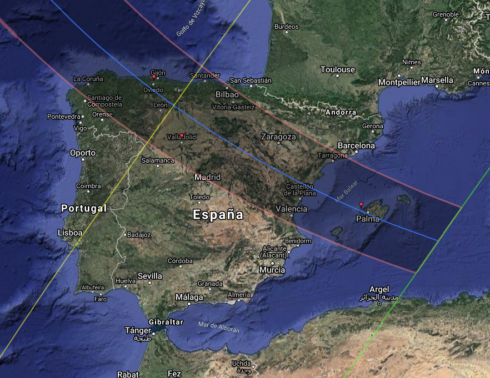
Prime viewing locations include Oviedo, Zaragoza, Palma, Valencia, Leon and Burgos.
The eclipse will first reach Galicia at around 7.45pm before crossing Asturias, Castilla y Leon, Aragon, the Valencian Community and the Balearic Islands as it heads towards the Mediterranean.
The rest of Spain will experience a partial eclipse, although in some places – including Madrid and much of Catalunya – up to 99% of the sun will be covered.
Experts say the eclipse will also be a spectacular sight from Andalucia, particularly from high ground with clear views and low levels of light pollution.
However, the region will experience a partial eclipse rather than totality, meaning the moon will not completely block out the sun and the sun’s corona will not be visible.
Click here to read more Health News from The Olive Press.