

Additional reporting by Kirana Luna Mostert and Raquel Rodriguez Mulero at the border
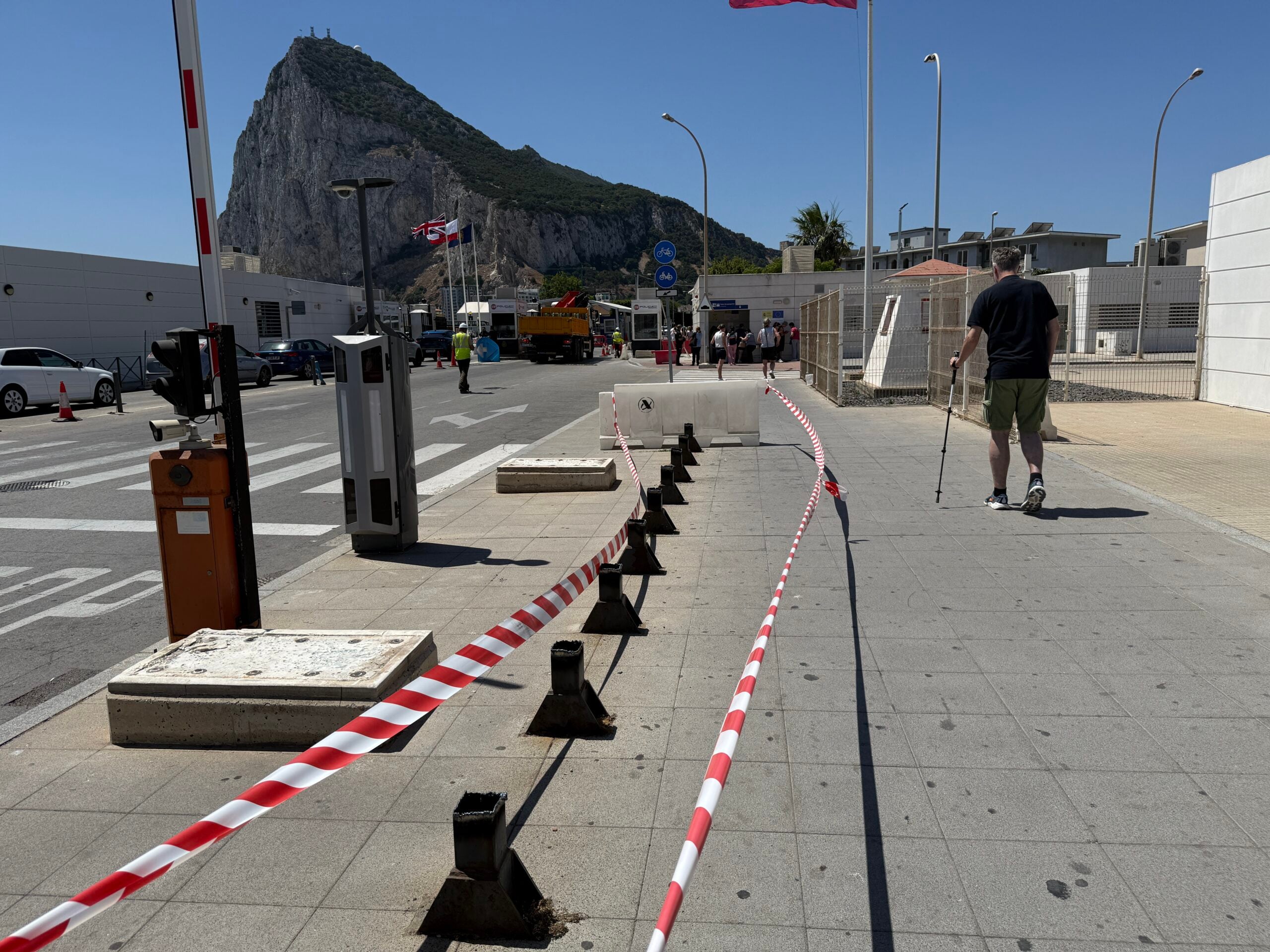
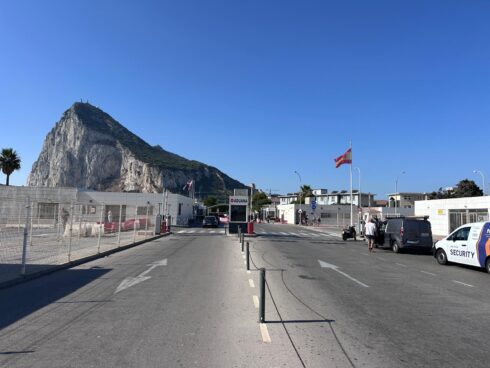
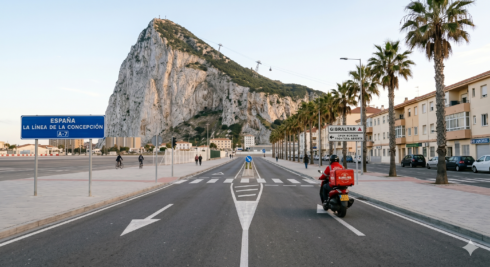
ON July 15, Gibraltar effectively became part of the Schengen area, allowing people to move freely between Spain and the British overseas territory without passport checks or the usually long, frustrating queues that had become part of daily life for decades.
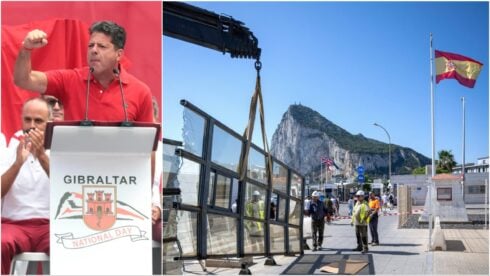
To mark the occasion, Pedro Sanchez, Spain’s Prime Minister, rushed to the border, and walked across with various ministers and Gibraltar’s leader Fabian Picardo.
As cranes dismantled sections of the old black border fence – and removal of an old metal gate being the symbolic moment – Sanchez declared that a ‘three-century-old wound’ had finally healed.
READ MORE: First crossers enjoy Gibraltar’s border-free frontier after historic EU-UK treaty is signed
“For decades, the border fence was an open wound for the thousands of workers who crossed it every day without knowing how long it would take them to get to work,” the Socialist leader said.
The moment was also witnessed by a crowd of happy faces gathered at the Gibraltar-Spain frontier to say goodbye to decades-long barriers.
“Frankly, I am very happy that this has finally been done,” said Juan Galeano, 85, a local resident who has lived through different stages of the frontier – from open doors to firmly closed gates.
“This is the best thing that the Spanish and English governments have done. Undisputedly.”
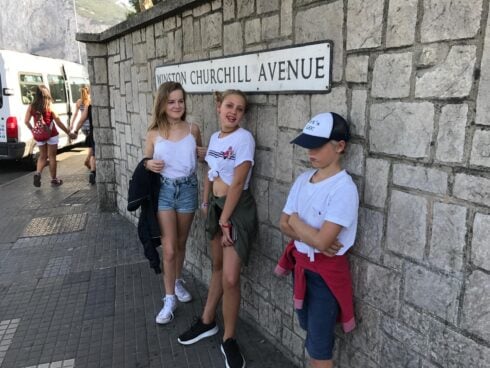
The gate was entirely closed in 1969 by Spain’s dictator, General Franco, but reopened in 1985 ten years after his death.
But the 15,000 Spanish workers who crossed it every day needed to go through queues and identity checks.
One of them is Fernando Simoes, 39, who lives on Spanish soil but works in Gibraltar.
“I cross it every day,” he said. “Without the border controls, it takes me no time to get home, but with them, the queues can last up to three hours.”
He smiles and looks relieved. “This makes my life a lot easier,” he said.
Century old disputes
But, as the show of harmony was taking place, the complexity of relations between the territory and Spain is far from resolved.
Inside Gibraltar, some residents worry that removing physical border controls could make the territory more vulnerable.
Layla Ignacio, a Gibraltarian sales beauty advisor, told the Olive Press that she always felt she lives in an ‘exceptionally safe place’.
Now, she is considering installing security bars on the windows of her ground-floor apartment.
Sovereignty is another issue
Gibraltar was captured by Anglo-Dutch forces in 1704 during the War of the Spanish Succession and was formally ceded to Great Britain under the Treaty of Utrecht in 1713.
But Spain has never given up trying to get it back.
While the territory itself remains a source of dispute, Gibraltar’s continual land reclamation into the Med has long been another point of contention.
Covering just 6.8 square kilometres (2.6 square miles), Gibraltar is one of Europe’s most densely populated territories. Much of its land is dominated by the Rock itself, leaving little room for expansion.
Its population has grown from around 32,000 to almost 40,000, increasing pressure on housing and infrastructure.
Because of that, Gibraltar has spent decades building artificial land into the sea, particularly facing La Linea. It is a move that has always sparked fury in Madrid.
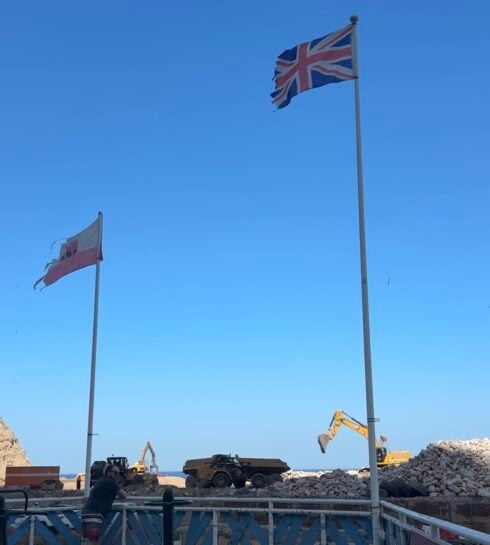
Every bulldozer that moves limestone into the sea to reclaim land pours salt into the very wound that Sanchez says has finally healed.
The latest development plan is the Eastside project, where rubble from a landfill site is creating the base for 1,300 housing units, plus a hotel and superyacht marina.
Spain argues that it never ceded the waters where they were built.
But Picardo, Gibraltar’s Chief Minister said that Spain’s complaints have ‘no legal force. It’s only political’.
Although the sovereignty of Gibraltar has been a point of contention in Anglo-Spanish relations, people love their territory with all its Britishness and showed that in a referendum in 1967 and in 2002.
Now, with the new treaty coming into force, and as Sanchez is referring to the removal of borders as ‘the last wall of continental Europe finally is falling,’ some people are unsure what it will mean for Gibraltar’s sovereignty.
“We are sceptical. Are we going to lose our sovereignty little by little?” Paul Vassallo, an English and Spanish teacher who is a Gibraltarian of Maltese descent, said to the Olive Press.
“We are a small community, and we want to remain that way.”
Click here to read more News from The Olive Press.




So on the Spanish side we drive on the right and in Gib we drive on the left so what’s the rules now ?
That’s a very good point.