

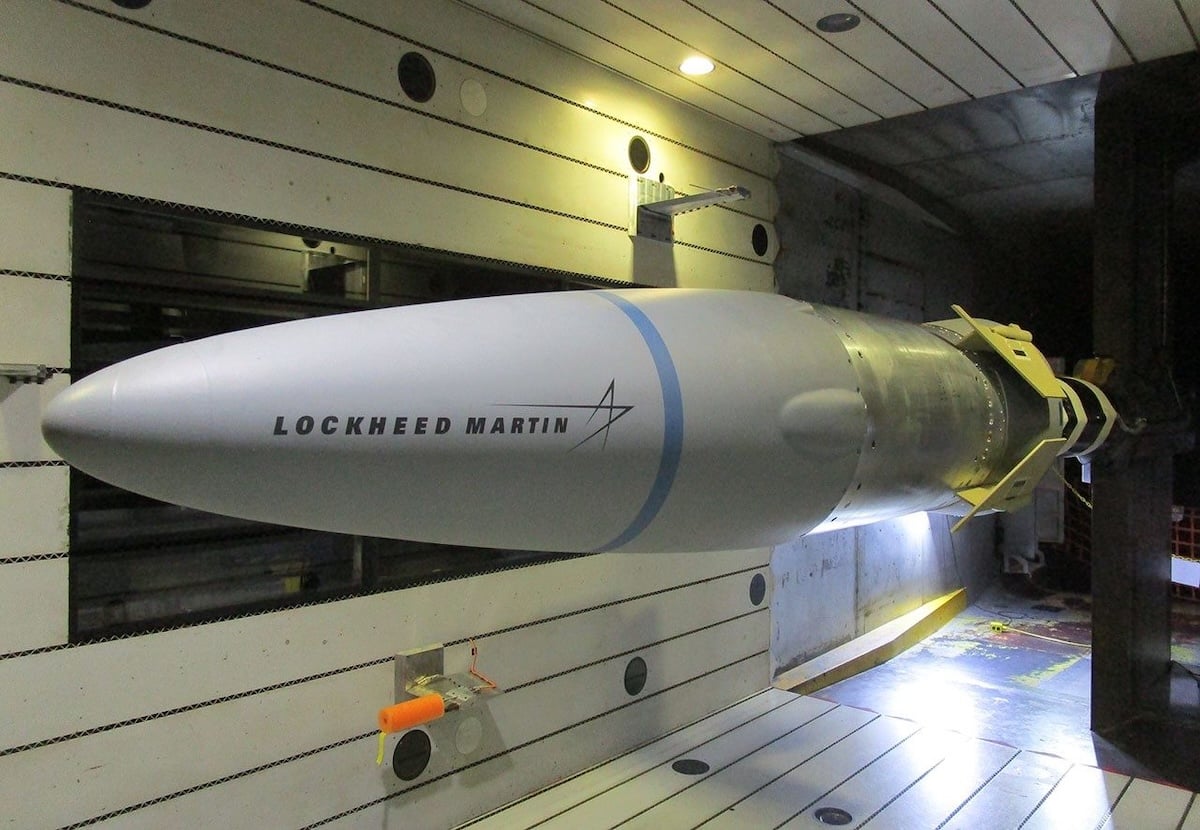
US defence firms have chosen Spain to invest tens of billions of euros building high-tech weaponry on European soil.
Lockheed Martin and RTX, two of the largest American defence contractors, are expecting ‘sustained demand’ across Europe as the continent rearms.
Both RTX and Lockheed Martin signed cooperation agreements with the Spanish government last year at Feindef, the country’s principal defence trade fair.
READ MORE: ‘Steel company bosses in Spain to be investigated by court for supplying material to Israel to make weapons
Perhaps surprisingly, industrial contacts have continued despite relations between Madrid and Washington remaining notably cool after Spain refused to allow the US to use its airbases as a launchpad for attacks on Iran.
In July, the President called Spain a “terrible partner,” said he didn’t want “anything to do with” the country, and said he had ordered Treasury Secretary Scott Bessent to halt trade altogether, “including visits.” He went on to call Spanish officials “hopeless, bad people.”
There is particular demand for air-defence systems like the Patriot missile which Lockheed Martin and RTX produce jointly.
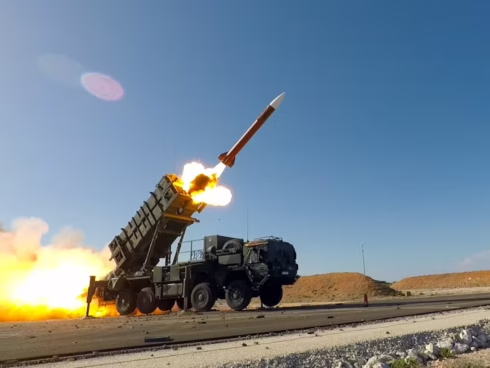
Existing partnerships already see Spanish firms Oesia and Sener manufacturing missile components for the two American companies, while Lockheed Martin and Indra signed a framework agreement two years ago to explore joint investment.
Indra is also said to be negotiating with Santa Bárbara, a subsidiary of US firm General Dynamics, which could pave the way for further shared contracts.
On the US side, defence corporations face a delicate balancing act: how to expand their Spanish and European operations without appearing to shift investment away from the United States and potentially upset President Trump.
Their response has been to pursue industrial partnerships rather than straightforward export deals, seeking European factories and subcontractors willing to manufacture American-designed weaponry locally.
RTX reported that $7 billion (€6.077 billion) of the $10 billion (€8.682 billion) in international contracts it signed during the first half of the year came from Europe, according to El Mundo.
Its chief executive pointed to the value of ‘co-production agreements on the continent’ in sustaining that growth.
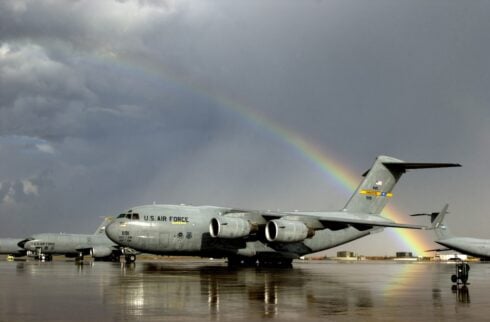
It is not only the private sector that is investing in Spanish defensive capabilities however. Despite the diplomatic differences, the US military has also invested a further $400 million €346.6 million) into Sevila’s key Moron airbase. The investment comes despite rumours that both Moron and the US naval base at Rota, near Cadiz, may be closed and relocated to Morocco.
The relationship works both ways. Indra opened its first US defence subsidiary this year, and Spanish shipbuilder Navantia is pursuing contracts to help modernise the American fleet.
Diplomatically, ties between Madrid and Washington remain strained. On the factory floor, at least, cooperation appears to be moving rather more smoothly.
Click here to read more Spain News from The Olive Press.