JUST a short drive from Alicante airport, a stretch of golden sand offers a glimpse of what the Costa Blanca looked like before apartment blocks and beach clubs transformed its coastline.
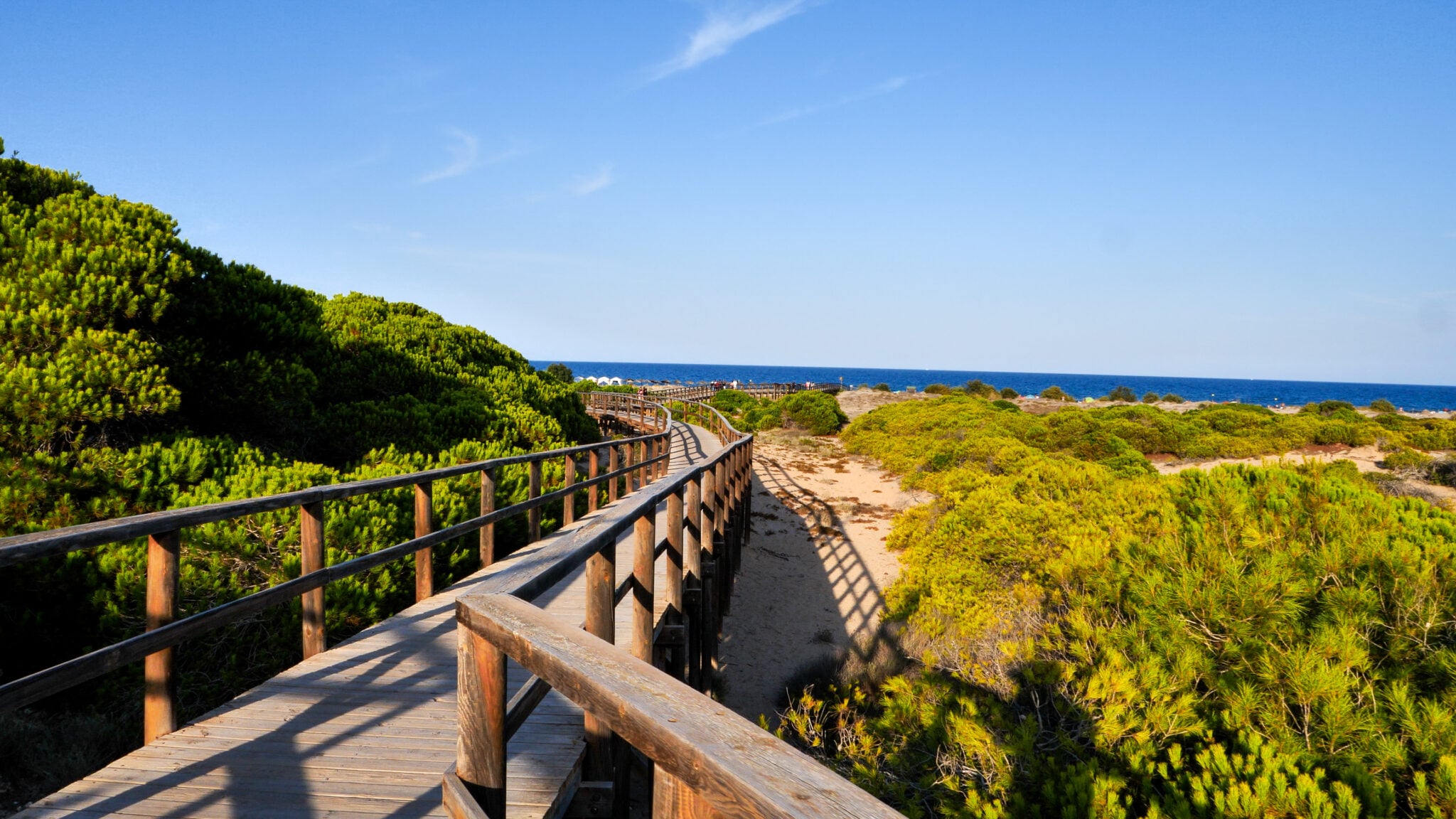
El Carabassi, between Arenales del Sol and Santa Pola, is one of the few beaches in the area where the dunes still run almost uninterrupted towards the sea.
There are no high-rise hotels lining the sand and no sprawling seafront development. Just pine trees, a wonky wooden walkway, and the Mediterranean.
The beach forms part of a wider coastal ecosystem linked to a nearby protected wetland, the Clot de Galvany. Here, dunes, pine forests, salt marshes and shallow marine waters are all part of the same natural landscape.
The beach itself stretches for around 900 metres and is characterised by fine golden sand and a system of recent and older dunes.
Visitors reach the shoreline via wooden walkways that cut through the dunes.
READ MORE: Spain’s best secret swim spots revealed: New free app helps find hidden inland bathing spots
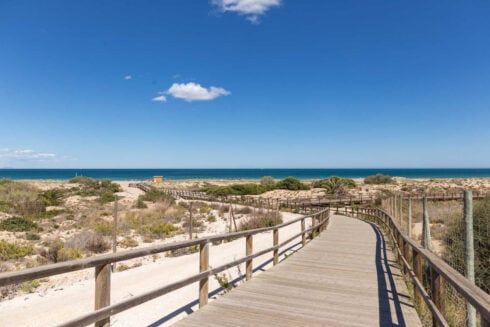
This is a deliberate measure designed to prevent thousands of pairs of feet from damaging the fragile vegetation holding the sand together.
Plants here have adapted to thrive among the dunes despite salty conditions, strong winds and a constant shortage of fresh water.
Species found in the area include sea holly, sea lily and marram grass, while the surrounding habitat supports reptiles, insects and a variety of birds.
The wider Clot de Galvany area is even more biologically important.
The 366-hectare protected site is recognised as both a Site of Community Importance and a Special Protection Area for birds, and contains a mixture of wetlands, salt marshes, dunes and Mediterranean habitats.
It provides a refuge for species including the marbled teal, squacco heron, white-headed duck and ferruginous duck – some of the most threatened wetland birds found in the region.
The shallow coastal waters nearby also form part of the same ecosystem, with the area noted for its marine life and clear conditions that make it popular with snorkellers.
The combination of dunes, pinewoods, wetlands and sea is what makes El Carabassi unusual.
READ MORE: Spain’s festival season calendar: Holy Weeks in Murcia and Albacete are standouts
Much of the Costa Blanca has undergone decades of intensive development, particularly around major resorts, yet this stretch has retained a remarkably natural appearance.
Elche’s own council describes it as an ‘ecologically valuable’ dune ecosystem, with vehicle access restricted in parts of the coastline to protect the environment.
The authorities have also taken steps to prevent large vehicles from damaging the fragile coastal landscape.
Since 2025, vehicles more than 2.2 metres wide have been prohibited from using certain access roads to El Carabassi and nearby beaches, with police warning that congestion and illegal parking can contribute to environmental damage and pollution.
The area, however, has not been completely untouched by tourism.
There are car parks, toilets, lifeguards and seasonal beach services, while the beach can become busy during the height of summer.
Deeper into the reserve, however, the crowds thin out, the sound of traffic disappears, and the dunes once again dominate the landscape.
Click here to read more Alicante News from The Olive Press.