
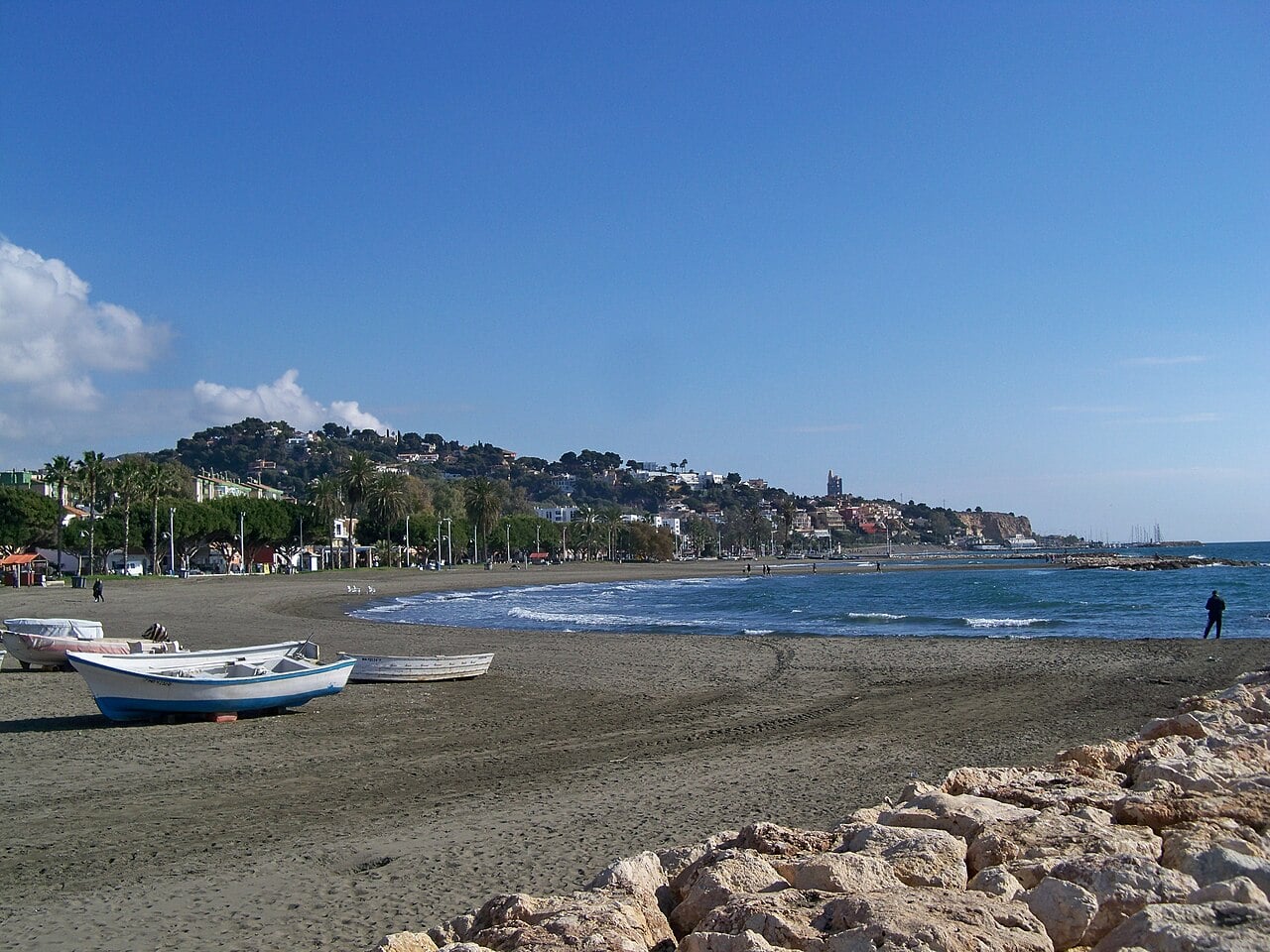
MALAGA has reopened two of six beaches shut over E. coli contamination this week, while four more stay closed under a red flag as the city’s Feria gets under way.
Campo de Golf-San Julian, near Malaga airport, and El Palo, the fishing district on the eastern seafront, had their green flags restored on Tuesday.
Guadalmar, Sacaba, Misericordia and San Andres, all on the city’s western coastline between the airport and the port, remain under the swimming ban.
New water samples taken on Monday by Emasa, Malaga’s municipal water company, showed E. coli levels falling at all four beaches, the town hall said.
But the bacteria count is still above the safe threshold set by Spain’s bathing water quality law, which requires a beach to close once E. coli readings breach the limit to protect swimmers’ health.
The beaches department has been cleaning the affected coastline, and Emasa will keep sampling the water over the coming days.
READ MORE: Three Benalmadena beaches reopen after bathers hit by mystery skin reactions – but two remain shut
The contamination traces back to a storm in the early hours of Saturday, when 14mm of rain fell on Malaga in a single hour.
Malaga’s sewer network carries rainwater and wastewater through the same pipes along much of the coast, so a downpour that heavy forces the system to release the overflow into the sea rather than risk flooding inland.
The closures have shifted since the weekend, with some beaches briefly reopened on Sunday before fresh tests forced them shut again.
READ MORE: Malaga bans swimming at six beaches after E. coli bacteria found in the water
The disruption lands in the middle of Malaga’s Feria, the city’s biggest annual festival, which runs from August 15 to 22 and draws huge numbers of visitors to the coast.
The town hall is separating stormwater and sewage pipes along the coast so heavy rain no longer forces discharges into the sea, aiming for 70% of the city’s network split under Emasa’s 2024-2029 infrastructure plan.
Work is under already way in Salvador Allende, San Javier in Churriana, Federico Orellana in the Carretera de Cadiz district, Palma-Palmilla and La Malagueta.
READ MORE: Marbella beaches reopen for swimming after fecal bacteria scare
A storm tank is also planned for tender in the coming months on the historic Carreteria sewer, which carries wastewater from the old town to the port and would store overflow rather than release it straight into the sea.
Until that tank is built, another storm as heavy as Saturday’s could force the same beaches shut again.
Click here to read more Malaga News from The Olive Press.