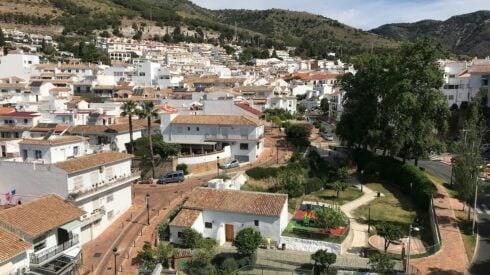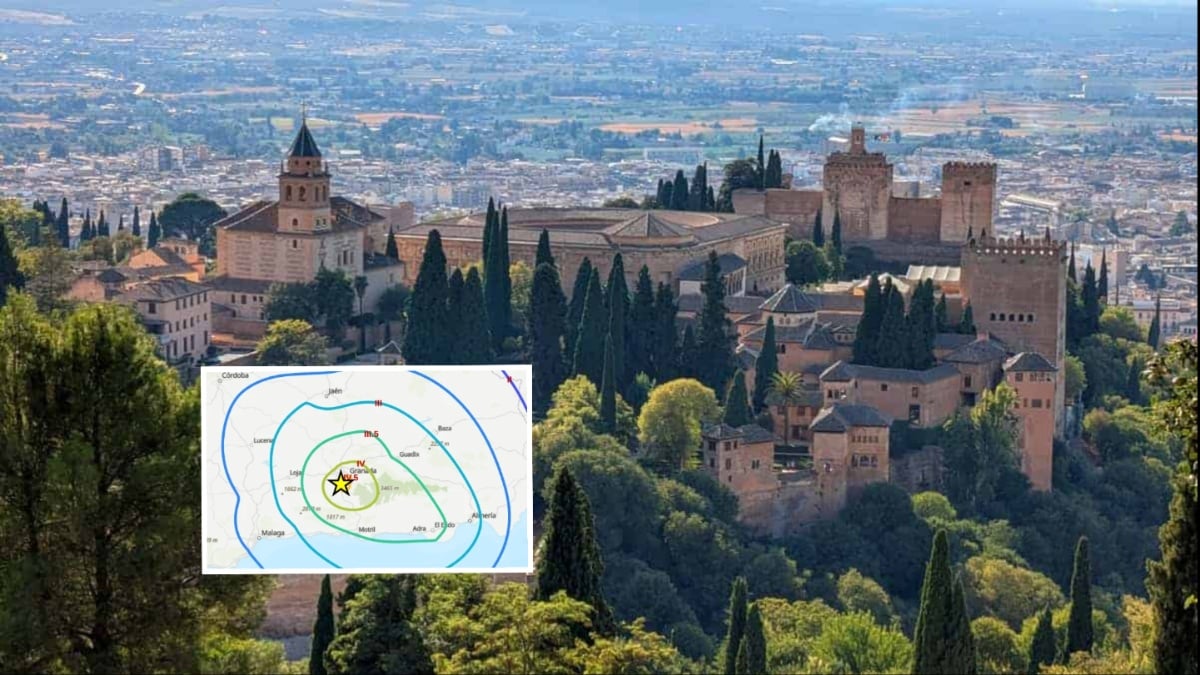
GRANADA has seen a recent earthquake swarm that has produced two magnitude-4.8 quakes and dozens of smaller, still-felt aftershocks since August 13.
While no one has been seriously hurt, the series has left locals and expats alike jumpy at the possibility that a bigger one could be round the corner – with no clear end in sight.
WHY GRANADA KEEPS SHAKING
Granada sits inside the Betic Cordillera, the mountain range running across southern Spain that formed while the African tectonic plate has been pushing slowly into Europe over millions of years.
That collision has left the ground beneath the city threaded with shallow faults capable of exactly this kind of sequence, according to Spain’s national geological survey (IGME-CSIC) and the Andalusian Institute of Geophysics.
Both briefed the regional government’s seismic-emergency advisory committee days after the swarm began.
READ MORE: Granada rocked by second earthquake in three days as 4.6-magnitude tremor felt across Andalucia
Mercedes Feriche, a researcher at the institute, told Spanish outlet Vozpopuli that energy from one earthquake does not simply vanish once it is released.
It can instead load into a neighbouring fault, building tension there until that fault ruptures in turn, which she said could explain why the strongest tremors have jumped between different epicentres rather than repeating in one spot.
Nieves Sanchez Guitian, of the Ilustre Colegio Oficial de Geologos, went further, telling El Debate that Granada and Malaga are currently the two areas of greatest earthquake risk anywhere in Spain, and that a major quake could strike the region at any moment.
READ MORE: WATCH: Granada earthquake leaves three injured and forces evacuation of iconic Alhambra palace
However, it should be noted that that is a standing assessment of the wider zone rather than a forecast that this specific swarm will escalate.
Residents can rest easy – no scientist briefing the regional committee has predicted the current sequence itself will produce anything bigger than the two magnitude-4.8 quakes already recorded.
HOW IT HAS UNFOLDED
The sequence opened quietly, with two foreshocks on August 13 of magnitude 3.1 and 3.6.
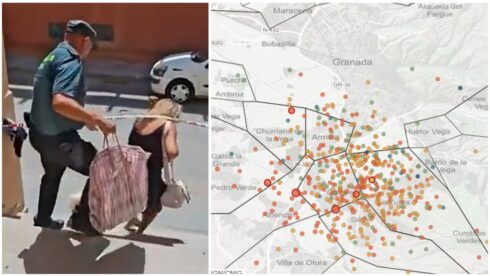
The first big shock landed just after 1am on August 15: a magnitude-4.8 quake centred on Alhendin, a town in Granada’s southern metropolitan belt, shallow enough to be felt across more than 500 municipalities as far away as Murcia and Madrid.
Three days later, on August 18, a second magnitude-4.8 quake struck Otura, a neighbouring town, followed within two hours by three more quakes above magnitude 3.9 in Alhendin, Gojar and Churriana — the most intense single day of the swarm, and the one that caused the bulk of the damage.
That damage has been real, if not catastrophic.
READ MORE: Granada earthquake swarm forces 600 people from their homes
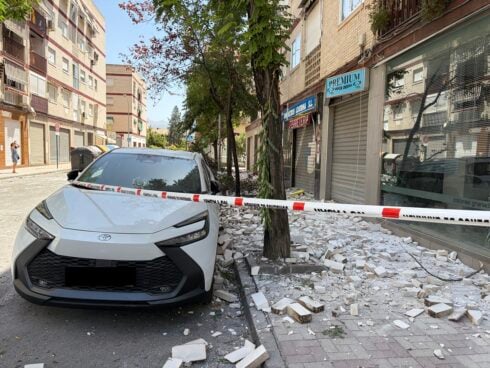
By August 24 the regional government’s housing chief, Rocio Diaz, said technical teams had inspected 976 buildings, of which 217 needed preventive work and 47 were not currently safe to live in.
Six apartment blocks in Las Gabias, a town on Granada’s western edge, remain evacuated, with 371 homes empty and dozens of residents still sheltering in a Granada city youth hostel.
Nobody has died, and only a handful of minor injuries have been reported, mostly from people leaving buildings in a hurry rather than from falling debris.
WHEN WILL IT STOP
Nobody can say, and every scientist involved has said so plainly: earthquakes cannot be predicted, only described once they have happened.
What officials are working from instead is precedent.
Raul Perez Lopez, of IGME-CSIC, has told the regional committee this swarm closely resembles one that shook Atarfe and Santa Fe, two towns west of Granada, in 2021 — a sequence that also had its most violent phase compressed into about five days, much as this one has.
That 2021 swarm did not end cleanly.
After its intense phase passed, it kept producing isolated, feelable tremors for months, including one further magnitude-4.4 quake a full seven months after the main shock.
On that comparison, Granada’s current run of aftershocks – smaller, but still felt as recently as August 25 – could plausibly continue in the same on-and-off pattern well into next year, rather than stopping outright any time soon.
THE SEPARATE CLUSTER OFF CADIZ
Granada is not the only part of Andalucia that has shaken this week.
Spain’s national geographic institute (IGN) has recorded a cluster of small earthquakes off the Cadiz coast since August 21, including a magnitude-3.3 quake near Cabo de San Vicente and two further quakes, of magnitude 2.5 and 2.7, in the Gulf of Cadiz itself.
None of the Cadiz quakes has been felt on land, and this is a different phenomenon to Granada’s swarm, not an extension of it.
The Gulf of Cadiz earthquakes originate far deeper, in the oceanic crust 30 to 60 kilometres down, where the African and Eurasian plates are converging directly – the same general zone that produced the 1755 Lisbon earthquake, magnitude 8.5, which sent a tsunami of up to 15 metres into the gulf and killed around 15,000 people.
This week’s tremors are nowhere near that scale, but the zone’s history is why the Gulf of Cadiz stays under permanent watch even when, as now, the activity itself is minor.
That 2021 swarm went quiet for months before one final, unannounced magnitude-4.4 aftershock arrived – and it is that pattern, not any single prediction, that Granada is now being told to expect.
Click here to read more Andalucia News from The Olive Press.