
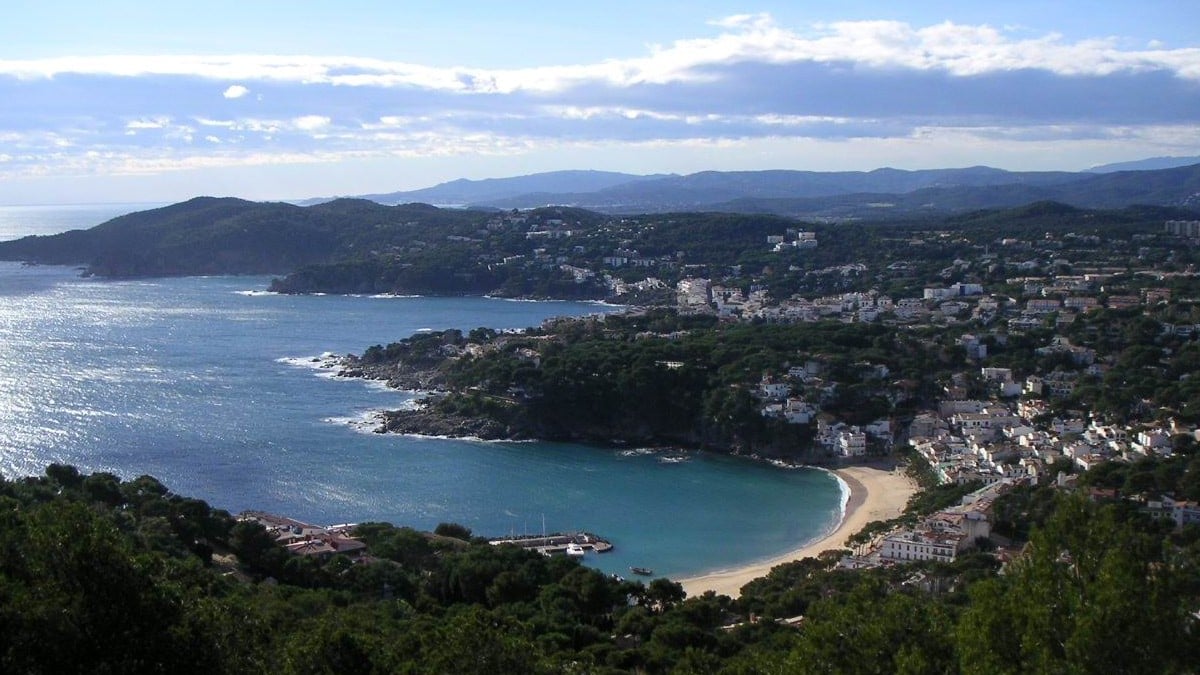
THERE was a time, back in the 1950s, when celebrities called it ‘Spain’s Saint-Tropez’.
For around a decade, the glitzy holiday resort of Llafranc drew some of the world’s biggest movie stars and musicians to the Costa Brava – including Hollywood legends Sophia Loren, Elizabeth Taylor and Kirk Douglas, alongside Spanish flamenco virtuoso Paco de Lucia.
But Llafranc’s appeal was never just about pristine beaches or quaint, whitewashed fishermen’s homes.
This tiny town near Palafrugell, around 130km northeast of Barcelona, has a history stretching back thousands of years, with traces of its extraordinary past still scattered around the modern-day resort.
Nestled between lush pine forests and a shimmering expanse of azure Mediterranean water, Llafranc is home to everything from a prehistoric burial chamber to the remains of an ancient Iberian settlement.
There is even a Roman wine press – a reminder that people were producing wine here almost 2,000 years ago.
The oldest relic is the Dolmen de Can Mina dels Torrents, a prehistoric burial chamber dating back around 5,000 years.
READ MORE: These are the three most affordable holiday destinations across Spain for a quick August getaway
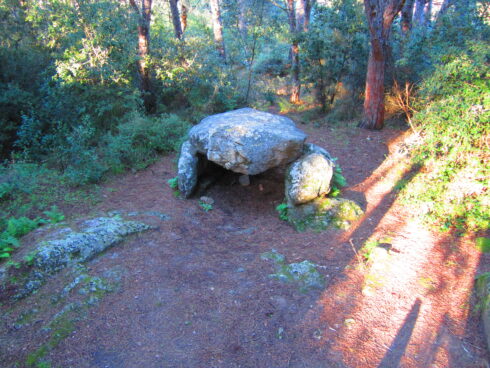
Built from enormous slabs of stone, the dolmen was used as a communal tomb during the Neolithic period.
It was discovered in 1964 and offers a remarkable glimpse into the lives – and deaths – of the people who inhabited this corner of the Costa Brava thousands of years ago.
Not far from the dolmen, at nearby Sant Sebastià, lie the remains of an Iberian settlement dating back to between the sixth and first centuries BC.
Its elevated position gave its inhabitants sweeping views over the sea and surrounding countryside – a useful vantage point for spotting approaching enemies or traders.
Archaeologists have uncovered remains of houses, workshops and storage areas, revealing a settlement that was once a hive of activity.
Then the Romans arrived, and Llafranc became an important centre for wine and pottery production, with local vineyards feeding a thriving trade across the Mediterranean.

The remains of a Roman wine press and cellar can still be seen in the town, bringing that ancient industry remarkably close to the modern-day holiday resort.
And Llafranc’s celebrity past is not entirely confined to the 1950s.
British author Tom Sharpe, best known for his wildly popular Wilt novels, moved to the town in 1992 and remained there until his death in 2013.
He fell so in love with the village that it became his permanent home and the setting for much of his later life.
Today, Llafranc is considerably quieter than during its glamorous heyday – though that may be part of its charm.
Click here to read more Olive Press Travel News from The Olive Press.