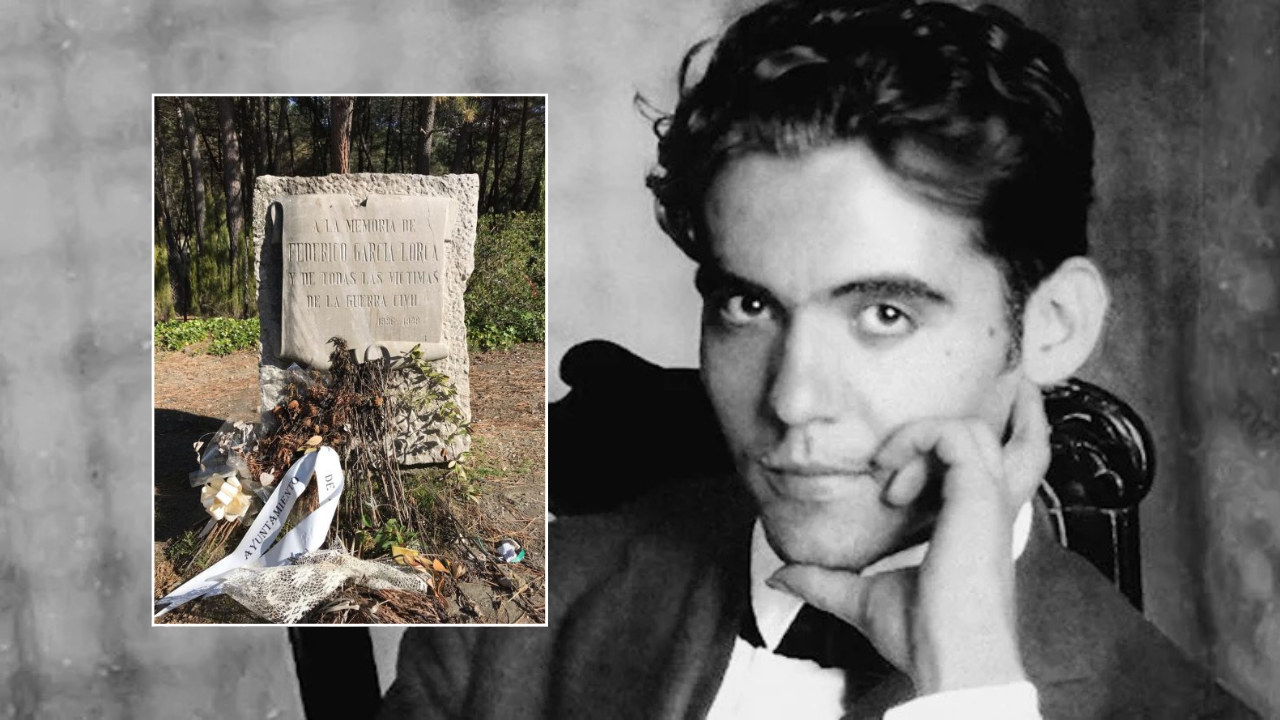
This article was first released in January 2020 by Dimitris Kouimtsidis and has been republished to mark the 90th anniversary of the death of Federico Garcia Lorca.
THE city of Granada is famous for so many reasons.
The Alhambra Palace attracts myriads of tourists daily, as does the Moorish architecture evident throughout the narrow streets of the last Spanish city to be recaptured by the Christians in 1492.
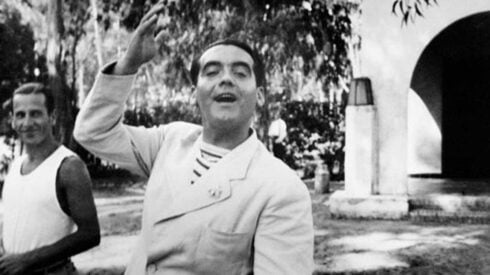
The provincial capital is also feted for its most famous literary son – the poet and playwright Federico Garcia Lorca.
You may be familiar with the name, and even with his controversial murder, but few people realise the full extent of his legacy.
Lorca was born in 1898 in Fuente Vaqueros, a small village outside Granada, into an economically comfortable family.
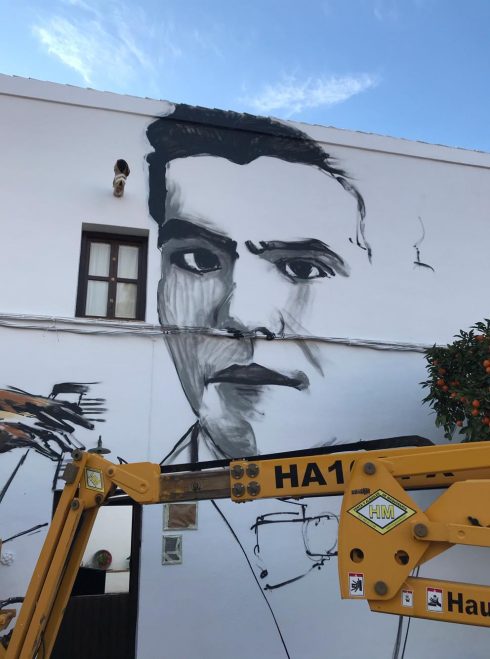
The house where he lived until he was ten is now a museum – a perfectly preserved early 20th century home where visitors are surprised to see, along with his writings, some of his artworks and his first piano.
Although not as famous for his art as his close friend Salvador Dali, many people forget that Lorca also drew and played music.
The family moved twice more – first to the nearby village of Valderrubio; then, when Lorca was 28, to Huerta de San Vicente, then on the outskirts of Granada but much closer to the city centre today.
Both these homes are also museums showcasing the life of this influential writer.
READ MORE: Following in the footsteps of Federico Garcia Lorca through Granada’s Alpujarra

According to the guide at Huerta de San Vicente, Lorca described his final home as the perfect place for writing as it was relaxed.
“He needed this space to clear his head after the time he spent in Madrid and Barcelona,” explained the guide.
His work was ‘crazy, quite out there’, added the guide, which may explain why it so inspired people, and why Lorca remains iconic more than a century later.
Anastasia Revi, an artistic director, theatre director and workshop facilitator who has rigorously studied Lorca’s works and run multiple workshops on the Spaniard, echoed the sentiment.
“His stories are full of surreal elements and they create this sense of magic realism.
“Even after all these years of studying his plays I’m still amazed. The way he used language is full of similes and metaphors that ‘trip out’ the audience.”
Blood Wedding, considered his most famous play, is awash with examples of magical realism such as the moon speaking as if it’s a human character.
His work tended to be quite dark, emotional and radical for the time.
A common theme running throughout is the spirit of duende (passion doesn’t fully describe it).
Duende controls his larger-than-life characters, most of whom struggle with a form of suppressed desire, like Lorca himself who was homosexual – a factor that probably played a part in his untimely death.
He was also an outspoken socialist and when the Civil War erupted in Spain in 1936, he was arrested by fascist forces and summarily executed.
Prior to his assassination he was held prisoner in the village of Viznar a few miles outside of Granada.
He was most likely shot along with other ‘undesirables’ somewhere between the villages of Viznar and Alfacar.
The exact location is unknown and his body has never been found, despite numerous projects to discover his burial site, the most recent in 2016.

Now there is talk that the investigation may be reopened once more.
Celebrated Hispanist Ian Gibson told the Olive Press: “It’s about time they carried on with his search. It is abhorrent that Spain’s most famous playwright and poet is still buried in an unmarked grave.”
The route from Viznar to Alfacar is only three kilometres but as you walk the winding paths up the Andalucian mountains, you can’t help but wonder what the poet was thinking on this final leg of his earthly journey.
He wrote of his own death often. These lines from his 1929 poem The Fable and Round of the Three Friends, are particularly prophetic: ‘They looked for me in cafes, in cemeteries, in churches, but they didn’t find me. They never found me? No. They never found me’. Could he have known?
Halfway between the two villages, a serene wooded area perfectly representing the Granada countryside hides a grim secret beneath its scented pines.
The Barranco de Viznar memorial, erected beside an olive tree on the site, only hints at the untold story – marking the spot where numerous republicans were mown down by firing squads and buried in unmarked graves.
Just outside Alfacar, a park named after the playwright has become a point of pilgrimage, its memorial stone showered with flowers all year round by visitors who make the trek up the mountain to visit his supposed place of death.
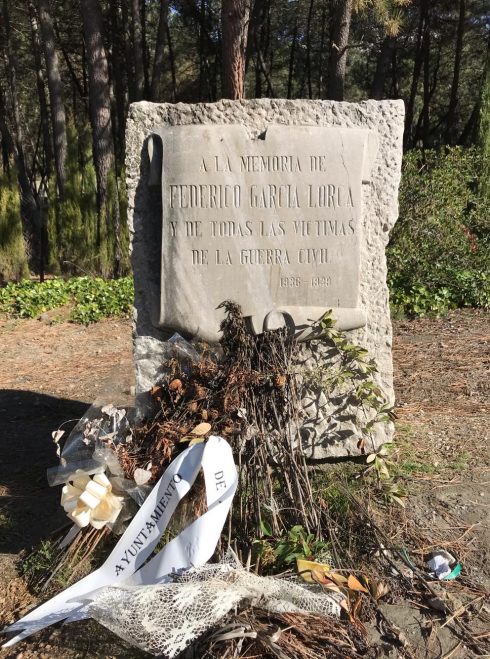
His ‘murder’ is a war crime that has given the poet legendary status. “He was killed very young and his execution at the hands of fascists for his liberal beliefs has only helped to elevate his status,” says Revi.
There is a sense that the Spanish, and the people of Granada in particular, are ashamed by the murder of one of the world’s most famous poets and playwrights on their own soil.
It might have been why I wasn’t allowed to take any pictures at his museum homes.
“You need special permission from the local council”, I was told.
My request to interview the tour guides about their fellow Grenadino received the same point blank refusal.
Why does the local government have all these rules in place for journalists wanting to write a piece on someone as famous as Lorca?
Shame would certainly make sense, and not just because of the snuffing out of an exceptional life barely half lived – he was just 36 when he died.
It is believed that a staggering 115,000 missing souls are still buried in unmarked graves throughout Spain. Federico Garcia Lorca was just one of them.
Click here to read more La Cultura News from The Olive Press.