
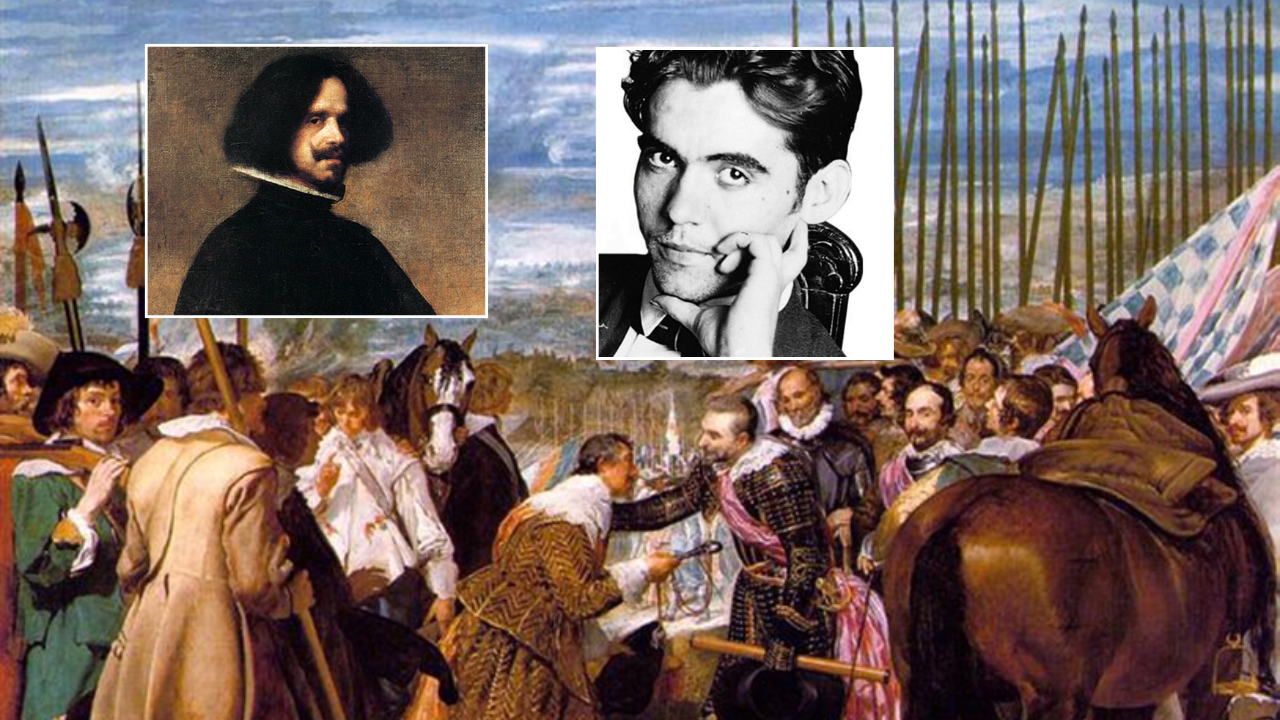
DIEGO Rodriguez De Silva y Velazquez, one of the world’s greatest artists, was baptised in Seville on 6 June of the last year of the 16th century.
The practice of the time was to have babies christened as soon as possible after birth, so it is assumed – since no records exist – that he was born the previous day.
A contract document has survived which shows that the ten-year-old Diego was apprenticed to a painter.
They must have got on well, because Velazquez eventually married his master’s daughter.
In 1622, the ambitious young artist headed for Madrid, with letters of introduction.
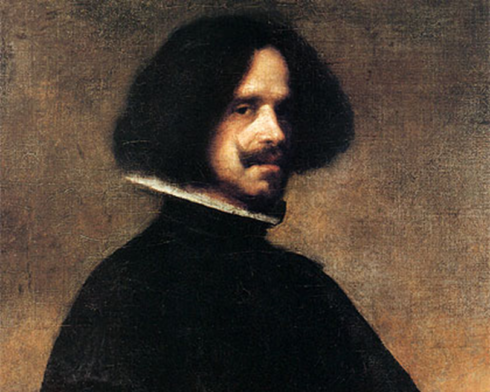
After painting a portrait of the writer Gongora (probably via an Andalucian contact: Gongora was from Cordoba), Velazquez got lucky.
The king’s personal portraitist died. In those days, rulers needed a lot of images, which were sent to other monarchs as diplomatic gestures.
Diego got the job.
For the next forty years, he dominated European art, painting kings and popes, and inventing clever visual tricks (one of his characteristic ruses was to include a window in his design, which might itself be a painting).
5 June, 1625 – Breda Surrenders to the Spanish
When Carlos V became king of Spain in 1516, he brought both a blessing and a curse.
As heir to the Holy Roman Empire, he added the Low Countries to Spain’s possessions, thus expanding the empire.
However, this was exactly the moment in history when Europe’s northern countries were moving away from the control of the South.
A century and a half of painful conflict ensued, at the end of which Holland broke free of Spain.
The life of Diego Velazquez spanned the period of Spain’s long decline. Indeed, his work is a kind of ‘readout’ of the nation’s dwindling self-confidence.
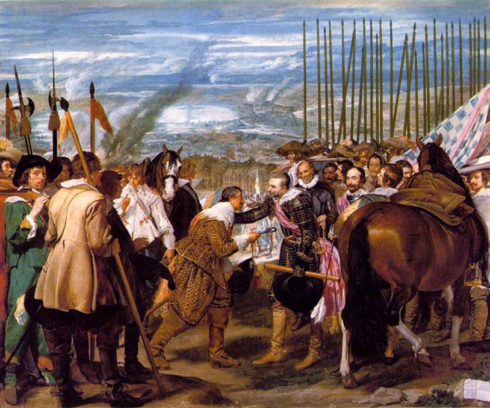
It was in 1630 that King Felipe IV commissioned Velazquez to paint a canvas, celebrating the Surrender of Breda.
Gradually losing the war, the Spanish court tried to maximise its occasional victories.
Breda, a small city in the south of what is now Holland, surrendered to the Spanish in 1625.
Velazquez’ rendition of the event is a masterpiece, and can be viewed today in Madrid’s Prado Museum.
The Velazquez painting shows the mayor of Breda handing over the keys of the city to the Spanish commander.
On the right, a horse, shown in brilliant perspective, gives depth to the design.
Best of all, the Army of Spain appears as an array of serried lances, suggesting unity and strength.
5 June, 1898 – Federico Garcia Lorca is born
Recognised as the greatest writer in Spanish of the twentieth century, Lorca had the luck – and the misfortune – to come from Granada.
He was lucky, because that delightful little city is a world unto itself, where rich and poor, payos and gypsies, rub shoulders.
Lorca learned hundreds of words and proverbs, arising from the local dialect, which enriched his poetry.
His misfortune was to be a ‘man of the people’ in a period (the early 1930s) when Fascism had taken hold in Granada.
Lorca also happened to be gay, and this was ‘unacceptable’ to local right-wingers.
During the 1920s, he worked with the composer Manuel de Falla to make the people of Granada aware of the city’s rich flamenco tradition (up to this point, flamenco had always been despised by non-gypsies).
Experts say that the popularity of Andalucia’s native art-form is directly attributable to Lorca.
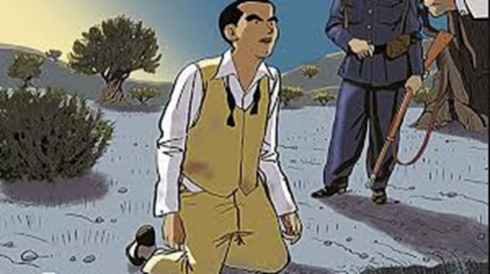
In the summer of 1936, Lorca (now a famous poet and playwright) was in hiding in the Granada home of his old friend, Luis Rosales. A gang of Fascists found out where he was and arrested him on their own authority.
He was taken to Viznar, a village in the hills to the north of the city. And there he was murdered.
For decades, very little was known of Lorca’s fate.
In the 1960s the Irish writer, Ian Gibson, investigated the events surrounding the poet’s death and finally established the truth.
Though Lorca’s body was never found, the spot where he was killed has been identified (it is now a garden of remembrance).
And each summer, Viznar holds a Lorca festival.
Click here to read more Spain News from The Olive Press.