
The year 1808 was a bit like 1940.
An aggressive conqueror, seemingly invincible, was sweeping across Europe, using his armies to subject nation after nation to his will.
Like Hitler in 1940, Napoleon was enjoying a string of easy victories.
The grande armée was apparently unstoppable. And now, in 1808, he unleashed the dogs of war on Spain.
Community after community crumbled in the face of the foe. In June, the French reached Zaragoza.
The capital city of Aragon was in no condition to resist.
Zaragoza had not fought with anyone for five centuries.
There were hardly any Spanish soldiers in the city. And Zaragoza was full to bursting-point with non-combatants – women and children of the outlying villages who had heard rumours that the French were approaching, and had fled to the city, hoping for refuge.
All the handful of able-bodied men could do was load the city’s ancient cannon, and point it at the Portillo, the main gate.
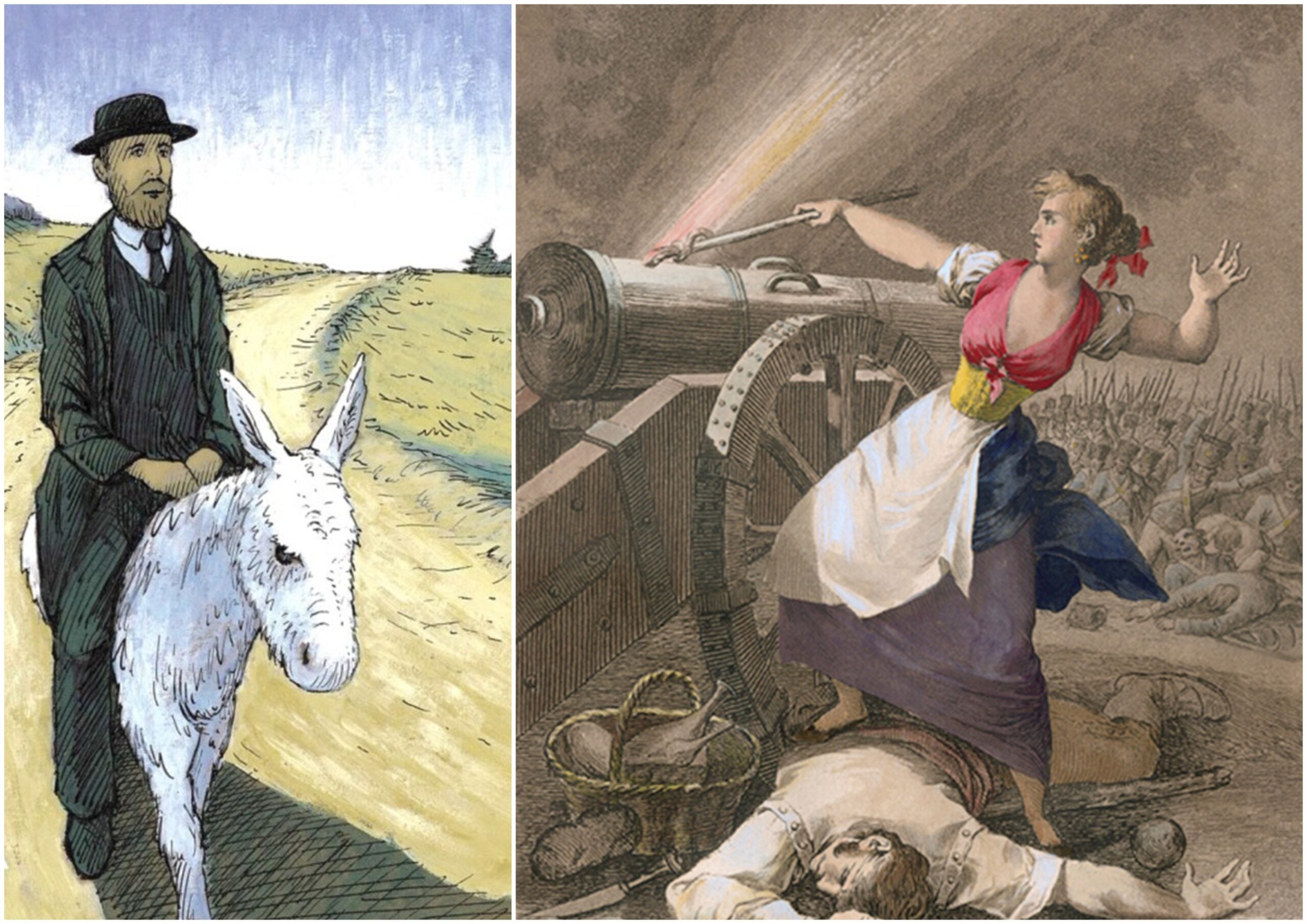
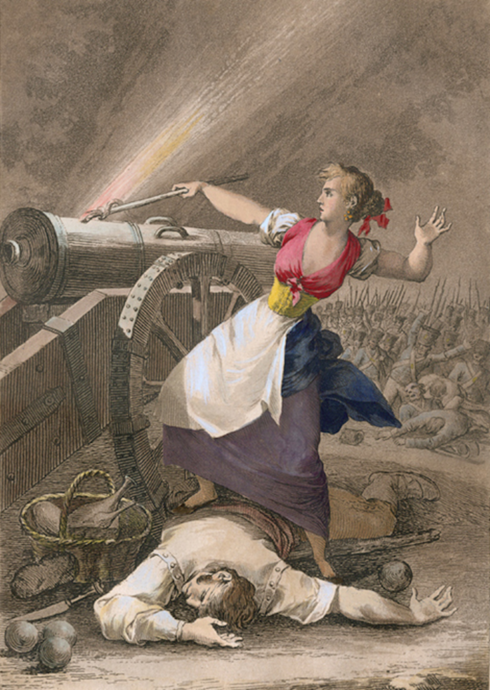
Agustina Domenech, 22 years old, had come into town from a nearby village.
She had heard that the defenders of Zaragoza were hungry, so she brought all she had – a wicker basket, full of apples.
As the French army came through the city gate, Agustina snatched up the smouldering fuse, and touched it against the cannon’s firing-hole.
The effect was sensational.
That single shot devastated the invaders. They broke ranks and ran away. Fearing that the Zaragosans had other ‘surprises’ waiting for them, the enemy officers withdrew.
For the first time ever, Napoleon’s army had been driven off the battlefield!
‘Agustina de Aragon’ lived for another half-century after the day she single-handedly defeated the French.
She was awarded a lot of medals over the years, and she wore them with pride.
They say she used to hang around the Portillo, to pounce on visitors, and regale them with her story. Who can blame her?
29 MAY, 1958: JUAN RAMON JIMENEZ DIES
In many ways, Juan Ramon Jimenez was not a very impressive man.
He was born, and passed most of his life, in the little village of Moguer, just outside Huelva.
Juan suffered from what we would now call clinical depression. He was timid, and didn’t talk much.
But he could write beautifully.
This, in a way, added to his problems. We talk today about people being ‘catphished’ – meaning that criminals find a vulnerable person and steal their identity.
It happened to Juan, a hundred years ago.
Thieves invented a fictitious beautiful woman (Georgina) and wrote fan letters to Juan, praising the poems he published in local newspapers.
Believing that Georgina was a real person, he struck up a correspondence with ‘her’.
At last, he’d found a human being who understood him, and whom he could trust. He fell in love with Georgina.
When the fraudsters started asking for money, the police got involved, and the ruse was discovered. There was no Georgina. The devastating effect on Juan’s mental health is not difficult to imagine.
He swore that he would never leave Moguer again, and would keep people at arm’s length.
It’s strange how fate works. This unhappiness led to the most meaningful relationship of his life, and the Nobel Prize for Literature.
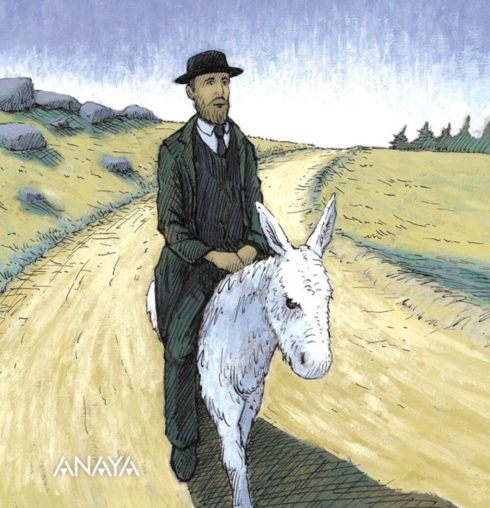
Juan Ramon Jimenez bought himself a donkey.
It was grey (Spanish people call a white horse or donkey ‘silver’). So he named it ‘Platero’ (‘Silversmith’).
Out of the deep, wordless love that grew between man and animal, emerged a book which every Spaniard knows and adores – ‘Platero y Yo’ (‘Platero and Me’).
Nothing much happens in the book.
The two friends, man and donkey, wander around Moguer. They are inseparable. They watch the timeless work of the peasants, growing and gathering food.
On summer afternoons, they lie in the long grass of the cemetery watching the butterflies, and listen for the distant train, carrying the metal ore of Rio Tinto Zinc to the ships which will take it to England.
Platero the donkey is one of the most charming characters in world literature.
When Juan and Platero lie down in the square to listen to a little girl singing a lullaby to her baby brother, the donkey falls asleep!
Click here to read more Spain News from The Olive Press.