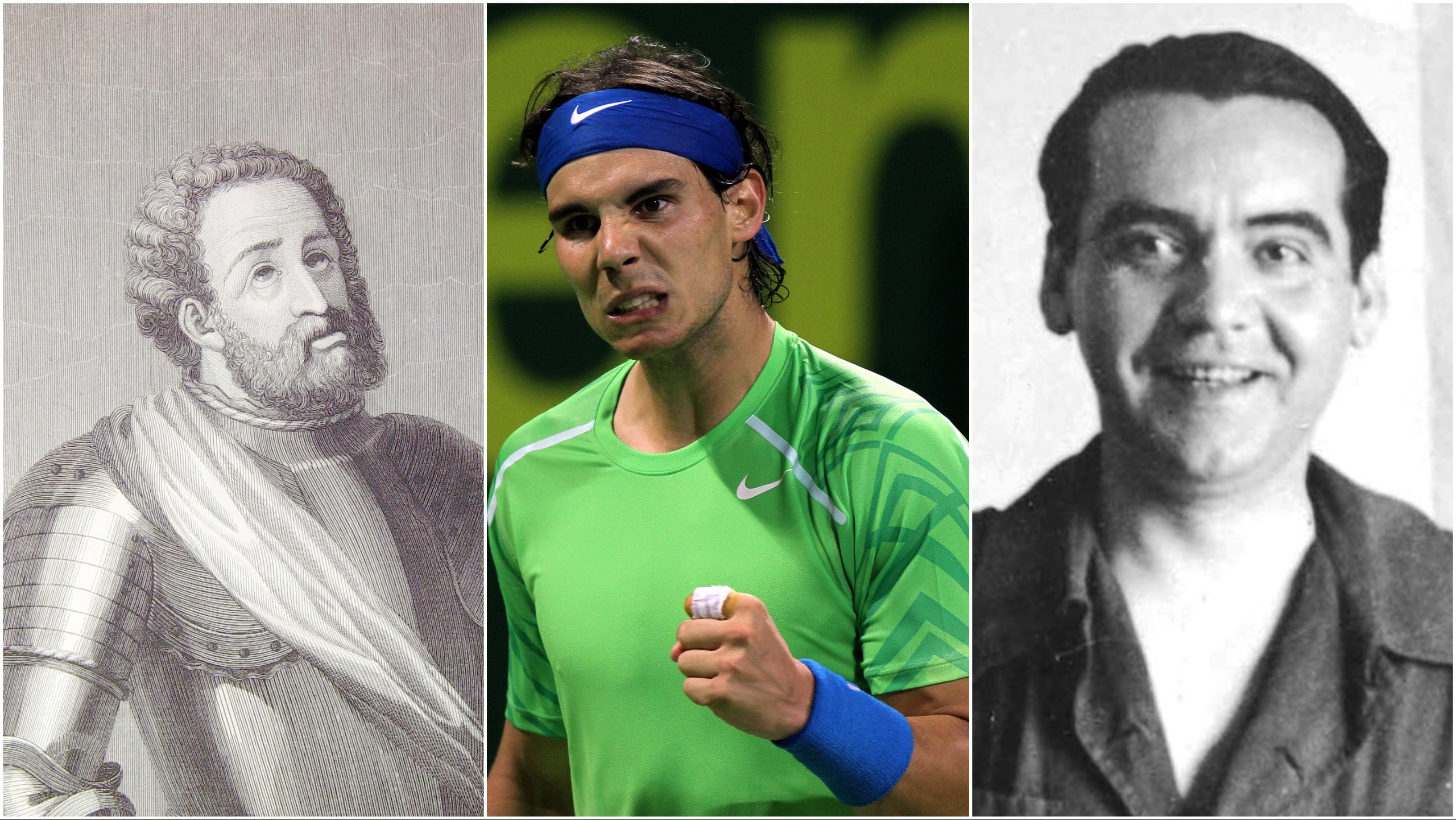
WELCOME to the latest edition of This Week in Spanish History, written by Michael Coy.
14 AUGUST, 1084 – El Cid wins major battle
In his long and eventful career as a warrior, Rodrigo Vivar (known to legend as ‘El Cid’) fought for both the Christians and the Muslims.
It’s hard, after a thousand years, to understand with clarity what his motives were, but he seems to have aimed at local control of the city of Valencia.
One of his greatest triumphs, the Battle of Morella (14 August, 1084) saw him leading Arab armies against the combined forces of Aragon and Navarre.
14 AUGUST, 1920 – Eusebio Perez Martin born
The Spanish Civil War broke out exactly 90 years ago, in the summer of 1936.
Eusebio Perez of Barcelona was 16 years old at the time, but he didn’t hesitate. He signed up to fight Fascism and to defend Catalunya.
After three years of war, fighting on the Aragon Front (just like the English writer, George Orwell), he fled to France to avoid capture.
Unfortunately, Hitler’s forces invaded in 1940, and Perez was arrested and sent to the Mauthausen Concentration Camp. He spent the entire Second World War there, being liberated by the Americans in May 1945.
READ MORE: Art Deco dreams: How Spain gave glamour a home in the hardest of times
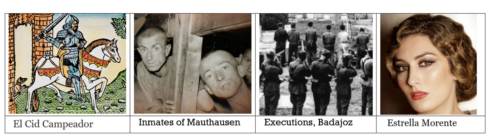
14 AUGUST, 1936 – The massacre of Badajoz
Franco had one enormous advantage in the early phase of the Civil War.
The experienced soldiers of Spain’s ‘Moroccan’ units were solidly on his side. Opposing him were communities of poorly-armed, untrained civilians.
As he advanced north from Sevilla towards Madrid, he took town after town with little effort.
However, the other side of the coin was, his units were numerically tiny, compared to the anti-fascists.
This came to a head when the Franco army captured Badajoz – a major city.
The soccer stadium filled up with thousands of prisoners and there were not enough men to guard them.
Franco’s solution? To execute them.
14 AUGUST 1980 – Estrella Morente born
She’s more than a singer. She’s the voice of flamenco in the 2020s, and she’s currently on a massive European tour.
Estrella Morente has, on top of beauty and boundless talent, an impeccable flamenco pedigree.
The Morente dynasty is super-famous in Granada: Estrella herself lives in the Gabias, a cluster of historic villages just south-west of the city.
You can catch her live in Mallorca on 4 September, or Barcelona on 29 October.
15 AUGUST, 1171 – King Alfonso IX born
Alfonso the Ninth was that rarest of things – a medieval monarch who was enlightened.
Only 18 years old when he inherited the throne of Leon and Galicia, Alfonso not only founded one of the world’s earliest – and best – universities (Salamanca), he also summoned a ‘real’ parliament, which could challenge his decisions.
He also drove the Muslim rulers out of Badajoz and Caceres.
15 AUGUST, 1939 – Cave of Bats discovered
The mountainous terrain south of Cordoba, between Lucena and Alcaudete, is very lonely and remote.
Imagine how deserted it must have seemed in the months just after the Civil War!
Four teenage boys decided to investigate the Cave of the Bats – and what they found was astonishing!
Bats, yes – but also wonderful stalactites, prehistoric paintings and artefacts like necklaces and shoes, made by human hunter-gatherers who lived here three thousand years ago!
READ MORE: The history behind Ceuta and Melilla – how Spain came to own two cities on mainland Africa
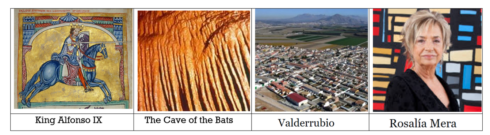
15 AUGUST, 1943 – Valderrubio is named
The village of Valderrubio, just to the west of Granada, is both beautiful and historic.
It lies on the lovely irrigated plain called the Vega, and it was once the home of Federico Garcia Lorca.
But Valderrubio has an embarrassing secret. It used to be called Asqueroso – which means ‘disgusting’.
By popular demand, it changed its name in 1943.
15 AUGUST 2013 – Founder of Zara dies
When Rosalia Mera Goyenechea died in 2013, aged 69, she was the world’s richest self-made woman.
She and her husband founded the fashion house of Zara in 1975, in A Coruña, and built it into a multi-million-euro enterprise.
Estimated to be worth 5 billion euros at the time, she was on holiday in Menorca when she suffered a fatal stroke.
15 AUGUST, 1487 – Malaga becomes a Christian city
The religious festival of The Assumption falls on August 15.
In the year 1487 it coincided with the Reconquista, which was nearing its climax.
The ‘Reconquest’ was the slow, steady military campaign by which Spain’s Christians won their land back from Muslim control.
Since it began in 711AD, the Reconquista had taken 776 years and was almost complete.
After Malaga fell to the Christians, only Granada remained to be ‘liberated’.
The Malaga surrender happened on the day of the Assumption, and it was decided to hold the city’s annual ‘feria’ on that date – a tradition which continues to this day!
16 AUGUST, 1519 – Cortes burns his boats
Selfish, greedy and cruel, admittedly – but few if any explorers in human history have had the vision and the courage of Spain’s Hernan Cortes.
We have a detailed record of his campaign to take control of Mexico because one of his officers – Bernal Diaz – kept a journal.
When his tiny force of native Spanish men baulked at the prospect of marching on the Aztec capital, Cortes forced their hand by burning the Spaniards’ only hope of retreat – their ships.
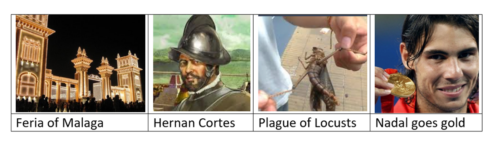
16 AUGUST, 1954 – Tenerife hit by plague of locusts
With glorious temperatures all year round, cuisine to die for and interesting beaches (some with black sand), the Canaries seem like paradise on earth.
However, the islands’ proximity to Africa is the source of one occasional drawback.
In 1954, Tenerife was engulfed by a swarm of locusts of biblical proportions.
As can be seen from the photo, these brutes were as much as ten inches in length!
17 AUGUST, 2008 – Rafa Nadal wins gold in China
Eighteen years ago, Rafa Nadal was riding the crest of a wave. He was unbeatable.
Spain’s greatest-ever tennis star had won the French Open, three years in succession, and had just beaten Roger Federer in what many say was the best Wimbledon final of all time.
He went to the Beijing Olympics on a winning-streak of 32 matches (ended
in the American Open semi-finals).
In China, Rafa took the gold medal, beating Chilean player Fernando
Gonzalez in the final – and becoming the world’s Number One in the process.
17 AUGUST, 2017 – Massacre on the Ramblas
Everyone who has ever visited Barcelona knows that the Ramblas, the elegant, tree-lined boulevard which runs from the Plaça de Catalunya down to the port, is
the place to stroll, eat and enjoy this wonderful city.
Younes Abouyaaqoub chose the time of day when the Ramblas was sure to be busiest – mid-afternoon – to crash his van into a crowd of tourists.
He killed 14 people, but was himself gunned down by police, four days later.
18 AUGUST, 2021 – Complainers Beware!
Ribadesella is a pretty little seaport in Asturias, on the north coast of Spain.
Five years ago, the council put up a sign which reads, “We havefarm animals in this village. Some of them wake up at dawn, and call to the others. We also have church bells, which ring out on special occasions. If any of this bothers you, don’t come here.”
How refreshing!
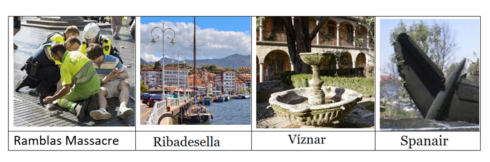
19 AUGUST, 1936 – Garcia Lorca shot dead in Viznar
Poet and playwright Federico Garcia Lorca chose the wrong moment in history to return to his native city of Granada.
In the summer of 1936 the Young Right – that is, gangs of armed fascists – felt entitled.
Lorca was beaten up more than once and went into hiding. However, the gangs found him, and forcibly removed him to the village of Viznar, where they executed him.
Spain lost its most gifted writer – and he wasn’t yet 40 years old.
20 AUGUST, 2008 – Spanair Crash, Madrid
Spanair Flight 5022 took off from Barcelona on 20 August, 2008.
It was due to arrive at Gran Canaria at 4pm, and had only one scheduled stop – at Madrid.
Little did anyone suspect that the plane would crash in Madrid at precisely
14:24, killing 154 passengers and crew, and forcing Spanair out of business.
It seems that the pilots did not properly configure the plane’s flaps for take-off, and the aircraft failed to generate enough lift to get airborne.
Click here to read more Spain News from The Olive Press.