

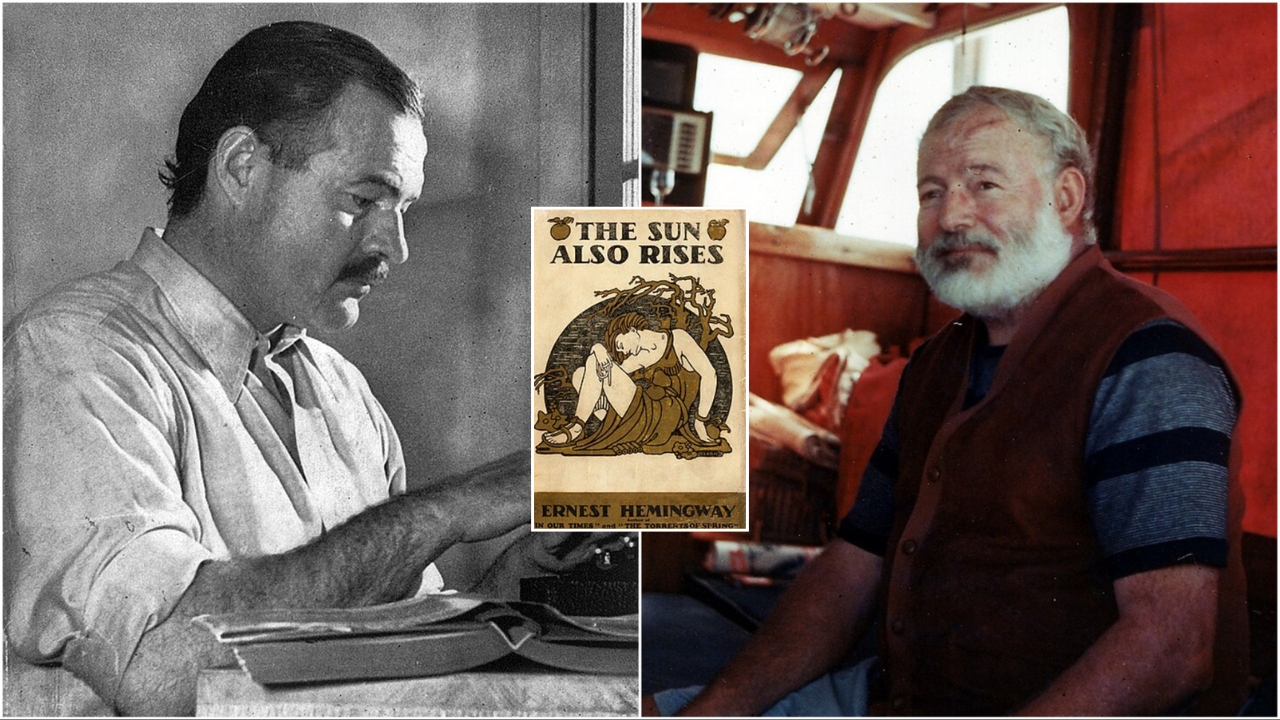
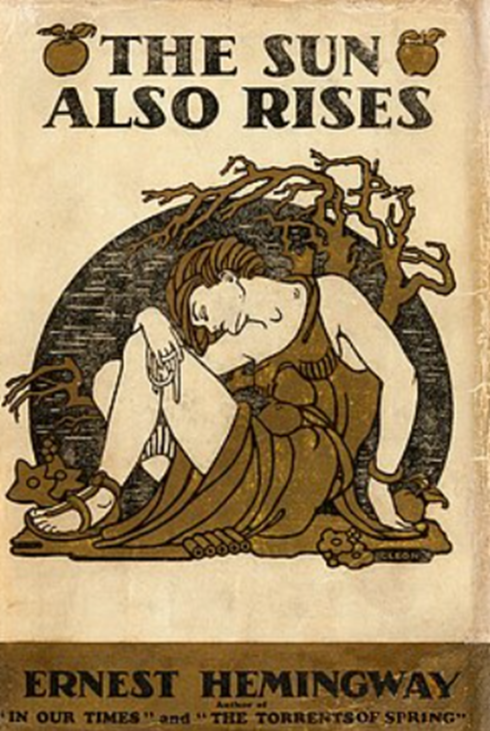
THURSDAY 22 October marks the 100th anniversary of the publication of The Sun Also Rises, the novel that made Ernest Hemingway famous. MICHAEL COY asks whether it’s now time to put the Hemingway myth to bed.
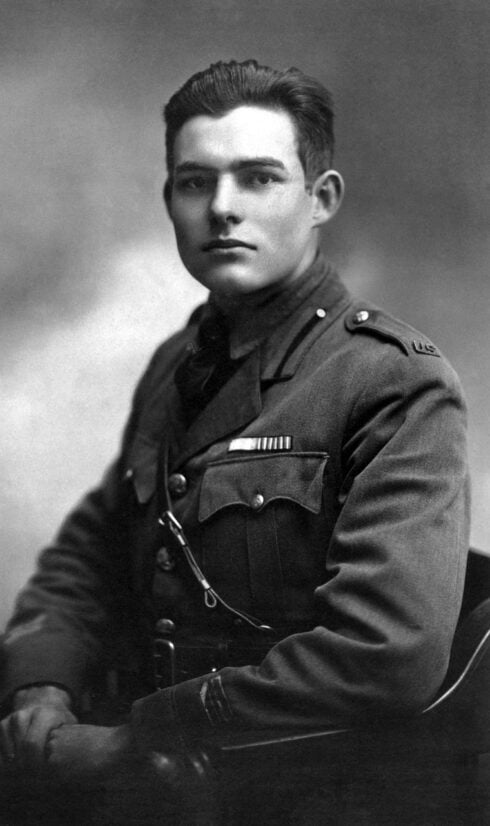
Thirty years ago, American, British and Australian tourists in Spain included a generous sprinkling of ‘Hemingway lookalikes’ – men in their sixties with carefully-cultivated white manes and beards.
All over Madrid, and in every bullring in Andalucia, they could be seen, dragging their poor wives around the Hemingway ‘places’.
These fans had obviously read the novels in their adolescent years, and had ingested the Hemingway notions of masculinity.
Time has done its work, and the Hemingway lookalikes are no more.
READ MORE: EXCLUSIVE: ‘Hemingway, Pamplona and me – why I run the bulls for my legendary dad’
We no longer believe in crudely simplistic theories about what makes a man. And anyway, modern adolescents don’t read.
Is it unfair to call these followers fakes?
The purpose of today’s article is to label Hemingway himself as the biggest fake of them all.
Given that many of us, in the 21st century, have only a nodding acquaintance with Hemingway, it might help to remind ourselves of his life and work.
Think first half of the twentieth century, and you think of Hemingway.
Born a few months before the century began, he lingered slightly, his powers clearly failing, beyond the halfway mark, ending it all with his own shotgun in July 1961.
He wrote a few novels which everybody’s heard of, and a mass of second-rate drama, short stories and journalism that is frankly junk.
America entered the First World War in April 1917, and the teenage Hemingway could not resist the opportunity to show his manliness.
He was a classic confident Mid-Westerner, versed in hunting and fishing, and the European War drew him like a magnet.
But the experience which both made him and broke him was not as a ‘dough-boy’ soldier.
He was a non-combatant ambulance driver. No trenches, no gas-masks, no gun.
He didn’t even make it to the Western Front. Hemingway was posted to the Alps, where Italy was trying to fight Austria.
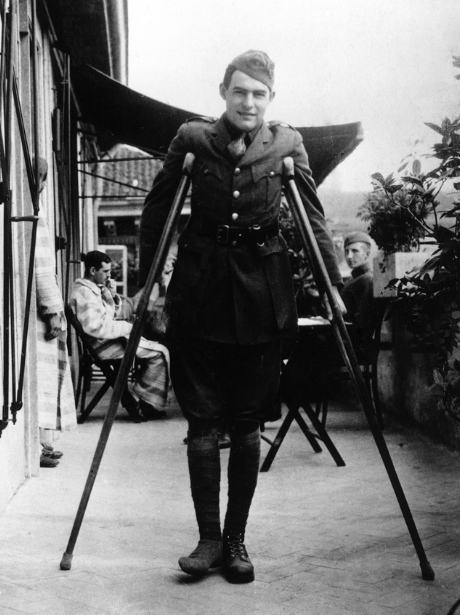
In July 1918, four months before it all ended, he was badly wounded when a mortar shell exploded near him.
This is hardly the place to attempt a medical diagnosis, but it seems plain that Hemingway suffered psychological damage that went untreated, but which shaped the rest of his life.
His physical wounds took months to heal and the recuperation – which included falling in love with his nurse – would form the obsessive core of his writing, a single trope that he returned to again and again.
We probably underestimate – even today, when we know about PTSD – the trauma that we put young men through when we send them into battle.
Hemingway called them the ‘Lost Generation’.
His friends were well-to-do Americans who, scarred by the War, no longer felt at home in the USA, and who lived an aimless, drifting existence in Paris.
The nurse whom he had loved so intensely – Agnes von Kurowsky – rejected him and married someone else. He never got over it.
Literary critics who have studied him point out that the rest of his life followed a consistent pattern: he acquired lovers, only to ‘dump’ them, before they could hurt him like Agnes had hurt him.
READ MORE: ‘Lost’ manuscript reveals Orson Welles dislike for Ernest Hemingway’s macho interpretation of Spain
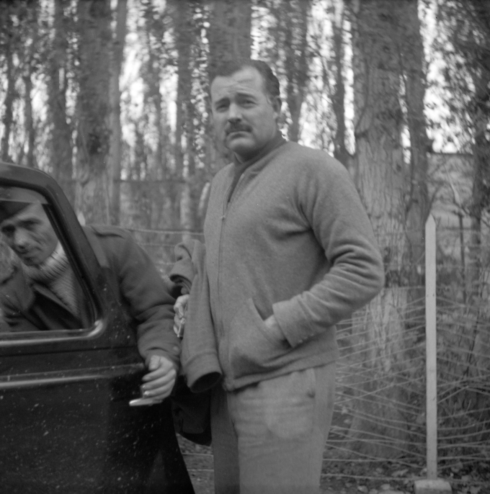
In The Sun Also Rises, Agnes appears as Lady Brett – an alluring beauty with the morals (in the eyes of a good Mid-Western boy) of a whore.
Jake Barnes, a thinly-disguised self-portrait, was so badly injured in the recent war that he can no longer make love.
This is telling. At some deep level, Hemingway knew that the War (and Agnes) had castrated him.
Then he discovered Spain.
Bullfighting – and especially the Pamplona running of the bulls – fascinated him. It fitted with his ideas of manliness.
Before Hemingway filled his books with Pamplona, it was a tiny local Basque festival, virtually unknown, even in Spain.
Today, the young men who run with the bulls in early July are as likely to come from Boston or Brisbane as from Bilbao.
By 1930, he had mined his theme to exhaustion. A Farewell to Arms (1929) told the Agnes story again, and Death in the Afternoon (published two years later) offered Hemingway’s ‘guiri’ understanding of the bullfight.
The rest of his life was something of an anticlimax.
READ MORE: Following Hemingway: An American Legacy
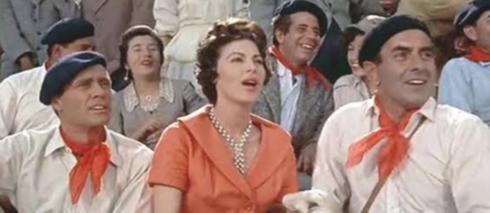
He was drawn to danger again (the Spanish Civil War and the Second World War), but once more, not as a combatant.
He is vague about his civil war activities (and one suspects he embellished them), and in the 1940s he was strictly a journalist.
Was Hemingway a great writer? His contemporary, James Joyce, was beyond dispute a genius, doing things with language that we are still unravelling. Hemingway invented nothing. His style can be likened to glorified journalism. Yet Hemingway got the Nobel Prize, and Joyce didn’t.
When he took his own life in July 1961, he was much-enfeebled by excessive drinking.
As he squeezed the trigger, no doubt he was thinking of the fine young man who arrived in Europe in 1917…and of Pamplona, where at that very moment they were running the bulls.
Click here to read more Spain News from The Olive Press.





Personally, I think it’s time to end Coy’s posing as a writer, and definitely as a “journalist”. This poorly researched and mediocre hatchet job on Hemingway — a far superior writer than Coy can ever hope to become — attempts to mix literary criticism with amateur psychology, neither of which he is qualified to practise.
Bit harsh… he’s entitled to his view particularly given he’s lived in Ronda for two decades and attended his fair share of bullfights.
I entirely disagree with Michael mind..
That was your defense?
Honestly, I subscribe for the reporting, not the opinion or commentary. If you enter that ring (I will use your bullfight standard), then get ready for a goring or ‘a good death’. Just some advice. I will still continue my subscription happily. Cheers.
Prepare for a goring !
What a rubbish review.
Labelling (or perhaps more accurately traducing) Hemingway as “the biggest fake of them all” seems more than a little over the top in an era when Donald Trump dominates the global news agenda.
Weak…very weak. Using Joyce as comparison is a bit disingenuous. Yes, Hemingway was not the greatest writer on several levels, but he was a great writer on others. You have an issue with the Noble Prize award to try to prove your point. The Nobel, many times, is more about politics than substance. It is certainly no litmus test. Ask literary professors how many have read Joyce’s Ulysses and Finnigan’s Wake, and if they are honest, not a lot, certainly not most, and absolutely not all. Hemingway would absolutely win that metric.
You definitely expose your envy of him with your assumption of his last thoughts. Such a juvenile statement reveals who is actually the fake. Good luck while you type all of your brilliant and clever words in your future.