
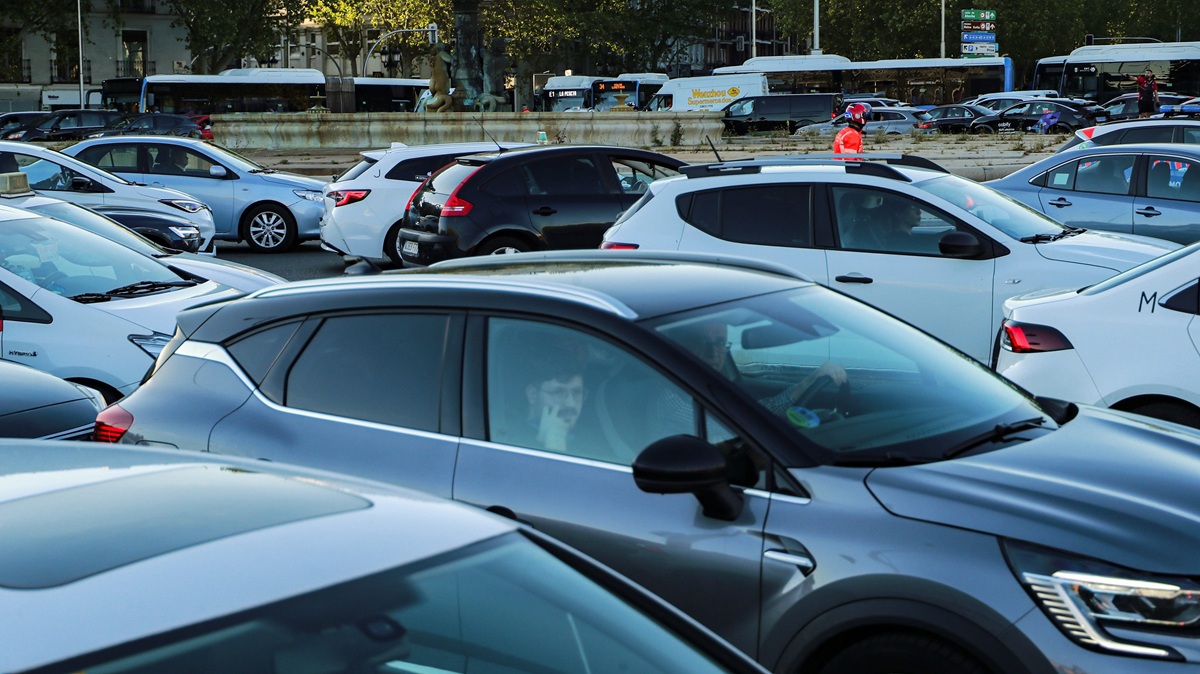
FOUR in five people in Spain breathe polluted air, environmentalists warn, with road traffic blamed as the country’s biggest culprit.
A new EU directive set to come into force this year has cut old pollution limits by more than half, meaning 80% of Spaniards are exposed to bad air under the tougher new standards, according to Greenpeace.
The figure compounds an earlier finding by fellow environmental group Ecologistas en Accion, which warned that around 33 million Spaniards were exposed to pollution levels above the new EU thresholds during 2025.
Greenpeace spokesperson Cristina Arjona told EFE this week that road traffic was the main factor behind the stark finding, warning that cities were not doing enough to tackle the problem.
Arjona explained that, under Spanish law, low-emission zones have been mandatory in municipalities with more than 50,000 inhabitants since 2023.
“[But] in many cases, cities are converting into pedestrian zones areas that were already pedestrianised – so they are not actually reducing pollution levels,” she warned.
The new EU rules will bring pollution limits closer to the levels recommended by the World Health Organisation, although some of the new thresholds remain above WHO guidelines.
READ MORE:
One of the biggest concerns is nitrogen dioxide, a toxic gas produced mainly by burning fuel in vehicles.
Breathing too much of it over time can irritate the lungs and airways, while long-term exposure has been linked to respiratory problems and a higher risk of heart and lung disease.
Cars and other vehicles also pollute by pumping tiny particles into the air through brake and tyre wear.
Arjona has now called for low-emission zones to be made more effective, alongside measures to reduce car use and encourage public transport, cycling and other cleaner ways of getting around.
She pointed to Barcelona, Madrid and Pontevedra as examples of cities where efforts to cut traffic have helped bring pollution levels down.
Greenpeace also identified other sources of pollution in Spain, including ‘ports and certain types of industry, as well as airports.’
Spain also made big strides in cleaning up its electricity supply over the past decade, with renewable sources now accounting for almost 60% of the country’s power generation, according to Arjona.
The expert, however, insisted cleaner electricity will not solve the problem on its own so long as millions of people are still exposed to pollution from traffic and other sources.
The new EU directive is due to be transposed into national law by December 2026, with the tougher air-quality standards applying from 2030.
Click here to read more Environment News from The Olive Press.