
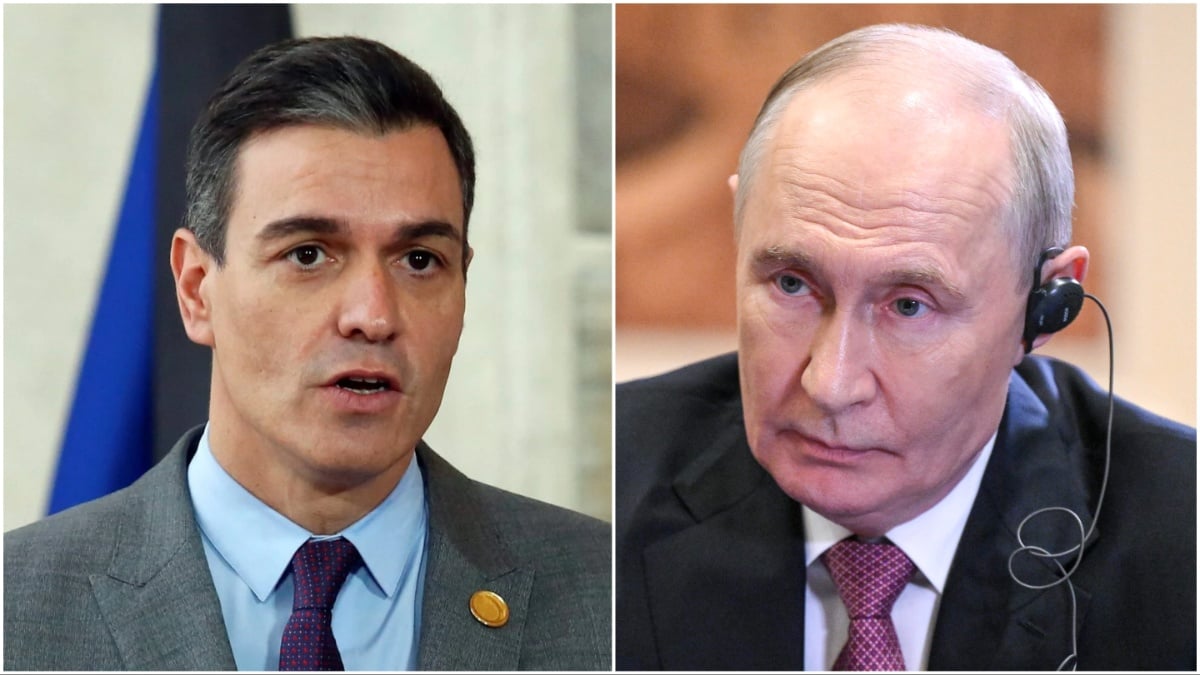
SPAIN’S Prime Minister has maintained a conspicuous political silence as neighbouring allies have one by one sounded the alarm over the escalating threat of Russian hybrid warfare.
European governments in France, Germany, Italy, the United Kingdom and even Switzerland have all taken concrete steps or made major announcements to counter the growing Russian threat in recent days.
European leaders have been publicly urging citizens to stockpile survival supplies and while rushing to reactivate Cold War-era bunkers.
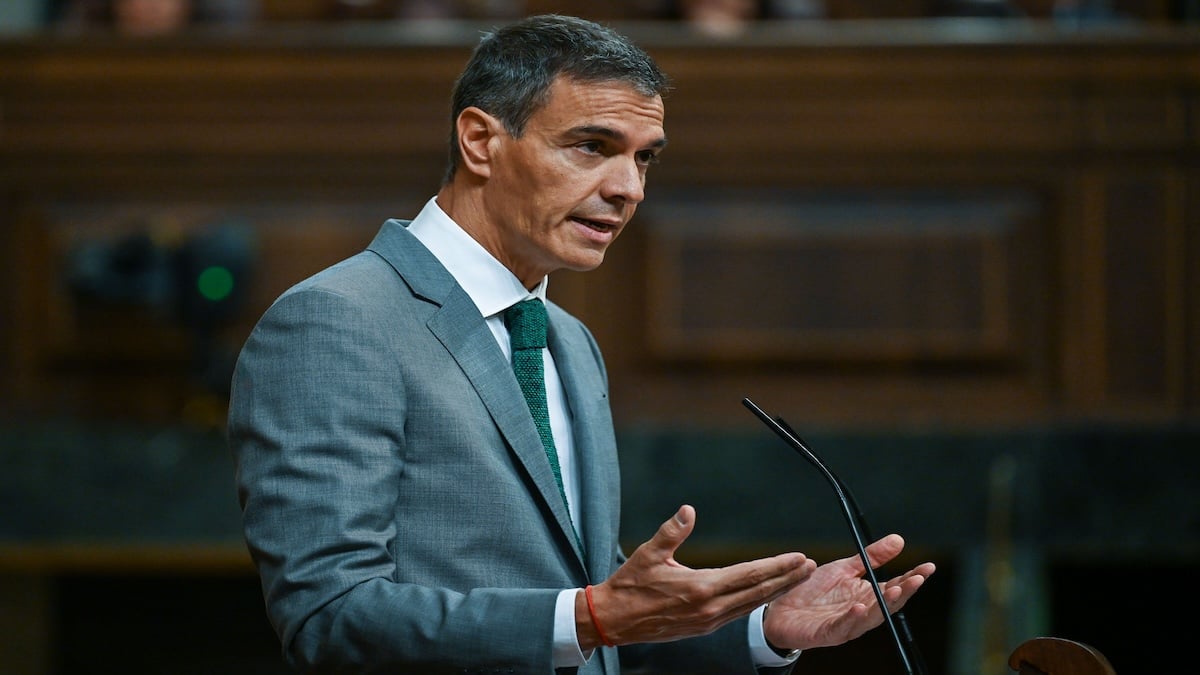
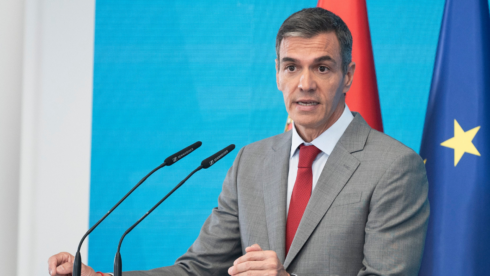
Yet Pedro Sanchez has made no national address nor has his government taken any public measures regarding civilian preparedness or the Kremlin’s shadow war against European targets.
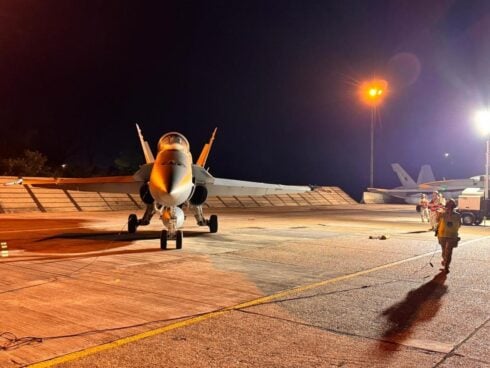
Despite the prime minister’s silence, Spain maintains significant military forces stationed in eastern Europe as part of its commitment to NATO, all of which are on heightened alert.
Spanish F-18 Hornet fighters deployed to Romania have carried out 15 live combat intercepts — known as Alpha Scrambles — in just 30 days of operation, according to NATO Allied Air Command.
The Spanish ‘Paznic’ Detachment is currently stationed at Mihail Kogalniceanu Air Base, a major military facility located near the Black Sea coast in eastern Romania.
The detachment maintains a continuous Quick Reaction Alert posture, meaning crews and fully armed aircraft are kept on permanent standby to intercept hostile or unidentified threats within minutes.
The tempo of these operations peaked in the early hours of August 16, when Spanish pilots were scrambled to intercept an unidentified aerial track that had breached Romanian airspace.
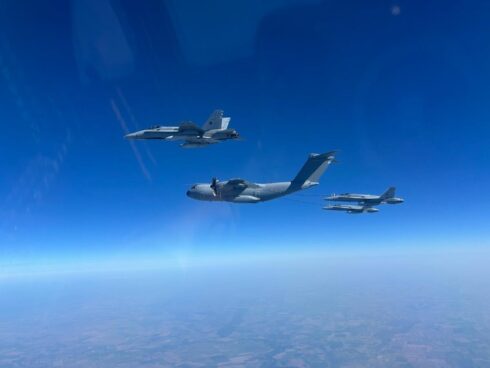
Operating at night under NATO’s integrated command network, the Spanish fighters successfully located the target, opened fire and shot the drone down.
Together, the crews have logged more than 200 flying hours in their first month on the frontier.
It is not just Spanish pilots pulling the trigger on the front line.
On September 14, an Italian Eurofighter on NATO patrol shot down a drone over Lithuania that Rome’s Defence Minister Guido Crosetto said ‘very likely’ came from Russia.
In the Baltic Sea, a Russian frigate recently fired two warning flares just metres past a Danish military helicopter.
Denmark’s Prime Minister Mette Frederiksen called the incident an attempt to ‘intimidate and divide’.
READ MORE: Spanish F-18s shoot down Russian drone over Romania territory after it entered NATO airspace
It came as Danish intelligence warned that Moscow is actively recruiting citizens to sabotage defence companies supplying Ukraine.
The escalating shadow war has prompted desperate warnings from Kyiv.
Ukraine’s Foreign Minister Andriy Sybiha warned European states in early September that Moscow is already waging a hybrid war against them.
He cited a string of recent incidents, including damaged undersea cables, disrupted aviation GPS signals, and drone incursions into NATO airspace and an explosive drone discovered in Leipzig airport.
Sybiha demanded that European governments shut down state-sponsored ‘Russian Houses’ operating in their cities, warning that Moscow plans to open 11 more such cultural centres abroad.
Spain itself hosts a numbers of these controversial institutions for over a decade.
There are two Casas de Rusia, or Russian Houses, in Madrid, while one was established in Barcelona in 2010, reportedly with funding from the Kremlin-controlled state energy giant Gazprom.
Following the invasion of Ukraine in 2022, the Barcelona centre officially suspended its activities and quietly rebranded itself as the CR Cultural Foundation to avoid public backlash.
However, the suspension was short-lived; the foundation is currently operating a full schedule of concerts, language classes, and cultural events from its base in the Catalan capital.
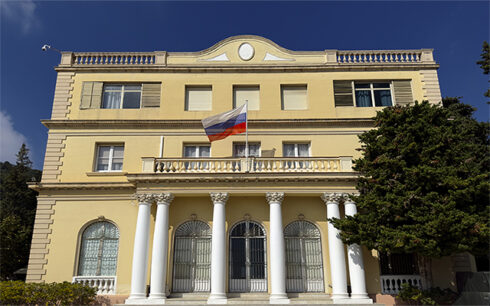
European intelligence services have repeatedly flagged the wider Russian House network across the continent as cover for espionage and propaganda operations.
In Alicante, a Russian House has been operating since 2012 as a hub for the region’s large Eastern European expat community.
The Costa Blanca association, officially registered as a non-profit, organises cultural events, language classes and even helps process Russian visas.
Further south on the Costa del Sol, the State Russian Museum opened a major branch in Malaga’s historic Tabacalera building in 2015.
The Malaga museum remains a direct outpost of the St Petersburg State Museum, housing hundreds of pieces of Russian art and hosting state-sponsored exhibitions.
Meanwhile, Marbella hosts various Russian cultural associations and language schools, such as the Eureka Russian School, which explicitly aims to ‘popularise Russian culture abroad’ through concerts and exhibitions.
But while Russia seeks to deepen its cultural footprint in Spain and other western European countries, in eastern Europe NATO is moving away from routine air policing towards a war-footing integrated air defence posture.
The active combat role that Spanish personnel are playing in this new strategy highlights a growing disconnect with the political messaging in Madrid.
Across northern Europe, governments are taking the threat of Russian escalation into civilian homes.
The United Kingdom is launching a national resilience campaign, advising households to stockpile water, durable food, torches and power banks to prepare for suspected Russian cyberattacks and sabotage.
Germany’s military planners are calculating logistics for up to 1,000 wounded soldiers per day in the event of a direct strike on NATO territory.
Berlin has also begun reactivating a sprawling underground bunker from 1979 beneath a military hospital in Ulm, southern Germany, designed to hold 2,000 people for three months.
In Poland, Prime Minister Donald Tusk has warned parliament that allied intelligence confirms Russia is planning deniable hybrid strikes against European states.
Warsaw is responding by constructing the ‘East Shield’, a 700-kilometre network of fortifications and drone defences along its borders with Belarus and the Russian enclave of Kaliningrad.
Even neutral Switzerland has formally updated its security strategy to prepare for collective defence, acknowledging that traditional neutrality offers no protection against drone warfare.
Almost all these actions from allies NATO governments came within a short window of days, indicating that some intelligence had been shared which spooked European capitals.
Yet Pedro Sanchez’s government has offered no such warnings or preparedness guidance for its population.
This lack of domestic communication creates a sense of insulation from a geopolitical crisis in which Spanish military assets are already pulling the trigger.
Click here to read more International Affairs News from The Olive Press.