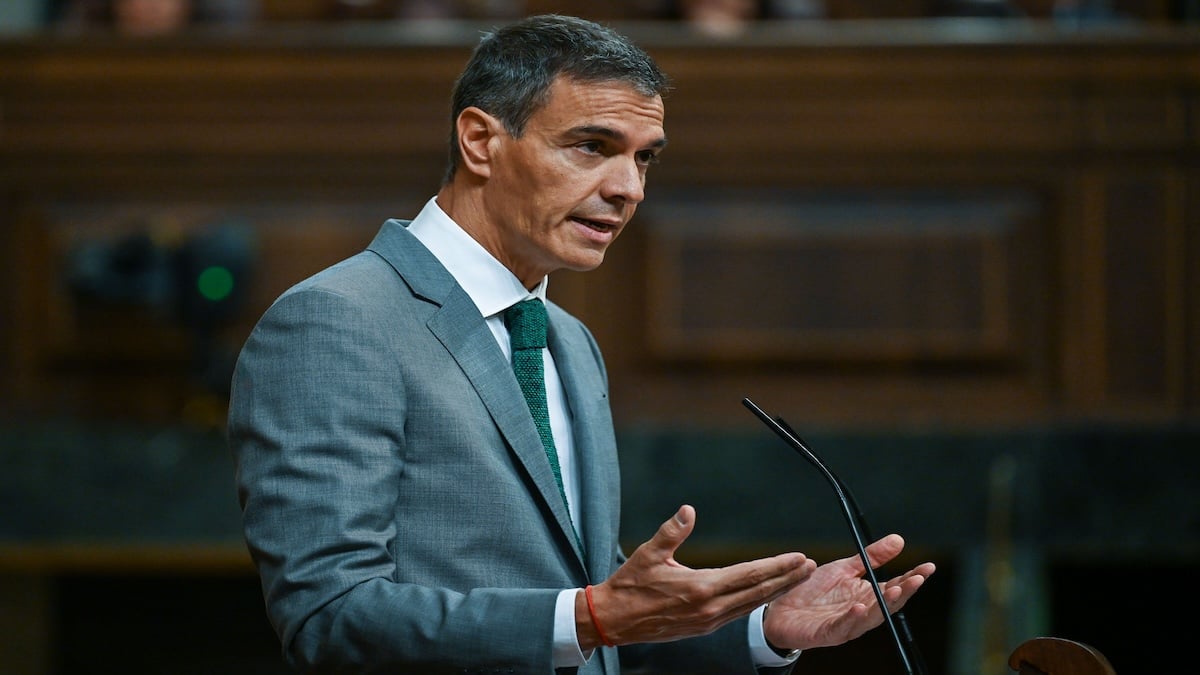

PEDRO Sanchez has pointed the finger of blame at Morocco for the first time since the Ceuta migrant crisis erupted on July 31.
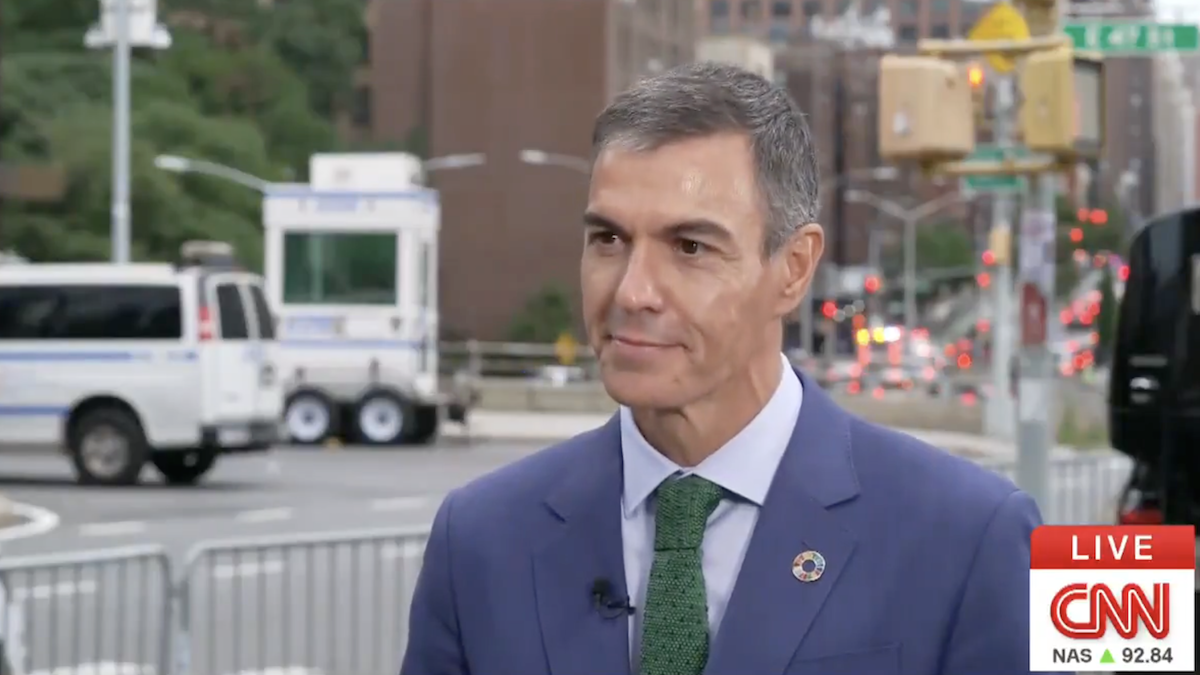
Speaking to CNN in New York, where he is attending the UN General Assembly, the Spanish prime minister said it is ‘clear Morocco’s border control mechanism failed’.
“We have asked Morocco for answers and actions,” he responded, after CNN’s Christiane Amanpour said Sanchez had ‘presided over a disaster’.
Sanchez used the interview to complain about a lack of wider solidarity from his European partners, arguing Ceuta and Melilla are not just Spanish cities but the European Union’s external border in Africa.
He said: “We showed that solidarity, for instance, in Lampedusa in Italy, when they suffered the migration crisis.
Lampedusa is a small Italian island that took in tens of thousands of migrant arrivals from North Africa in 2023.
He even took time to take his customary sly dig at Donald Trump: “We showed that solidarity in Greenland, when other governments questioned the territorial integrity of Denmark and Greenland.”
“So, we ask for that solidarity when it comes to Ceuta,” he said.
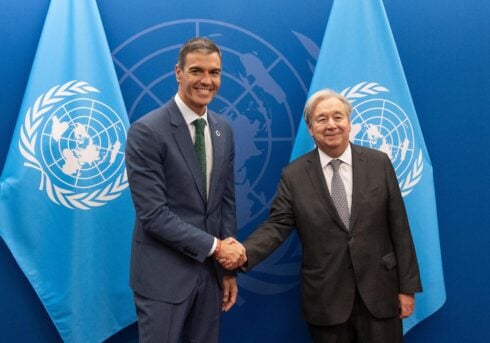
On Morocco itself, Sanchez was careful not to go further than saying its border mechanism had failed, insisting Spain still has ‘a very positive bilateral relationship’ with Rabat built up over the last eight years.
A recent declassified police report on the crisis suggested that the government had been warned in advance.
The CENIF document, from the Policia Nacional’s border-intelligence unit, informed the judge overseeing the case, Maria Tardon at the Audiencia Nacional, that the July crossing was planned rather than spontaneous.
But Sanchez rejected that reading: “Those documents show that there was no clear evidence that something like that would happen.”
He said an investigation into what happened in July is still ongoing.
The CENIF report puts the number who crossed at 72,000, and says 90% left Ceuta again within hours, which investigators say points to a goal other than migration.
It states the operation was actively guided by Moroccan gendarmes, who were themselves taking instructions from plainclothes agents on the ground.
Of the estimated 15,000 migrants thought to still be in Ceuta – a figure that sits well above other recent official and on-the-ground estimates – Sanchez said Spain intends to return most of those who crossed to Morocco, but said this would be done ‘with dignity’.
“In Spain, it means that migrants are not cattle, but humans, and that is what we have to do as a great democracy and a great country like Spain,” he said.
Meanwhile, security forces in Ceuta are on high alert today (Wednesday, Sept 23) over fears of a repeat mass entry timed to coincide with Morocco’s legislative elections.
The Interior ministry had put 324 public-order officers on standby since the weekend, 180 from the Policia Nacional and 144 from the Guardia Civil, after accounts on social media called for a new crossing.
But as of mid-morning, the Tarajal crossing point, the main land border with Morocco, and the nearby Benzu breakwater had registered no attempted crossings.
On the ground, the picture in Ceuta is still far from resolved more than 50 days after the initial crossing.
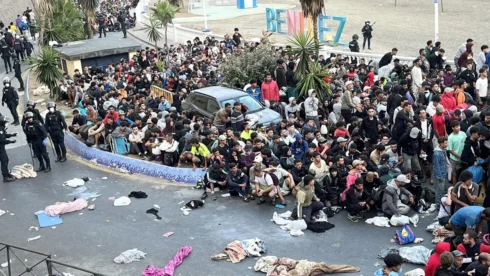
Trampolin beach, where migrants have been camped since July, remains covered in improvised tents.
The Policia Nacional has had no order from the Delegacion del Gobierno, the central government’s representative office in Ceuta, to clear the camp, and without it, officers cannot act on their own initiative.
A fire tore through the camp around September 11, destroying at least 40 tents that housed families with children, and unrest broke out on September 18 after police tried to move migrants to a new temporary camp in the port.
How many migrants remain in Ceuta is itself disputed.
Field sources put the figure at around 8,000, Interior Minister Ferndano Grande-Marlaska gave 3,500 earlier this week, and CNN’s Amanpour claim of 15,000 in her interview with Sanchez went uncontested.
Click here to read more Spain News from The Olive Press.