
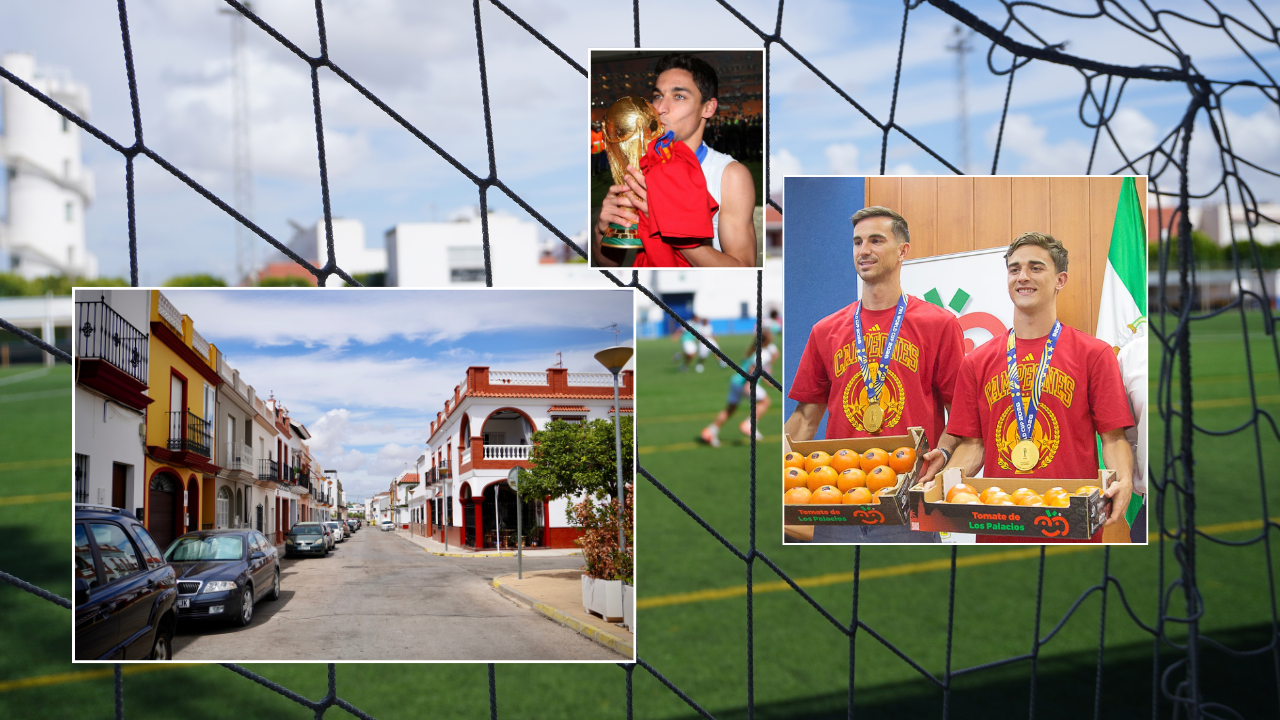
‘GOAAAAAAL!’ the commentator screamed, and the crowd at my local pub in Barcelona went wild.
People hugged, cried and laughed.
Soon afterwards, cars began honking and Spanish flags were waving everywhere… even in my predominantly Catalan barrio.
It was only the second time in history Spain had won the World Cup and every inch of the country was celebrating.
But perhaps nowhere more passionately than in a small corner of rural Andalucia: Los Palacios y Villafranca, a town in Sevilla province that has produced no fewer than three of the country’s World Cup-winning footballers.
They are Fabian Ruiz, who scored Spain’s opening goal against Belgium, Pablo ‘Gavi’ Gavira, the child prodigy fast-tracked through Barcelona’s celebrated La Masia academy, and Jesus Navas, who famously lifted the World Cup in South Africa in 2010.
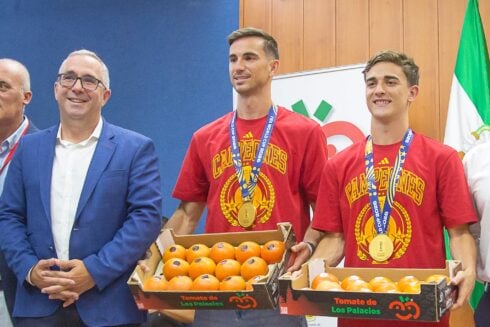
All three grew up here, went on to greatness in world football and still regularly return home.
Such is Gavi’s affection for his hometown that he recently donated €1.3 million to help build homes for underprivileged locals.
The big-hearted midfielder – once revealed to be a crush of Princess Leonor – handed over the money for a homeless hostel, with the mayor praising his humility and insisting fame ‘has not gone to his head’.
So what exactly is it about Los Palacios that has turned out this remarkable trio of sporting talent?
With a population of just 35,225, it is hardly a household name.
Yet alongside the three footballers, the town has also produced Marco Navas, Jesus’s older brother and a professional player, as well as motorcycle world champion Jose Antonio Rueda – a major achievement in a country obsessed with MotoGP.
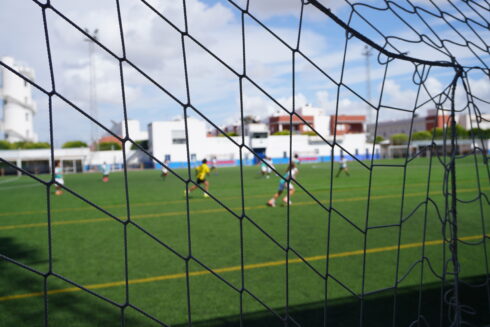
The town is also proud of its food, particularly its famous tomatoes.
There is even a theory that the local crop might somehow hold the secret to producing sporting champions.
So is there something in the water? Or perhaps in the tomatoes?
It certainly helps that Los Palacios sits between Sevilla and its two famous La Liga clubs, Betis and Sevilla FC, while Jerez de la Frontera – one of Europe’s great centres of motorcycle racing – lies within easy reach.
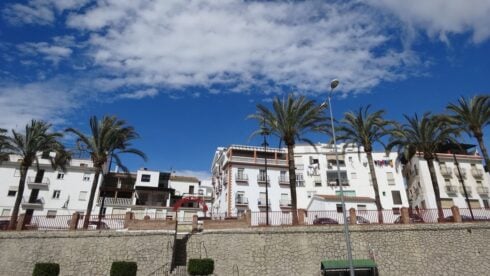
And while it may look like an unassuming agricultural town today, Los Palacios has a long and colourful history.
Dating back to Roman times, when a settlement known as Searotinus stood here, it later became an important stopping point on the trading route between Cadiz and Sevilla.
After the Christian reconquest, the area became known for hunting, helped by its proximity to the vast marshlands and wilderness of Doñana.
The name Los Palacios is believed to date back to the 14th century, when a series of royal residences were built here, while neighbouring Villafranca de la Marisma developed separately as a small rural settlement.
The two eventually merged in 1836 to create the modern town.
READ MORE: Valencia’s Oceanografic aquarium names shark after Spain’s World Cup hero Ferran Torres
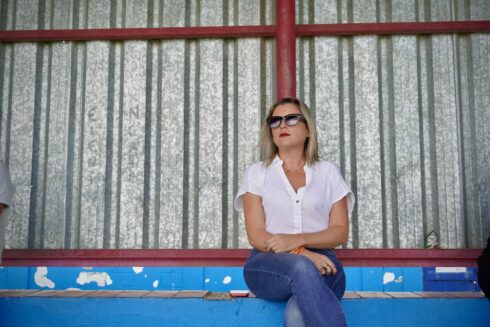
But today, Los Palacios’ real identity is sport.
“There is a real sense of pride here today, not just for our footballers,” Esther Lopes, 53, told the Olive Press outside local club Los Palacios CF, where Ruiz began his career.
She was one of around a dozen parents watching their children being put through their paces on an adjacent training pitch.
“Everyone is very committed here, knowing that through our collective efforts, alongside the town hall and the club, we can achieve great things,” she said.
“Los Palacios definitely has a very strong culture of sport. Whether it’s young children or the elderly, sport is deeply rooted in our lives here.”
Her son Javi is a youth academy player and, naturally, she insists that ‘he shows a lot of talent’.
“In fact, I hope to watch him play for our country one day,” she adds with a smile.
READ MORE: Champions of the world: Spain defeat embarrassing Argentina to win World Cup for second time
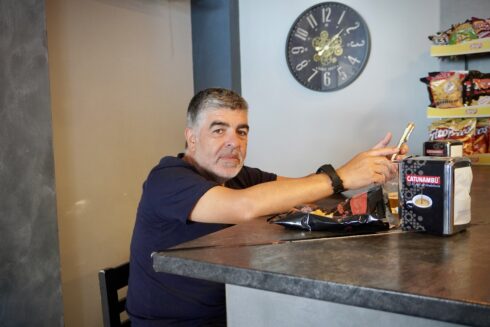
Nearby, Jose Maria, 48, is enjoying a cold beer at his local bar.
“We are very proud,” he told me, holding up three fingers. “Three of the best players come from here. We certainly never expected it.”
The love of football certainly runs deep.
Los Palacios is gearing up to celebrate the centenary of local side La Liara Balompie, founded in 1928, while despite its modest population the town boasts four football clubs.
Hundreds of children pull on their boots from the age of five. And perhaps that is the real recipe for success: start them young and create plenty of competition.
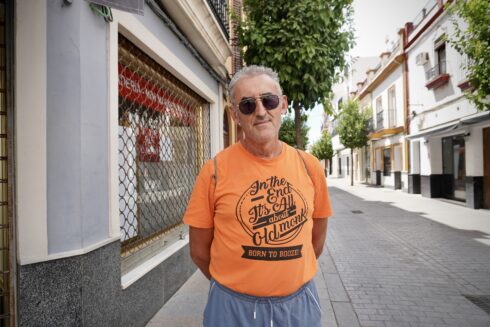
“There is something special about this place,” Fernando Martin, 62, told me as he headed towards the gym.
“People say it’s a certain fighting spirit we have, that we never give up. Every single family is divided between supporting Sevilla and Betis. From the youngest ages, players are constantly fighting to make it to those clubs.
“Everyone knows those two clubs are the stepping stones to the national team.”
He has a point. Both Ruiz and Gavi joined Real Betis as youngsters, while Navas came through Sevilla’s academy before going on to become one of the most decorated players in Spanish football.
“Football is deeply rooted here,” Martin says. “It belongs to us.”
The town’s pride can certainly be seen in more than just words.
Two sports pavilions have recently been named after Ruiz and Gavi, while the municipality is planning a monument dedicated to all three World Cup heroes.
The players have even received one of the town’s more unusual honours: being presented with their weight in tomatoes after returning home from international triumph.
Which brings me back to that theory. Could the secret to producing world-class footballers really lie in the local crop?
“There is a myth the tomatoes are the key to the great players here,” I suggested to Martin.
He smiles. “Well, we certainly all love tomatoes.”
Perhaps I need to keep digging.
Click here to read more Spain News from The Olive Press.