
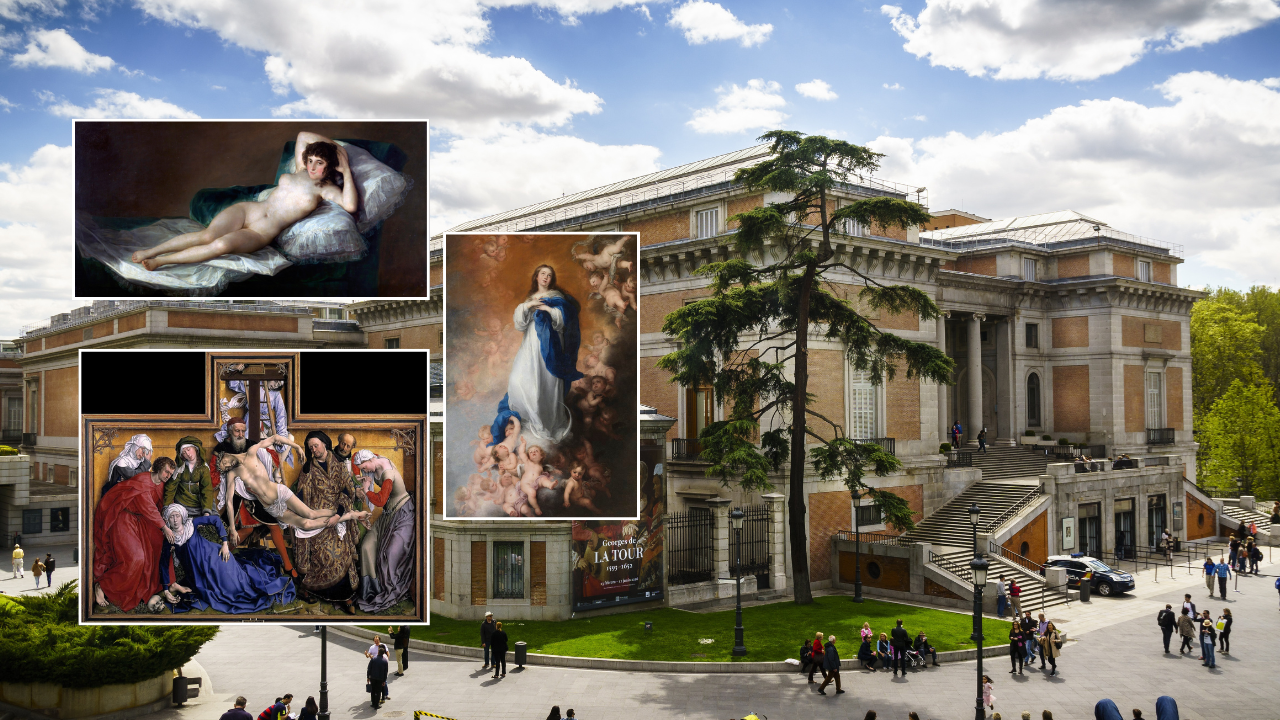
IT’S a world-class art gallery.
It houses European painting and sculpture dating from the 1100s to the twentieth century, and has the planet’s best collection of Spanish art.
Founded on November 19, 1819, the Prado holds about 8,000 paintings. Some were originally owned by the Spanish royal family, and many of the non-native works were selected by Diego Velazquez, who acted as an agent for the Spanish court.
The main building was designed in 1785, on the orders of King Charles III, who wanted to launch a Natural History Museum.
It remained empty for a generation as plans changed and wavered. Finally, it was chosen as the home for a national art collection.
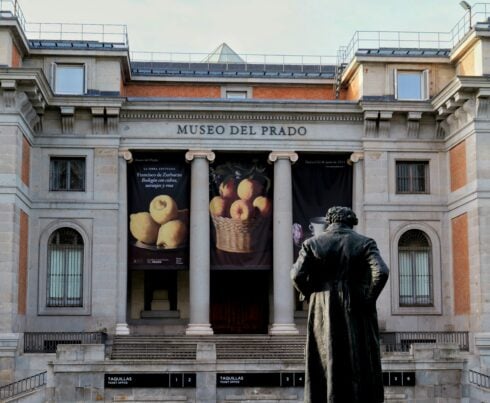
At first the museum was open only to ‘quality’ visitors: aristocrats and people of standing in society. However, the ordinary people clamoured to see ‘their’ art. The big change came in 1868, when Queen Isabella II was overthrown.
The Prado was nationalised and opened to the public at large.
Clearly, it was too small to cope with the number of people wanting to get in. Over the next half-century, the Prado acquired royal buildings situated nearby (the Cason del Buen Retiro and the Salon de Reinos) and expanded its display area enormously.
In our own era, the cafeteria and bookshops have been relocated and new underground galleries added, making more space for people to look at paintings. The gallery currently gets 2.5 million visitors a year.
Here’s our guide of three of the best paintings you MUST see when you next pay the Prado a visit:
The Descent from the Cross
Ernest Hemingway wrote that the Prado has a big advantage over museums like the Louvre, because Madrid is a mountain city with clear, pure mountain air.
Rogier Van Der Weyden’s 600-year-old Flemish painting seems to support that point of view. The figures are crystal-clear and beautifully defined.
Christ is dead, and a handful of loyal supporters are taking His body down from the cross. Joseph of Arimathea holds Christ’s torso, as Mary, Christ’s mother, faints with grief.
READ MORE: How the Godfather of Psychoanalysis helped the Dali turn dreams and fears into unforgettable art
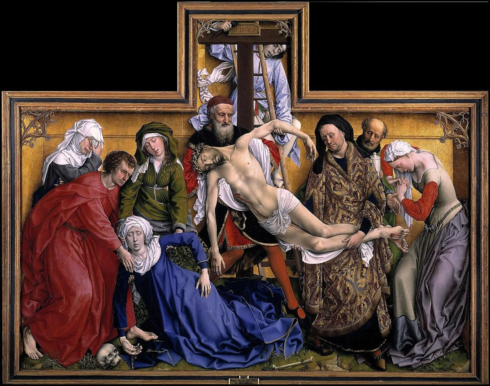
The young Van Der Weyden deliberately set out to paint a masterpiece, and make himself famous throughout Holland and Belgium.
He used a lot of ‘contrapposto’ (the sinewy bending of the human body) which was much sought-after at the time.
Van Der Weyden’s clients were a society of archers, and it is thought that the painting’s curious shape was the artist’s attempt to imitate a crossbow.
It came into Spanish hands via Charles V, the king who also owned the Low Countries.
The Immaculate Conception
Bartolome Esteban Murillo was a sevillano, born and bred.
The painting seeks to depict the moment when Mary miraculously becomes pregnant with Jesus.
Notice how Mary is represented as a real, flesh-and-blood woman, rather than some idealised saint. Her halo is greatly reduced, to make her seem more natural.
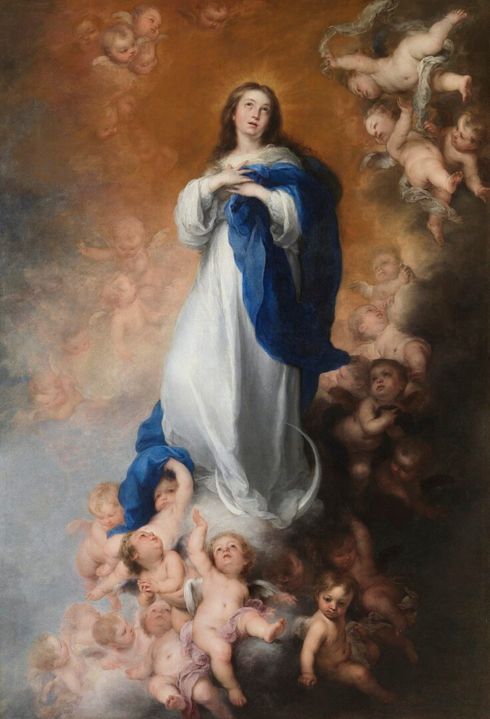
Murillo is using a technique which looks easy, but which is in fact fiendishly difficult to execute: aerial perspective.
The painting would originally have been hung on a church wall, several feet above ground level. Mary and all the angels look ‘right’ to the viewer, because they are all aligned on an imaginary vanishing-point.
The Naked Maja
Goya has far more paintings hanging in the Prado than any other artist.
By the year 1797 he was established as a member of the royal court (he was the king’s personal painter).
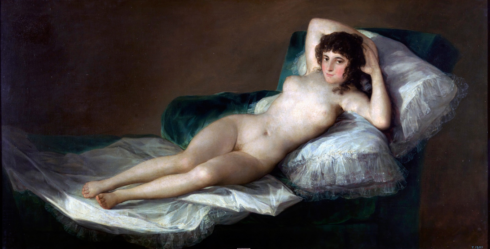
He began an affair with the beautiful and eccentric Duquesa de Alba.
She modelled for this painting which – predictably – caused a scandal.
Click here to read more Spain News from The Olive Press.