

SPAIN’S roughly 2.9 million naturalised citizens are split almost evenly between left and right ahead of Sunday’s general election.
According to an El Pais analysis of pre-election data from the Centre for Sociological Research (CIS) adjusted to current polling averages, 44% of foreign-born Spanish voters intend to back left-wing parties (PSOE, Sumar, or Podemos), compared to 37% of native-born Spaniards.
Meanwhile, support for the right-wing bloc (PP and Vox) sits at 47% among naturalised citizens — nearly identical to the 50% recorded among those born in Spain.
Around 820,000 foreign residents have gained Spanish nationality since the 2023 general election, bringing foreign-born voters to roughly one in every 12 eligible electors.
However, political analysts say lower turnout rates and Spain’s provincial constituency system mean the ‘migrant vote’ is unlikely to swing Sunday’s outcome.
Immigrant voters from fellow European countries were split very evenly down the middle,
While the overall numbers closely track the wider Spanish electorate, breaking the data down by country of birth reveals sharp ideological divides shaped by the political histories of the voters’ homelands.
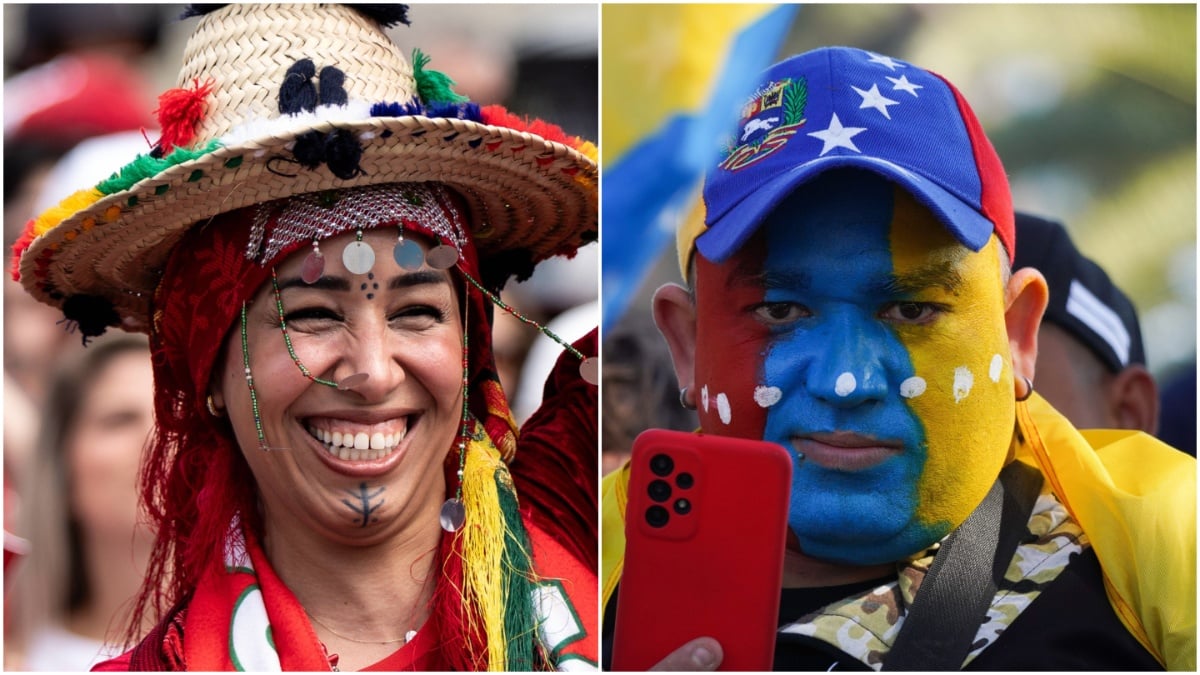
Voters born in Venezuela lean heavily to the right, with roughly 70% backing either the Partido Popular (PP) or Vox (47% PP, 30% Vox among decided voters).
Right-wing parties also command a clear lead among naturalised citizens from Cuba and Ecuador, drawing over 45% of their support.
At the opposite end of the spectrum, naturalised Moroccans overwhelmingly favour the left, with 69% backing the Spanish Socialist Workers’ Party (PSOE).
Voters from Colombia and Argentina are much more evenly divided across the political spectrum, with Colombians favouring the PSOE (44%) alongside a combined 44% for the PP and Vox, while Argentines split fairly evenly between left and right.
“You cannot consider migrants, or naturalised foreigners, to behave as a bloc — just as women or young people do not,” explained Laura Morales, a researcher at the Spanish National Research Council (CSIC).
Santiago Perez Nievas, a researcher at the Autonomous University of Madrid, noted that Latin Americans — who can apply for citizenship after just two years of legal residency compared to ten years for countries without bilateral agreements, such as Morocco — often bring their home countries’ political memories with them.
Those fleeing left-wing regimes in Cuba or Venezuela tend to reject the Spanish left, while many from Argentina, Chile, or Uruguay carry memories of right-wing dictatorships.
Meanwhile, citizens from Morocco or with Moroccan roots are acutely wary of Vox and the far-right anti-Muslim rhetoric and the ‘remigration’ agenda.
Despite their growing numbers, foreign-born citizens have a significantly lower impact at the ballot box than native-born Spaniards.
While overall turnout in Spain typically hovers around 70%, researchers estimate turnout among naturalised citizens sits between 55% and 60%, with participation varying sharply by nationality.
Argentines, Cubans, and Venezuelans show the strongest appetite to vote, with turnout rates around 65%, while turnout drops to roughly 40% among voters born in Ecuador, Peru, and Colombia.
Although Moroccans form the largest foreign community in Spain, only around 25% hold Spanish citizenship, and turnout among those eligible falls below 40% — limiting what would otherwise be a major source of votes for the Spanish left.
Experts also point out that many naturalised citizens fall into lower-income brackets, a demographic that statistically votes in lower numbers across Spain regardless of birthplace.
Combined with their geographic dispersion across provinces, analysts conclude that foreign-born voters will gradually assimilate into domestic voting patterns rather than decide who takes power after Sunday.
Click here to read more Politics News from The Olive Press.