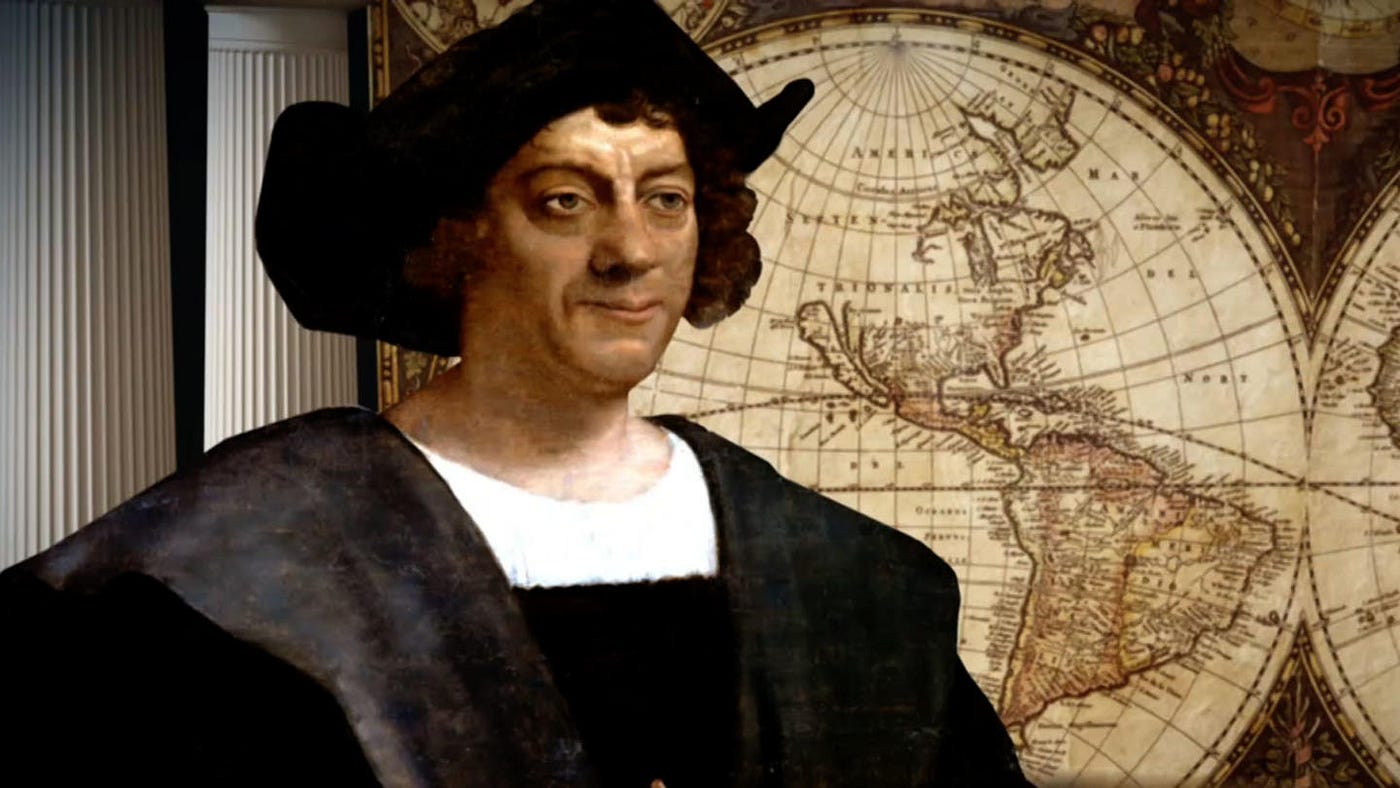
EVERYONE knows the story of Christopher Columbus – the man who sailed west and opened the door to the New World.
But fewer know the darker twists of his life. This week marks 525 years since the world’s most famous navigator, far from glory, was hauled before the Spanish Crown in chains.
We all carry some misconceptions about Christopher Columbus (Spanish people never use that name – they call him ‘Cristobal Colon‘). Though he handed a vast new continent to the Spanish Crown, making Spain the world’s mightiest nation, he himself was Italian.
His name will always be associated with America, yet in fact he discovered only the Caribbean islands and had little to do with the mainland.
The harsh truth is, the conquistadores didn’t much like Columbus. Five centuries ago, people didn’t think of nationality in quite the same way as today – someone living in Oxford would call himself a subject of the English king, rather than say, “I’m British”.
READ MORE:
- During this month in Spain: Indians revolt in Argentina, volcano erupts in the Canaries and much more
- CERVANTES: One of Spain’s greatest writers, he led a life as dramatic as his novels. Michael Coy takes a look at the man behind Don Quijote
- LIFE IN SPAIN: The story of Ferdinand Magellan, the true hero of the Spanish age of exploration
The Spanish men who flocked to the New World saw Columbus as different – Spanish wasn’t his first language, and there were whispers he was a converso, a Jew secretly clinging to his faith.
Columbus, in truth, wasn’t one of them. He was neither a sailor nor a farmer. Today we might call him a venture capitalist. His promise to the Catholic Monarchs was simple: “Fit me out with a fleet, and I’ll return with silks and spices.” In Renaissance Europe, suspicion always hung over men who made money from money.
On his first journey in 1492, Columbus reached Cuba and the Bahamas. (The word Bahama itself comes from the Spanish baja mar – ‘low sea’ – because the great ships of Castile could not get close to the shallow beaches.) A year later, his second voyage took him back to Cuba, then on to Jamaica and the Windward Islands.
By the summer of 1498, Columbus sailed from Andalucia with six ships. This expedition brought him to America proper for the first time, setting foot in what is now Venezuela.
And it was on this third voyage that his fortunes turned.
Returning to Hispaniola – the island now shared by the Dominican Republic and Haiti – he found rebellion. Some conquistadores had seized power during his six-month absence.
Columbus faced a dilemma. If he moved against the rebels, he risked stoking the resentment he knew was already brewing. But if he did nothing, he looked weak – and the monarchs in Madrid might strip him of command.
He chose force, jailing some rebels and executing at least one. But the whispering campaign grew. Letters flew back to Spain accusing him of corruption and cruelty, written by men who hoped for lucrative royal posts.
The Crown dispatched Francisco de Bobadilla to investigate. When Bobadilla’s ship reached Cuba, Columbus boarded to greet him. The meeting was brief – Bobadilla ordered him chained like a common criminal. The date was October 1, 1500.
New documents still surface. As recently as 2006, witness statements relating to the arrest were unearthed. What we can say is that Bobadilla acted rashly – at best – and at worst allowed prejudice, both xenophobic and antisemitic, to guide his hand.
The Catholic Monarchs quickly intervened. They ordered Columbus freed and summoned him to the Alhambra in Granada, where he was received with honour after six weeks in chains. Bobadilla was dismissed and forced to pay compensation.
The great navigator had one more voyage ahead – in 1502, he would reach the shores of Mexico. But perhaps the sweetest moment of his remarkable life came in the Alhambra Palace, when he knew that his enemies had been humbled and his fortune secured.
Click here to read more La Cultura News from The Olive Press.