THE little town of Hendaye lies literally on the border. The Basques – known in Spain as vascos – occupy a region that long predates modern notions of nationhood, stretching along Spain’s north-eastern coast and well into France.
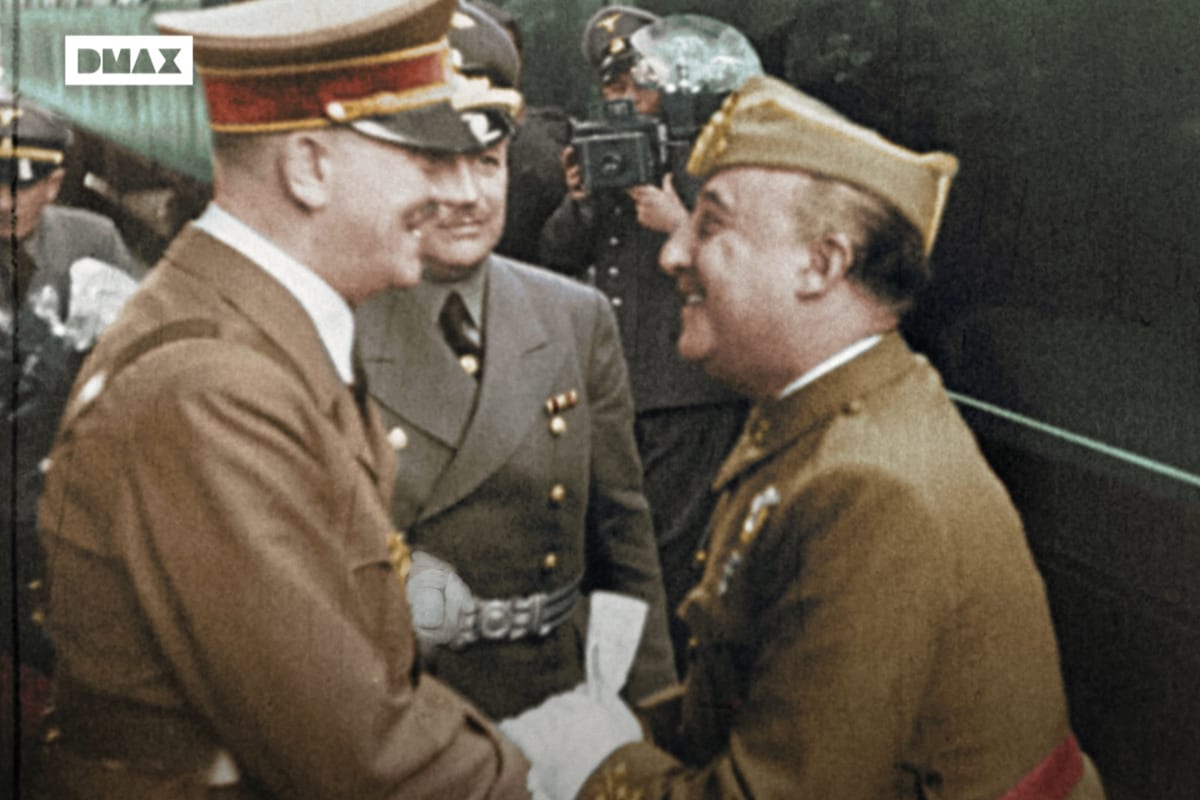
It was here that two men, each riding high at that moment, chose to meet in the autumn of 1940.
Francisco Franco was the uniform-wearing caudillo of Spain. Barely 50 months earlier, he had been an ambitious but unimportant army officer serving in Morocco.
Spain’s long-running colonial war in North Africa was draining its resources and manpower. The irregular guerrillas of the Muslim tribes were proving more than a match for Spain’s lumbering army.
Any ‘hothead’ seeking rapid promotion volunteered for service in Morocco. The dull, bureaucratic Spanish military offered little excitement.
READ MORE:
- ON THIS DAY IN SPAIN: A dodgy deal and a dynamite girl that created a country and then blew it up
- ON THIS DAY: The Battle of Lucena – where Spain’s last Muslim king lost his fight against Christianity
- ON THIS DAY: José Antonio Primo de Rivera: the fascist leader Spain never had
A junior officer in the 1930s could expect long years of garrison duty in a city like Zaragoza, with slow advancement by filling dead men’s shoes.
Africa, where there was real fighting, offered opportunities – and Franco rose quickly through the ranks.
By 1936, Spain was in crisis. The Right clung to ‘Old Spain’, with its loyalty to monarchy, Christianity and empire.
The Left embraced Marxism, following a philosophy that had recently triumphed in Russia. The two sides were on a collision course.
In July that year, Franco launched a rebellion against the Left. His movement quickly took on the trappings of the latest political fashion – Fascism. After three years of bitter civil war, he emerged as ruler of a devastated Spain.
Hitler, meanwhile, was at the height of his power in that fateful autumn of 1940. From a lowly Austrian corporal, wounded and penniless at the end of the First World War, he had risen to become Germany’s Führer and conquer much of Europe in a dazzling series of victories.
Poland, Holland and – most shockingly – France, had all fallen swiftly before his blitzkrieg, or lightning war.
In October 1940, the United States was still more than a year away from entering the conflict. Japan was expanding rapidly across the Pacific (British interests in Australia and Singapore were under threat), while Italy was advancing in Egypt and Libya and appeared poised to conquer Greece.
Only Britain, isolated and friendless, continued to resist Fascism – and in that very autumn, the Blitz was devastating its cities.
This was the perfect moment for Nazi Germany and Fascist Spain to come to an understanding.
Hitler wanted Franco to attack Gibraltar. The loss of that single naval base, he believed, would end the war in Germany’s favour. Britain would be driven from the Mediterranean.
It’s easy to forget that, 85 years ago, almost all trade and troop movement happened by sea. Air travel was still in its infancy (Orville Wright was still alive) and the movement of food, armies and diplomats all depended on ships.
If Britain lost Gibraltar, its only way of reaching the Empire would be the long route around Africa – precisely what Hitler wanted.
Germany’s fleet of fast, heavily armed “commerce raiders” – the Bismarck, Scharnhorst and Gneisenau – together with its U-boats, had one mission: to sink British merchant ships.
The longer those vessels spent at sea, the easier they were to find and destroy – and the sooner, so Hitler thought, Britain would be starved into surrender.
But as we know, it didn’t work.
Everyone who met Franco remarked on his overriding trait – stubbornness.
He had two powerful reasons for resisting Hitler’s pressure. First, he knew better than anyone how exhausted Spain was.
Three years of civil war had emptied the treasury and drained the nation’s manpower.
Second, he feared foreign entanglements. War with Britain might draw America into the conflict (Spain had lost a war to the USA within living memory) – and he had no wish to be seen, like Mussolini, as Hitler’s puppet.
Referring later to the frustrating Hendaye meeting, Hitler is reported to have said he would ‘rather have three teeth pulled than talk to Franco again’.
Spain stayed neutral, Gibraltar remained unconquered – and democracy eventually defeated Fascism.
Perhaps Hendaye was more important than we realise.
Click here to read more La Cultura News from The Olive Press.