THE date November 6 may seem to be just another day, but in Spanish minds it is associate with tales of exile.
Of the three isolated Spaniards we are going to take a look at, Juana la Loca is the saddest case. ‘Joan the Mad’ was Queen of Spain, but she spent half a century under house arrest, with no hope of leading a normal life, effectively in internal exile. Not only had she done nothing wrong – she wasn’t even mad.

Juana was born on November 6, 1479, the daughter of Ferdinand and Isabella. Her father was King of Aragon (essentially Catalunya) and her mother was Queen of Castile (the heart of the peninsula, basically Madrid). By marrying, they created the Spanish state.
In 1496 Juana married Philip, an Austrian prince. She was 16 years old, and from that point onwards, things began to go wrong. Family members who could help her – her ‘support system’, as we might say today – started dying off.
A brother and sister were lost to illness. This made Juana next in line to the throne, but deprived her of two powerful allies. In 1504 her mother died, and it was then that Ferdinand, her father, showed his true colours.
Juana was now Queen of Castile. Ferdinand was not prepared to grant her any prestige. He had her declared ‘mad’, without medical evidence, and confined to the palace at Tordesillas. He appointed himself ‘administrator’ in her place.
If Juana hoped that the Habsburg Empire – through her husband Philip – might come to her aid, she was disappointed. Philip died suddenly, soon after her arrest.
Her tyrannical father finally died in 1516, but although she was now Queen of all Spain, Juana’s luck didn’t improve. Her teenage son, Charles, brushed her aside and ruled as the new king.
She lived until 1555, spending most of her life – from age 24 to 75 – as the prisoner of her menfolk.
Carles Puigdemont is Spanish, but he doesn’t dare set foot on his native soil. A passionate Catalan separatist, he was president of Catalunya in 2017 when the region declared independence from Madrid.

Under his leadership, Catalunya held a referendum and then a vote, even though the Constitutional Court in Madrid had ruled against the plan. In October 2017 Puigdemont was charged with rebellion. To avoid arrest, he fled the country – showing up in Belgium on November 6.
Since then, he has moved around Europe, evading Interpol warrants (he was briefly detained in Germany in 2018 and in Italy in 2021) – but he still cannot return to Spain.
The most remarkable exile tale of them all is that of Alvar Nuñez Cabeza de Vaca, the Andalucian conquistador. He is the Robinson Crusoe of Spain.
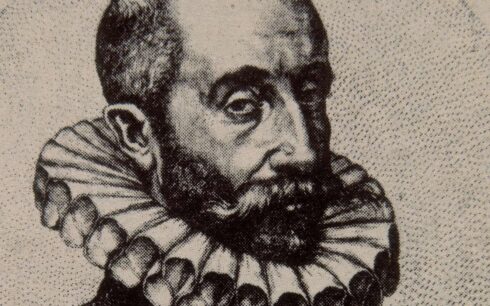
Born in Jerez in 1488, Cabeza de Vaca made a name for himself in his teenage years as a brave and intelligent soldier. Naturally, he was drawn to the New World, where young men of ability could get rich quick.
In 1527 a conquistador named Narvaez was putting together a team to explore the wilderness that is now Texas, Mississippi and Florida. There were rumours of a Native American tribe that owned great stores of gold.
The King decided to sponsor the Narvaez expedition and appointed Cabeza de Vaca as treasurer – effectively second-in-command and consigliere to Narvaez.
When they reached the Texas shore in early 1528, the conquistadores questioned local Indians and were told of fabulous gold further inland. Narvaez ordered everyone to prepare to march north. Cabeza de Vaca strongly argued that it would be wiser to stay with the ships and learn more about local conditions.
When Narvaez asked if he was afraid, Cabeza de Vaca simply had to join the march. “I preferred to die rather than be labelled a coward,” he later wrote.
What followed is one of the greatest adventure stories of all time.
They found no gold. The expedition sailed further west, but disaster struck. Shipwrecked on November 6, 1528, Cabeza de Vaca was captured and enslaved by Native Americans.
READ MORE:
- ON THIS DAY IN SPAIN: A dodgy deal and a dynamite girl that created a country and then blew it up
- ON THIS DAY IN SPAIN: Flamenco legend Antonio Gades died
- ON THIS DAY: Democracy made a comeback in Spain after Franco’s fascist dictatorship
He escaped and lived off the land. For eight years he wandered the Deep South of what is now the USA, meeting only Indigenous tribes. If they seemed hostile, he convinced them he could cure diseases.
He describes how, when you have to, you can do anything. He learned their languages and built a reputation as a faith healer.
Finally, in 1534, his wanderings took him to Mexico, where he encountered fellow Spaniards – and returned safely to civilisation.
Click here to read more La Cultura News from The Olive Press.