
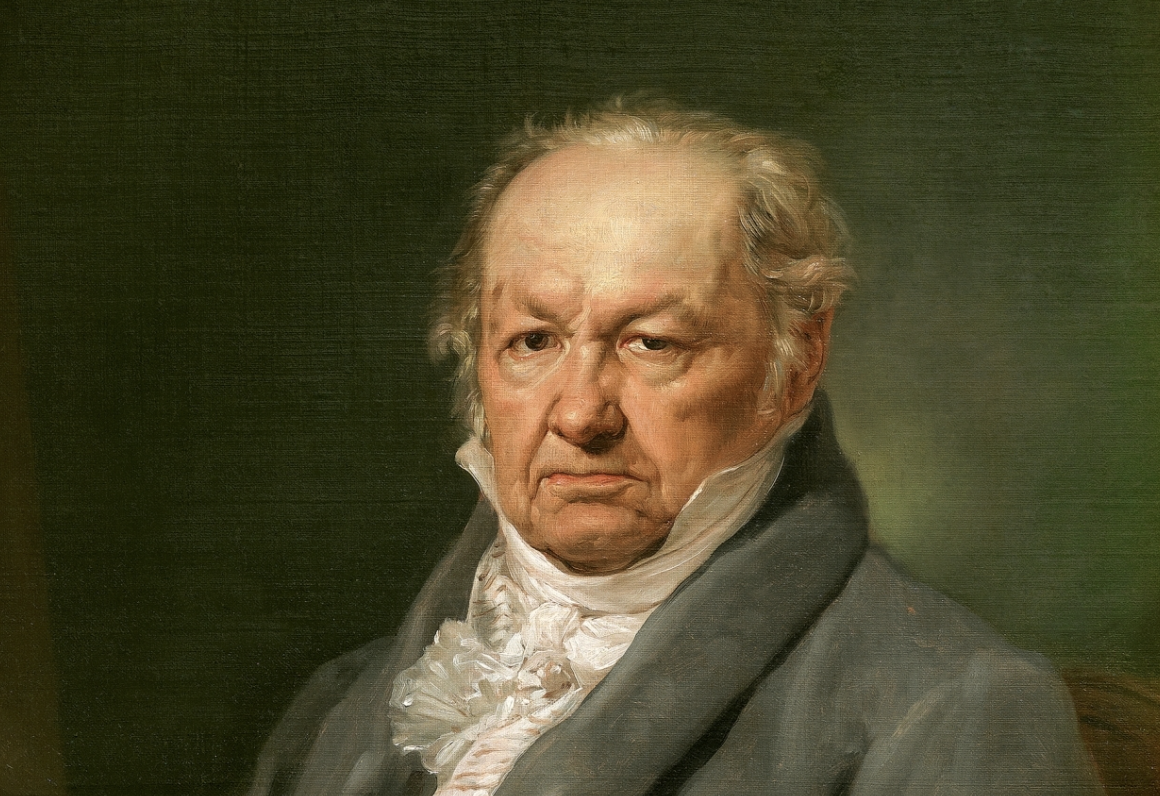
FRANCISCO de Goya did not just paint Spain’s history – he lived its most dramatic, colourful and scandalous chapters.
To mark the anniversary of his death on April 16, 1828, we look back at an outstanding artist who, much like Picasso, came to define the very essence of ‘Spanishness’.
Although he was born in Aragon in 1746, he moved to the capital as a young man to study art.
Today, most Spanish people regard him as a ‘madrileño de pura sepa’ (a Madrid thoroughbred).
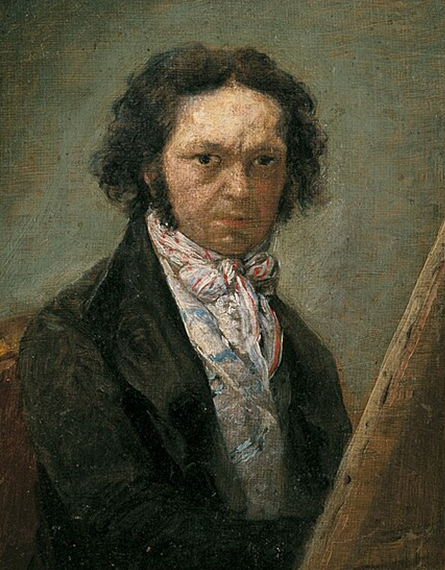
This is because his work, which is clearly divided into distinct phases, serves as a vivid, real-time chronicle of Madrid during a truly explosive era.
Young Madrid
In his 20s and 30s, Goya painted a lot of flirtatious, fun, social scenes.
There was a park in the eastern part of the city, on the banks of the Manzanares River, where young men and women could meet and socialise without attracting scandal.
In his canvas, ‘Keeping the Sun Off’ (1777), he depicts a society beauty who is set for a day’s flirting.
Her clothes are perfect, she has her fan in her hand and (most important of all) she has a servant with a parasol, so that she won’t catch the sun.
READ MORE: ON THIS DAY: The death of Pablo Picasso – but is he Spain’s greatest ever artist?
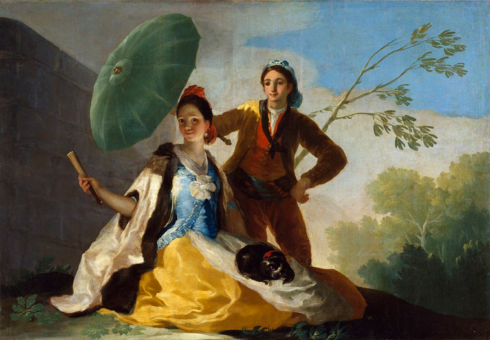
White skin was beautiful, while a tan suggested that you were a common field-worker.
In this part of his life, Goya used primary colours, and figures were solid, and stood out from the background.
Revolutionary Madrid
In 1808, the lives of all madrileños (including Goya) changed for ever.
Napoleon’s armies invaded Spain, and Goya’s paintings record the cruelty.
One of his most famous canvases, ‘The Third of May’, is almost like a war documentary in its journalistic realism.
A French firing squad is massacring ordinary Madrid citizens.
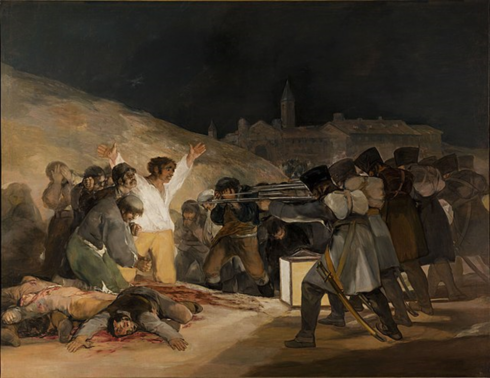
By now, Goya has mastered two Italian techniques: ‘chiaroscuro’, the ability to use light and dark to convey meaning, and ‘sfumato’ – a softening of edges for realism.
The only pure white in the picture is the shirt of the Spanish man who is about to die.
Our eyes are drawn towards him as his extended arms ask the silent question, “Why Me?”, and also remind us of Christ’s sacrifice on the Cross.
The faces of the French soldiers are hidden from us, rendering them somehow not quite human.
Agents of evil, they blend into the night of despair which has descended on Madrid.
Upper-Class Madrid
In 1786, Goya was appointed Court Painter to King Carlos III.
It was a position which carried two enormous benefits: it paid a regular salary, and it guaranteed access to the Spanish nobility.
When it came to snobbery, Spain was a more rigid society even than England.
A commoner like Goya would never normally have been able even to converse with the ‘grandees’, but now he was considered their equal.
Better still, because he was obviously one of the king’s favourites, many nobles were anxious to have their portraits painted by him.
Three years later, the new king (Carlos IV) promoted Goya and boosted his salary.
We cannot be certain, from this distance of time, whether or not Goya had an affair with the Duchess of Alba, but it seems likely.
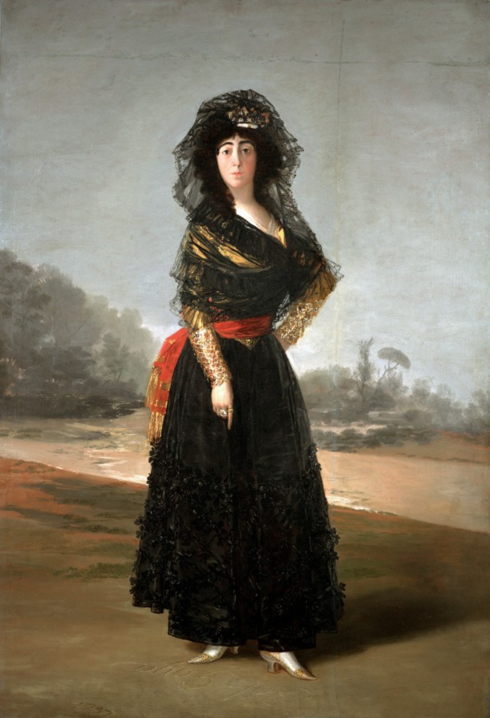
Maria Teresa de Silva was the 13th Duchess and a regular at the royal court.
She was fated to die suddenly at the age of 40 in 1802, in Sanlucar.
The death was rather suspicious.
Officially, she died of tuberculosis, but she had not shown any symptoms of illness.
The possibility remains that someone (maybe her husband?) poisoned her to ‘punish’ her for the Goya liaison.
We have several Goya portraits of her, and he seems to have given them his very best.
His ‘Naked Maja’ painting certainly raised eyebrows, as nudity was allowed only if the subject was taken from ancient mythology.
READ MORE: ON THIS DAY: The Madrid train bombings – how Spain’s worst ever terror attack unfolded 22 years ago
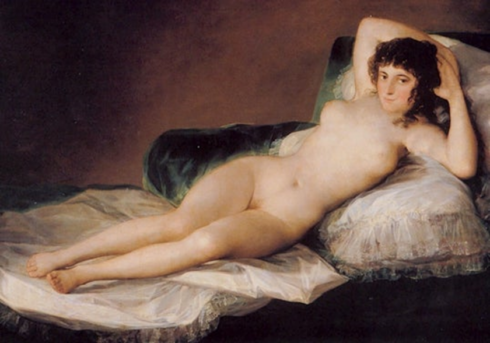
Maria Teresa is seen, in all her glory, on a very fashionable chaise-longue.
Critics have labelled it ‘the first true nude in western art’.
The relationship (if there was one) seems to have endured throughout the 1790s.
Goya survived Maria Teresa by three decades, and had more professional accolades to come.
But it’s nice to think that he devoted his best efforts to Maria Teresa, and (we hope) never forgot her.
Click here to read more La Cultura News from The Olive Press.