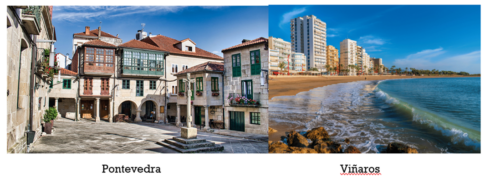
THEY’RE both seaside towns and they’re both very Spanish — but Pontevedra and Vinaròs could hardly be more different.
Each has its reason to remember 15 April.
Pontevedra, a busy working port on the Atlantic coast, is — in that familiar Galician way — devoted to serious hard work.
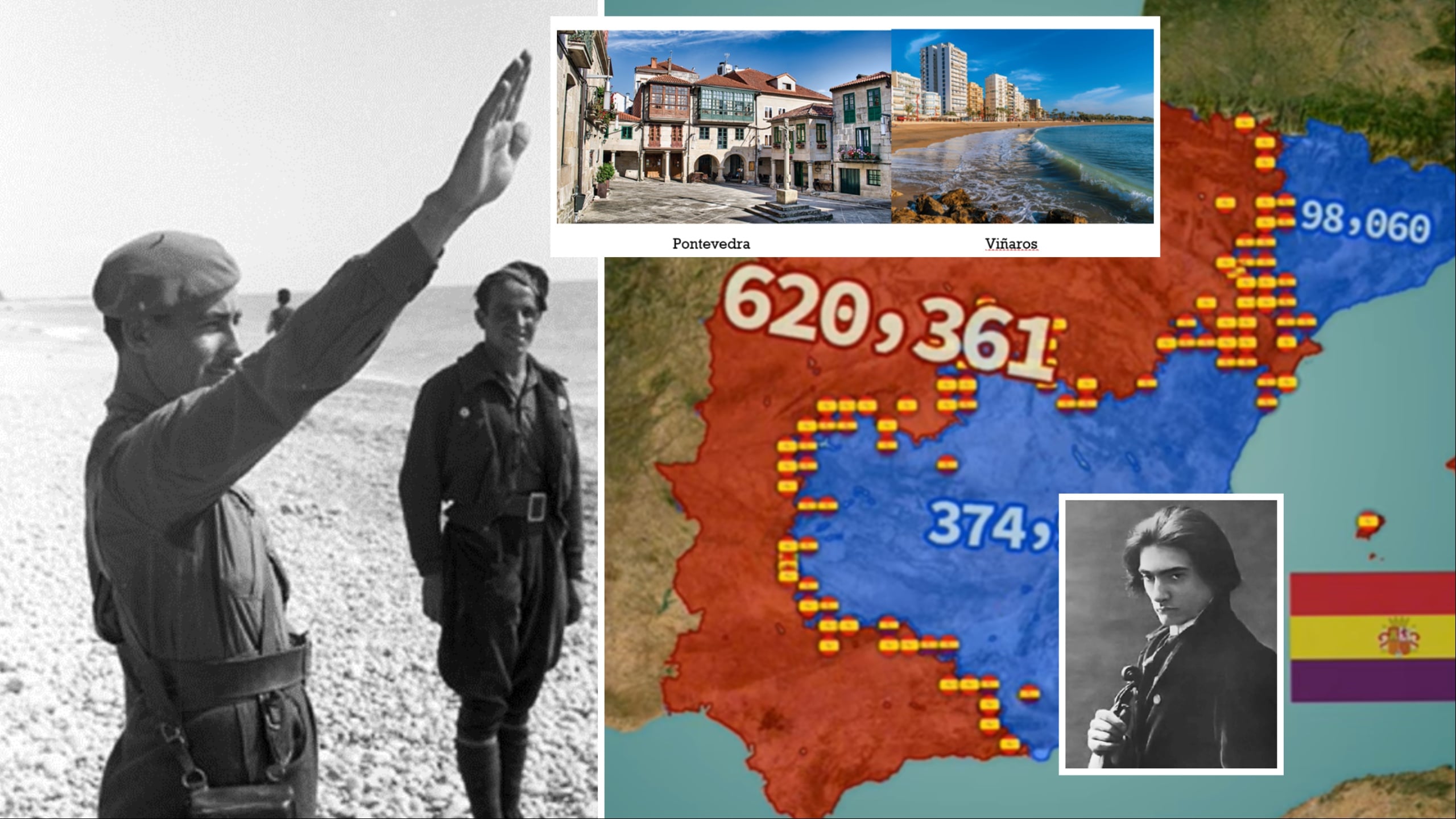
It is known for fishing, trading, for the charm of its medieval squares, and as the birthplace of a great violinist: Manuel Quiroga Losada.
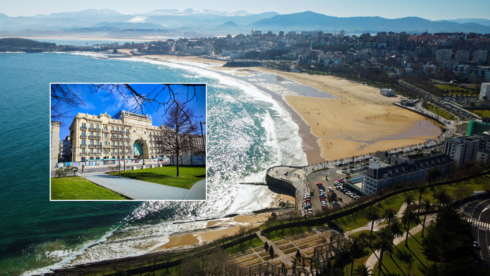
On the other side of the country, with its smiling Mediterranean beaches, Vinaròs is a place where nothing much ever happens. It is an amiable little resort, situated halfway between Valencia and Barcelona.
READ MORE: ON THIS DAY: The death of Pablo Picasso – but is he Spain’s greatest ever artist?
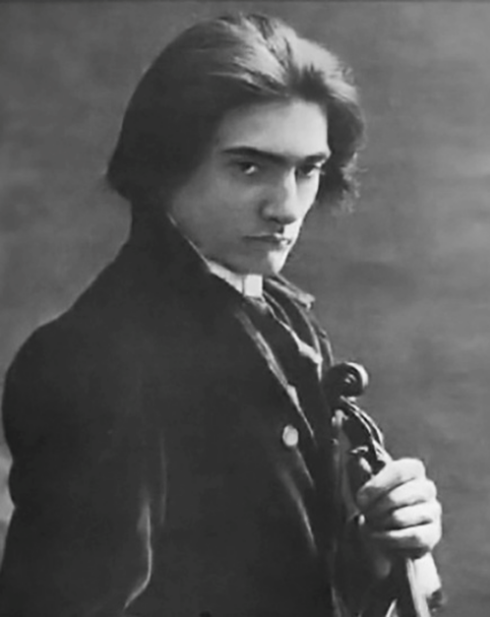
Manuel Quiroga Losada
Perhaps Spain’s most prominent violinist, Manuel Quiroga was born on 15 April 1892, and died 69 years later, almost to the day.
A native of Pontevedra, he showed astounding talent as a child and gave his first public concert at the age of eight.
At 15, he travelled to Germany to take masterclasses with Fritz Kreisler. While passing through Paris, he heard that the Conservatoire de Paris was accepting applications.
He put his name in, and was chosen first out of several hundred candidates.
A friend of the classical world’s luminaries, he knew Fauré and Falla, and did a concert tour with Enric Granados.
As a young man he made Paris his base, socialising with Darius Milhaud and Isadora Duncan.
His love of Paris was shattered when the French government arrested him on suspicion of spying.
It was the First World War, and tensions were running high. Quiroga had given a concert in Austria.
He turned, instead, to the USA. Between the two wars, he reached his professional zenith, constantly touring America, Europe and Argentina.
On 8 June, 1937, he was crossing New York’s Times Square when he was struck by a truck. His life was not threatened. But his precious right arm was badly injured — so severely that it ended his playing days.
He retired to Pontevedra.
Quiroga was subsequently diagnosed with Parkinson’s disease. He passed away in 1961.
Franco’s forces reach the sea
Though the Spanish Civil War lasted three long years, much of that time was consumed by frustrating stalemate.
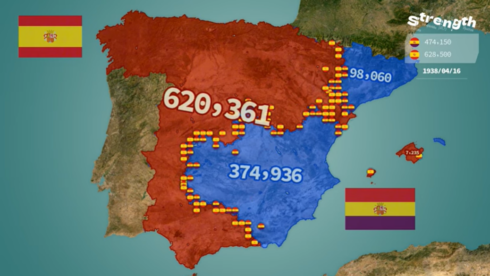
Franco’s supporters held most of the west and north, but their opponents, the Republicans, still held the east — from Almería in Andalucia all the way up to the French border.
With the three big cities — Madrid, Barcelona and Valencia — the Republicans had the advantage in manpower, and could move their units around their zone without difficulty.
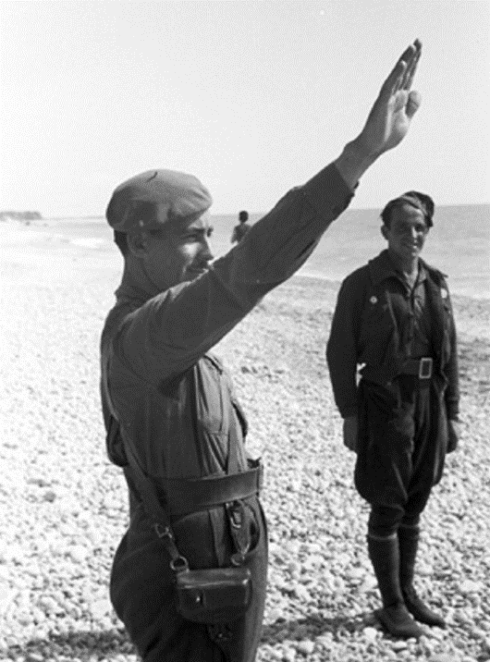
That all changed on 15 April 1938, when Franco’s troops captured Vinaròs. It was the culmination of the Aragon Offensive, and it struck a psychological blow from which the Republic would never recover.
Soldiers frolicking in the sea knew they had cut ‘leftist’ territory in two. Barcelona was now isolated, and the two halves could no longer reinforce each other.
The newly captured towns had also swung the population advantage Franco’s way.
Some leading Republicans openly declared the war lost. Prime Minister Negrín said the Republic would fight on.
If he could draw Britain and France into the conflict, he believed, Franco could still be beaten.
It was a forlorn hope. Europe’s policy of appeasement — giving Hitler and Mussolini whatever they demanded to avoid another war — was at its height.
As Spanish Republicans could have told them, the more you give Fascists, the more they demand.
Britain and France held back, fearing that any aid to the Republic would trigger a conflict with Hitler. They could not know it in April 1938, but that conflict was inevitable, and just over a year away.
In an attempt to show that the Republic was still viable, Negrín launched the Battle of the Ebro — a last hurrah that exhausted what remained of anti-Fascist resources.
The two towns on 15 April, a violinist born and a republic broken, never knew each other. Spain is full of distances like that.
Click here to read more La Cultura News from The Olive Press.