
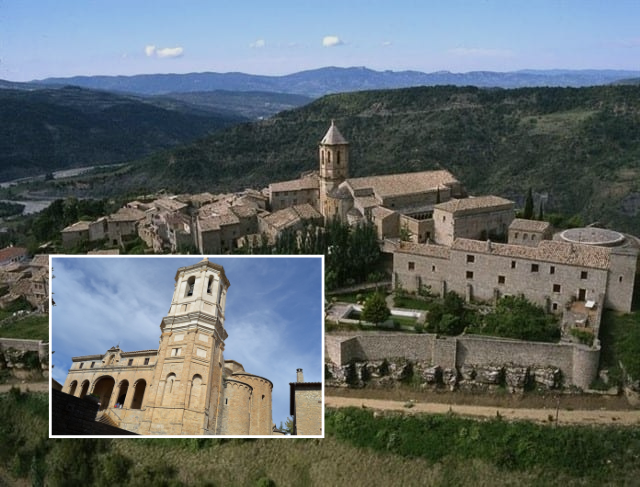
A VILLAGE in northern Spain is home to the smallest cathedral in Spain – and it was once targeted by a notorious master thief.
Roda de Isabena is a medieval hamlet of just 40 residents that proudly boasts the tiniest cathedral.
Perched above the Isabena river valley, the Cathedral of San Vicente Martir is a striking example of Romanesque architecture that dates back to the 10th century.
Despite its modest scale, the cathedral carries immense historical and artistic weight.
READ MORE: FROM THE ARCHIVES: Get off the beaten track with a holiday in Spain’s northern region Asturias
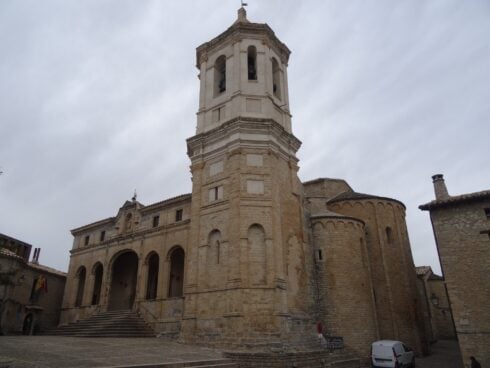
Builders originally constructed the cathedral when the village served as an episcopal seat, but a Muslim raid destroyed it soon after its consecration.
Rising again in the 11th and 12th centuries, the structure seen today retains its austere Pyrenean Romanesque character, blending seamlessly into the mountainous landscape.
Its design is simple but elegant, with three main sections ending in rounded walls, and a small cloister decorated with carved stone details and inscriptions.
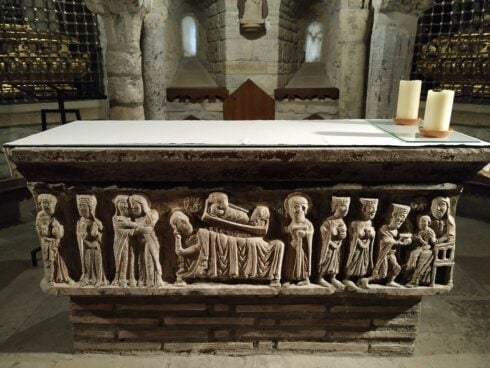
One of its most important treasures is the tomb of Saint Ramon, a bishop who helped spread Christianity across the region.
But this peaceful site has not always enjoyed quiet reverence.
The infamous art thief Rene Alphonse van den Berghe targeted the cathedral in the night of December 6-7 in 1979.
Known as ‘Erik the Belgian’, he looted dozens of sacred objects, including murals and valuable liturgical pieces.
In cases like the Roda de Isabena cathedral, he typically exploited how remote and lightly protected many rural churches were in the 1970s.
Due to the unlocked doors, Rene Alphonse van den Berghe could just walk in and take whatever he wanted.
He and accomplices entered the cathedral and stole 35-40 movable religious objects, including the chair of Saint Ramon and The Virgin and Saint Vincent Tapestry.
The theft was part of a broader wave of sacred-art robberies in Spain at the time, where smaller, isolated churches were especially vulnerable due to limited security.
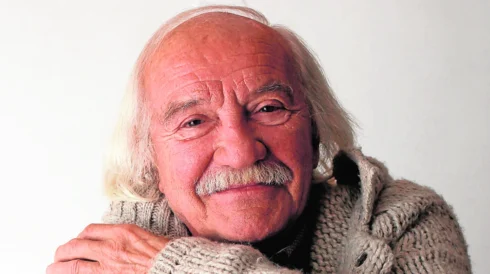
Although some items were eventually recovered, the heist left a lasting mark on the village memory.
The cathedral no longer functions as an episcopal seat, but remains the heart of the village.
Cobbled streets wind between stone houses, opening onto sweeping views of the surrounding valley.
Roda de Isabena has been recognised by Los Pueblos Mas Bonitos de España since 2019.
This cemented its status as one of the most picturesque destinations in Huesca.
Click here to read more Travel News from The Olive Press.