
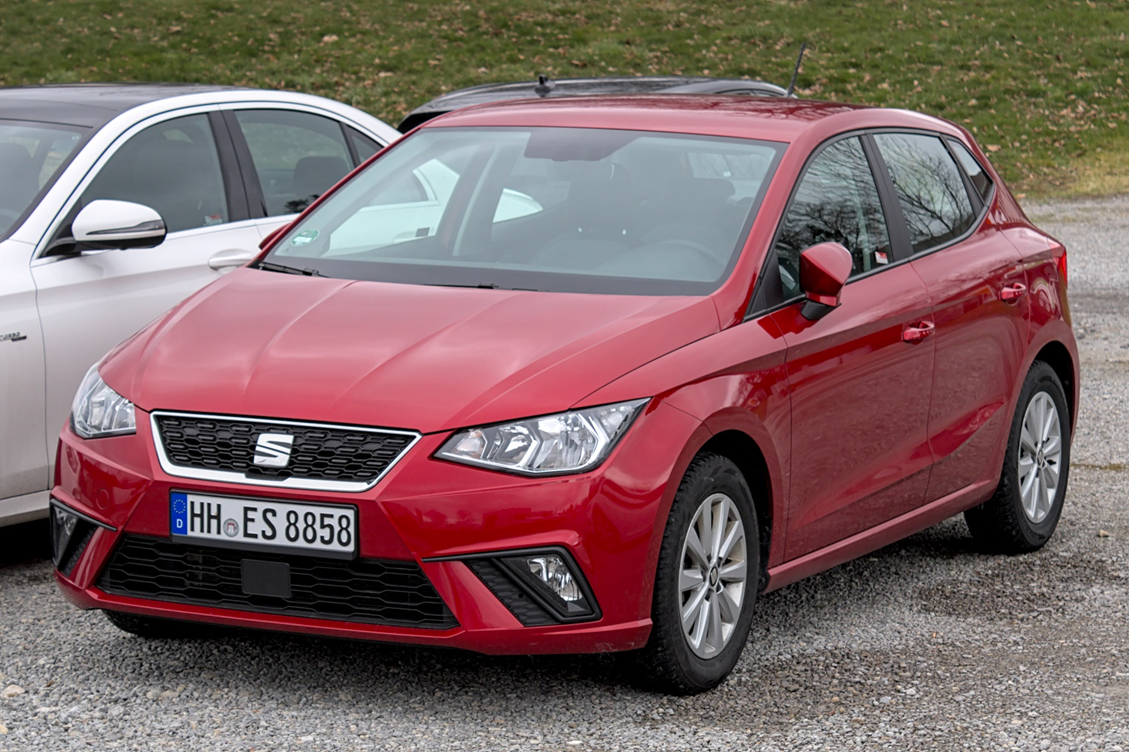
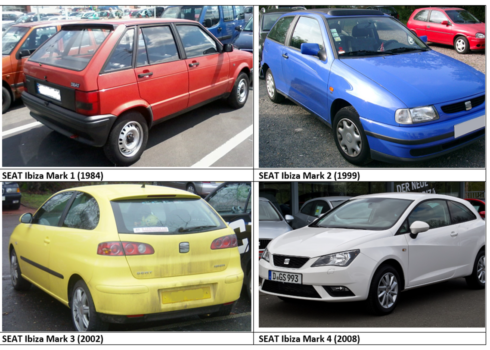
THE very first SEAT Ibiza rolled off the assembly line at Martorell, Barcelona on 27 April, 1984. Marketing had come to Spain.
SEAT (the Sociedad Española de Automoviles de Turismo) was the Spanish national car manufacturer (a sort of British Leyland with good weather) until Volkswagen bought it up in the 1980s.
Marketing is the story of capitalism in the 20th century. Before it existed, companies made products – for example, HP Sauce – and said to the public, “take it or leave it”.
The company alone decided details like the size, colour, price, etc.
Then the Americans came along.
Far more money could be extracted from the hapless punters (that’s us), said the American “Madmen”, if industry is looked at from the reverse direction.
Who buys a car? Why? Which is more important to the buyer – the sump, or the upholstery? The transmission, or the boot space? Which name is more sexy – “VW Golf”, or “T-Roc”?
It is because they ask these questions that VW/SEAT have scored such a resounding success with the “Ibiza”. It’s the group’s best-selling car.
Auto designers now say, “A 23-year-old single woman who has just finished university in Malaga is about to start a job in Antequera, and she’s about to buy a car.”
They analyse her. She wants to remain living in Malaga, and drive to and from work. No gas-guzzlers for her: she’s looking for a small, economic, easy-to-park vehicle, but she wants stereo, air-con and power steering.
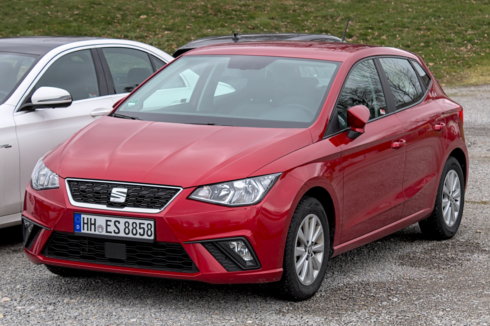
She wants a SEAT Ibiza!
The builders spend a lot of money on “focus groups”. Members of the public are asked, “What emotion does the colour lavender provoke in you?”
It sounds silly, but it works. When cars are sprayed (let’s say) metallic blue in the factory, the company already knows they will sell.
And now for another of those horrible advertising words – “convergence”.
The problem for SEAT, back in the day (and for British Leyland, for that matter) was quality control.
No-one wants to buy a car, only to have it break down immediately. German and Japanese manufacturers had the knack of reliability.
Today, cars work. Rover, SEAT, FIAT – they are essentially all built on German or Japanese frames. We’ve got reliability, but we’ve sacrificed variety.
It used to be easy to tell a Ford Prefect from an Austin Healey. How confident are you today that you can distinguish between a Ford Focus and a VW Polo?
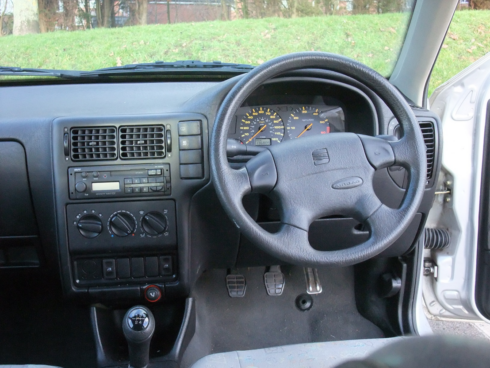
If the public liked the “cheap and cheerful” Mark 1 of the SEAT Ibiza, the critics were not so happy. They pointed out the odd dashboard, with its “quirky” instrument arrangement, and absence of control stalks.
By the time that the Mark 2 hit the streets (1992), Volkswagen had completely absorbed SEAT – and it showed.
Production values had improved, and the Ibiza had “arrived”.
It now had airbags as standard and the Polo dashboard had been incorporated into the design. A new coupé version was released (the “Cordoba”).
The car’s third generation (2002) defined the commercial battleground precisely. The Ibiza was up against the Ford Focus.
To appeal to young drivers, no fewer than two “hot hatch” versions emerged.
By now, production was closing down in Spain. The Ibiza was increasingly being built in Slovenia, to cut production costs.
Of course, electric and diesel versions had to come. When the fourth Ibiza hit the markets in 2008, it bore very little resemblance to the Spanish original.
We’re now on the fifth generation.
Sales have remained surprisingly constant over the years. Back in 1984, SEAT sold 121,500 cars and in 2024 the Mark 5 shifted 108,000 units.
2020 was its worst season (74,500 – presumably attributable to COVID), but otherwise sales have rarely fallen below a hundred thousand a year.
Spanish drivers are preoccupied by the distance between electric charging points. They call it “car autonomy”.
As the number of chargers inevitably increases, we can expect to see consumer confidence growing, and the electric Ibiza maintaining its place in the market for years to come!
Click here to read more Technology News from The Olive Press.