
Editor’s note – published a day late
SPAIN’S rich history is full of fascinating events that occurred on April 20, from Hollywood blockbusters to civil war executions and the death of a sacred Basque tree.
“EL CID” MOVIE CONCLUDES SHOOTING, APRIL 20, 1961
In the age when Rodrigo Vivar – the real El Cid – was alive, roughly the time of the Battle of Hastings, the Christians were starting to recapture territory from the Arab rulers of the Spanish peninsula.
There is a medieval poem which describes the exploits of the greatest of all Christian knights, El Cid.
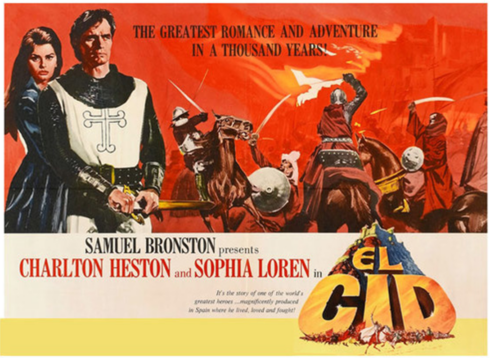
In the late 1950s an American film producer, Samuel Bronston, set up studios in Madrid because Spain was a cheap place to make movies and it had vast, unspoiled sites available for filming, such as castles, white villages and ancient windmills.
The only risk was that Francisco Franco threatened from time to time to expel all Americans, as he feared that they would pollute’ the Spanish people with democratic ideas.
Bronston decided to make the blockbuster movie, El Cid, to win Franco’s favour, noting that in his speeches, the dictator often mentioned his admiration for the knight and frequently compared himself to Vivar.
Charlton Heston was cast as the hero, Sophia Loren was the love interest, and thousands of Spanish soldiers were ‘borrowed’ for use as extras in the battle scenes during the seven-month shoot.
There are two things to note about Loren: the first is that she refused to be made up to look older in the later scenes, so when a grizzled, scarred Heston returns to her after the wars, she is still as young as at the start!
The second thing is that on the very last day of shooting, she fell down the stairs of her hotel and broke her arm.
JULIAN GRIMAU EXECUTED, APRIL 20, 1963
By the time of his execution, Julian Grimau was 52 years old, having spent his youth during the Spanish Civil War in Barcelona as a high official in the communist party.
It is said that he ran a prison in which Franco supporters were tortured and murdered.
He fled abroad at the close of the war, but in the 1950s he joined a spy-ring which was trying to infiltrate Spain.
Perhaps Grimau ‘inserted’ himself on a spying mission, or perhaps he was in some way handed over to Franco’s men by double agents, but however it came about, he was arrested in Madrid in 1960.
READ MORE: ON THIS DAY: The death of Pablo Picasso – but is he Spain’s greatest ever artist?
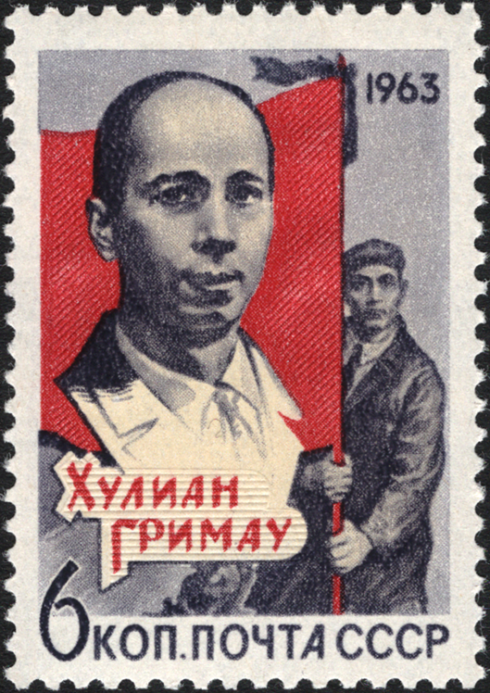
During questioning, he “accidentally” fell from an upper-storey window, badly injuring his skull and his wrists in what Franco’s secret police unsurprisingly dubbed an attempted suicide.
By 1963, Franco had been the sole ruler of Spain for about 25 years, and Civil War attitudes had somewhat softened during a decade when ordinary prisoners were being pardoned by the thousand.
But Grimau had tortured prisoners in Barcelona and could expect no leniency, leading to a trial before a military committee – rather than a court of law – that was an absolute farce.
The prosecution offered a lot of hearsay but no facts, and the committee ruled him guilty without even retiring to discuss the case.
The initial firing-squad was made up of Guardia Civil officers, but they flatly refused to shoot the prisoner, meaning army volunteers had to be brought in to execute him.
THE SACRED OAK TREE OF GUERNICA DIES, APRIL 20, 2004
For probably a thousand years, the Basques of north-eastern Spain have made their own laws and settled their own disputes, with a panel of elders meeting under a specific oak tree in the town of Guernica for this very purpose.
The last ‘great’ oak died on April 20, 2004, at the age of 146, and while a replacement sapling has been selected, it is not clear at what stage it will start to act as the “official” oak.
Height matters for this tradition, and the outgoing tree was 4.5m tall.
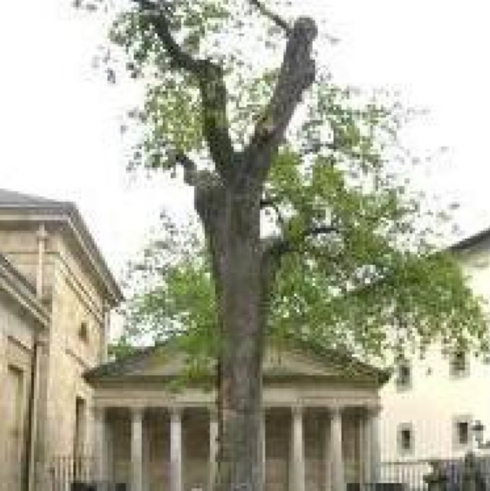
The sacred tree miraculously survived the German Luftwaffe’s intense bombing of Guernica in 1937, but as it aged its health suffered greatly.
Armillaria mellea is one fungus which attacked the tree, while another parasite reduced its ability to sprout new leaves by 90%, and the unusually hot summer of 2003 weakened the tree disastrously.
The soil eventually had to be entirely replaced to remove all fungus spores.
You can be sure that The Olive Press will keep a “tree watch” going, and inform you of any arborial alarms.
Click here to read more La Cultura News from The Olive Press.