
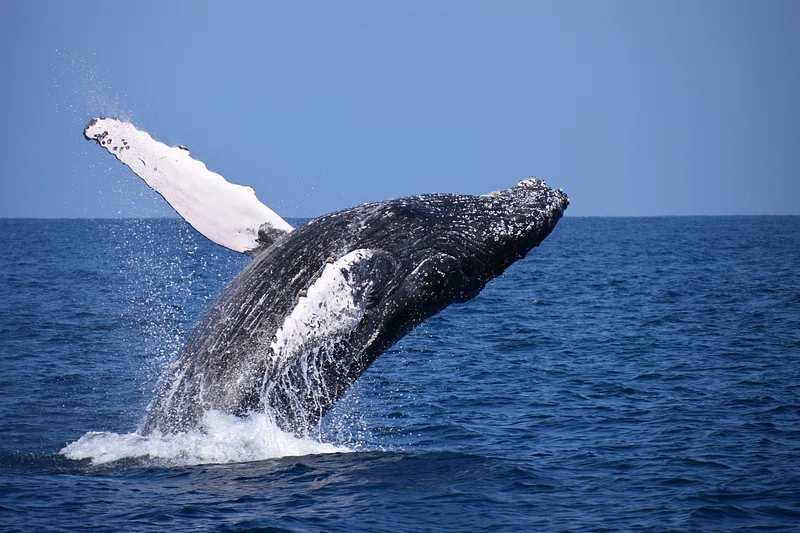
The waters of the Strait of Gibraltar have become so noisy that whales are being pushed to their biological limits just to be heard.
The waters beneath one of the world’s busiest maritime corridors are so noisy that long-finned pilot whales are struggling to communicate.
Researchers say the soundscape is akin to living next to a 24-hour industrial machine.
More than 60,000 vessels pass through the Strait every year, producing persistent underwater noise levels ranging from 79 to 144 decibels.
Scientists say this creates an acoustic environment where normal whale communication is increasingly impossible.

Researchers from Aarhus University found that the whales have significantly increased the volume of their calls in recent years.
Most alarmingly, they may have reached their physiological limit and cannot call any louder.
The findings are based on a multi-year study using suction-cup sensors, attached to 23 whales in the Strait.
The devices recorded over 1,400 vocalisations in three years, showing how the animals adapt to rising noise pollution.
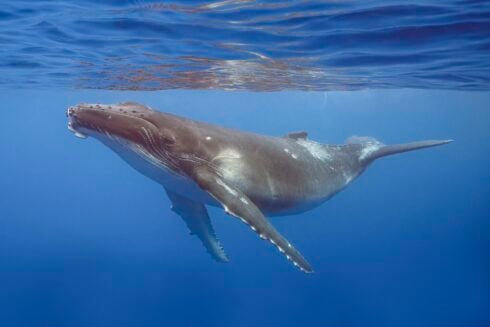
What they discovered is particularly concerning as low-frequency calls – essential for maintaining group cohesion – are the most affected.
These calls are what keep pods together, especially when mothers and calves separate during deep dives.
Engine noise masks those signals and this results in the breaking down of social structures.
The local population is already critically small, estimated at around 250 individuals.
For such a limited group, communication failure is a direct threat to survival rather than a minor inconvenience.
Without reliable vocal contact, whales struggle to coordinate hunting, locate mates and maintain family bonds.
Researchers warn that this leads to an ‘invisible isolation’ at sea, where animals may be physically present but socially disconnected.
Experts from the Polytechnic University of Catalunya warn that noise pollution is one of the most underestimated threats to marine ecosystems.
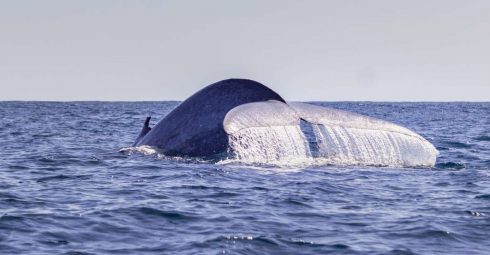
It does not kill instantly, but disrupts everything from plankton behaviour to top predator communication.
In the Strait of Gibraltar, researchers say the situation has become urgent.
Some are now calling for urgent measures to be implemented, such as reducing ship speeds and rerouting traffic lanes.
Click here to read more Gibraltar News from The Olive Press.