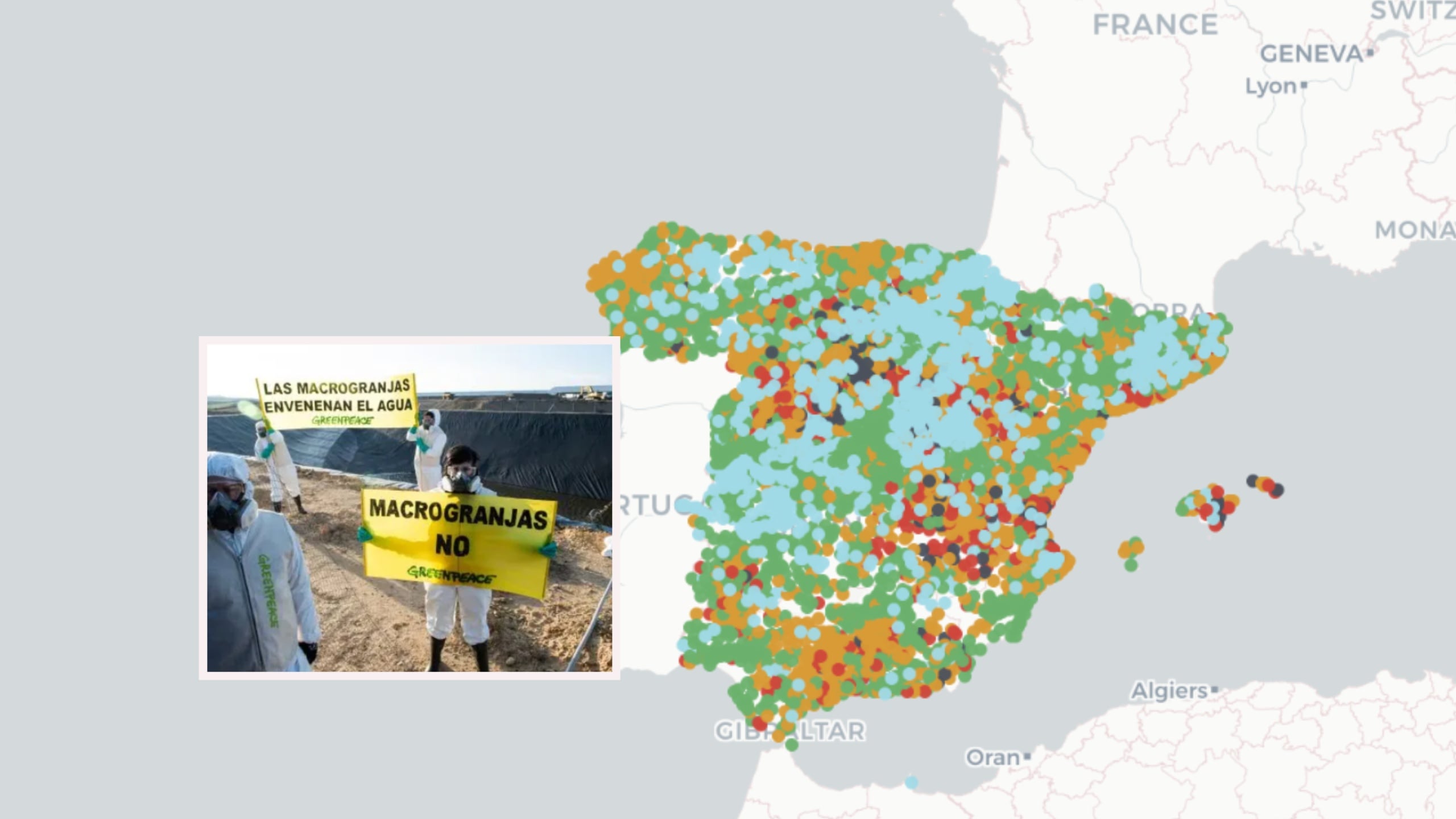
ACTIVISTS from Greenpeace have unveiled a map that shows which regions in Spain are suffering from nitrate pollution and poor water quality.
Spain is known for its livestock farming and meat exports, but is the massive output decreasing the overall quality of drinking water?
Global environmentalist group Greenpeace has published a map that shows Spain’s concerning water situation.
Based on new data from the National Drinking Water Information System (SINAC), more than half of the municipalities across Spain have high levels of nitrates in water.
READ MORE: Relief for holidaymakers as Spanish airport strikes are called off ahead of Easter getaway rush
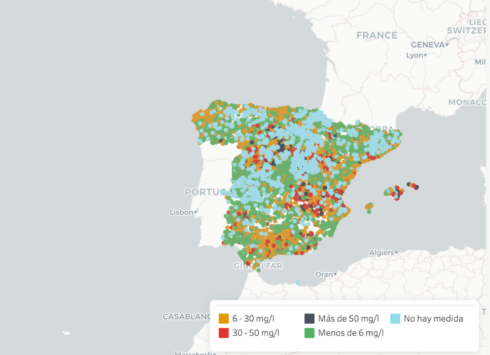
There were 332 towns shown in black on the map, which represents unsafe tap water that is considered undrinkable due to the concentration of nitrates exceeding the legal limit of 50 mg/l.
Towns marked in red are considered to have nitrate levels between 30 and 50 mg/l, meaning it is at a critical point under legislation.
The towns highlighted in orange have levels of nitrates between 6 and 30 mg/l, while places marked in green have nitrate levels below 6 mg/l.
Around 23% of Spanish municipalities (1,893 towns) have not yet had their levels of nitrates measured, leaving them marked in blue.
READ MORE: Relief for holidaymakers as Spanish airport strikes are called off ahead of Easter getaway rush
The issue had already become so pressing that the EU’s Court of Justice issued a judgement against Spain in 2024 for non-compliance with the Nitrates Directive.
Not only does the problem still exist, but it is looking much worse now that the current legal limit is being called to be reduced to 6 mg/l.
This would be a drastic reduction by nearly nine times the current level, also leaving a much larger portion of Spain in the black or red.
The most concerning areas listed as black zones are Humilladero (104 mg/l), Alamedilla (63 mg/l), Viator, Almeria (52 mg/l), and Castillo de Locubin (50 mg/l).
READ MORE: Relief for holidaymakers as Spanish airport strikes are called off ahead of Easter getaway rush
Several regions in Spain are grappling with high nitrate levels with over 50 mg/l of contamination.
Valencia tops the list with more than 20 areas, followed by the Balearic Islands with 15, and Girona with 7.
Outside Catalunya, the map shows 7 surrounding areas in the black category as well.
Burgos is also significantly impacted, with more than 30 areas exceeding the threshold.
READ MORE: Relief for holidaymakers as Spanish airport strikes are called off ahead of Easter getaway rush
Outside the Basque Country, an additional 7 areas are experiencing nitrate levels at or over 50 mg/l.
Areas within the Costa del Sol currently marked as red and nearing a crucial point under the legislation are Alhaurin el Grande (34 mg/l), Algarrobo (31 mg/l), and Benamargosa (42 mg/l).
According to Spain’s 2024 water quality report from the Ministry for Ecological Transition, nitrate levels were higher in both surface and groundwater.
Nitrate pollution is one of the biggest impacts to drinking water. Not only does it cause environmental issues like the loss of biodiversity and deterioration of water quality, but it can also affect human health, even being linked to the development of colorectal cancer.
READ MORE: Relief for holidaymakers as Spanish airport strikes are called off ahead of Easter getaway rush
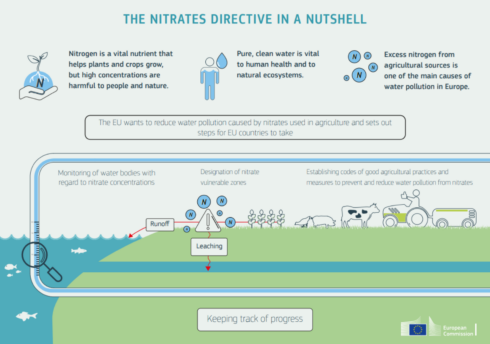
While there is typically a low amount of nitrates in water from organic matter breakdown, the issue is when these levels are raised. Common reasons for exceeding nitrate levels include farming fertilizers and livestock farming.
It doesn’t help that one of Spain’s largest exports is pork. Since the 1960s, the amount of pigs slaughtered in Spain has increased by 2,000%. In 2025 alone, nearly 1 billion animals were killed for human consumption, a number activists claim is far too high for the generating of excrement.
Just as Greenpeace addressed the current problem, they believe there is a solution: to alter the current method of livestock farming which they claim is ‘destructive, cruel, and vulnerable.’
Click here to read more Spain News from The Olive Press.