
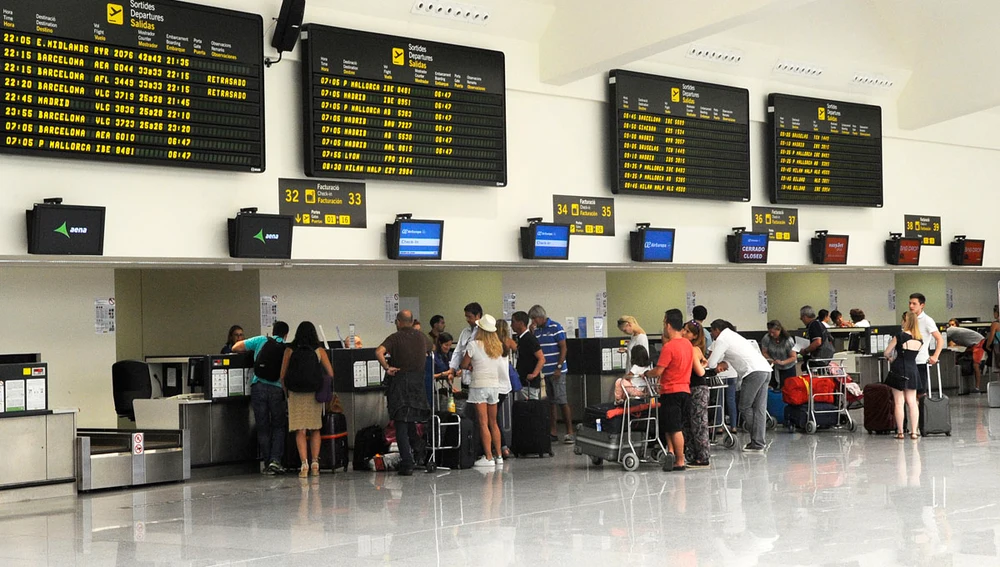
SPAIN’S airport company has been hit with a €10 million fine for installing facial recognition cameras intended to speed up boarding.
These cameras took pictures of passengers’ faces before they stepped foot onto planes – they formed part of a biometric boarding process implemented by airport company Aena.
The Agencia Española de Proteccion de Datos (AEPD) has now hit Aena with a fine that amounts to €10,043,002, according to El Confidencial.
READ MORE: Scenes of chaos at Tenerife South Airport as EES rollout continues to gridlock Spain’s airports
AEPD concluded that Aena’s biometric identification systems were implemented without an Evaluacion de Impacto en Proteccion de Datos (EIPD) meaning that they did not comply with the general rules of data protection in the country.
These biometric systems collected data at security, boarding gates, and bag drop off with passengers volunteering to participate, provide their information, and have their photo taken.
Now, the process’ temporary suspension has been ordered with traditional identity verification systems being allowed to continue to occur.
In response to the fine, Aena told the media on Tuesday that ‘it respectfully disagrees with the sanction imposed by AEPD both on substantive and procedural grounds’.
Aena will present this belief before courts despite the AEPD insisting that the company did not comply with its formal obligation to draw up an EIPD prior to the programme’s beginning.
READ MORE: Wetherspoon’s global takeover starts at Alicante airport in Spain – Dilip Kuner gives his verdict
According to the AEPD this means that Aena’s digital system, which was part of their strategic plan for 2022 to 2026 to streamline airport traffic, did not comply with data protection regulations.
The AEPD also confirms that Aena, which is chaired by Maurici Lucena, was aware that this system had high risk implications during its Menorca and Madrid pilots – they had even consulted the agency on two occasions about how best to process data.
Aena’s forecast analysis of risk impact allegedly was inadequate and, therefore, AEPD points out that it should not have expanded its pilot project to other airports, such as Barcelona.
On the contrary, Aena guaranteed that it has not breached security, gone through the users’ data, or transferred information to a third party, stating that ‘the custody of this data has not been at risk at any moment’.
Highlighting the voluntary aspect of the system, Aena insists that it has respected Spain’s data protection rules and aims to ‘restart the programme as soon as possible’.
Click here to read more Spain News from The Olive Press.