
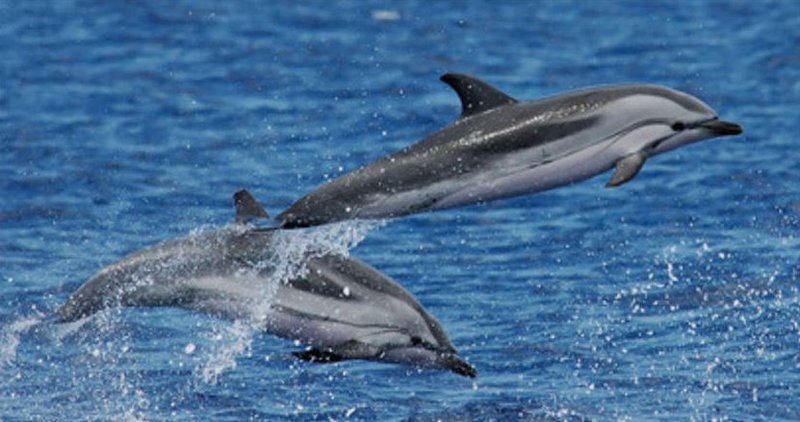
A DARK, curved fin slices briefly through the Atlantic’s surface before vanishing into the blue. Moments later, a sleek grey back breaks the water again, followed by another.
As a small pod of dolphins moves effortlessly alongside the boat, everything around it remains quiet. The soundtrack to the encounter is the muted sloshing of ocean water on the vessel’s hull.
This is the kind of experience increasingly being promoted off the southwest coast of Tenerife, where whale and dolphin watching is undergoing a subtle but significant transformation.
READ MORE: The ancient capitals of Spain – Ten cities that were once seats of Spanish power
Rather than chasing dramatic close-ups or guaranteeing sightings, a growing number of operators are embracing a slower, more respectful approach that places animal welfare and environmental awareness first.
Among those leading the change is veteran skipper Sergio David Hernandez Herrera, who has spent more than two decades navigating these waters.
His guiding principle is simple: whales are not pursued. If they surface nearby, the moment is observed quietly; if they dive or move away, the boat follows suit.
“The animals decide,” he told El Pais. “Not the timetable.”
The waters between Punta de Teno and La Rasca form one of Europe’s most significant marine habitats.
Thanks to steep underwater drop-offs and nutrient-rich currents, the area supports an extraordinary diversity of cetaceans, with around 23 species recorded.
Most notable are the resident pilot whales, which live here year-round, making Tenerife one of the few places in the world where they can be reliably observed without seasonal migration.
Yet this natural wealth has not always been treated gently.
Tenerife welcomes millions of visitors every year, and whale watching has long been one of the island’s headline attractions.
At its busiest, the industry has been criticised for overcrowded boats, excessive engine noise and vessels converging on the same pods.
While legal, such practices can disrupt natural behaviour and cause stress to animals – ultimately undermining the experience itself.
In response, a new model of conscious navigation is taking hold.
Small operators are leading the way, using compact boats with limited passenger numbers and prioritising education over entertainment.
Encounters are shaped by the animals’ behaviour rather than marketing promises. Engines are slowed or switched off, strict approach distances are maintained, and boats position themselves carefully to avoid surrounding whales or dolphins.
This approach aligns with wider efforts by local authorities and conservation groups to regulate marine tourism.
Tenerife has become a reference point for ethical whale watching in Spain, with operators required to follow codes of conduct designed to reduce noise pollution, limit the number of vessels near a pod, and encourage responsible observation.
But conservation extends beyond that, with many operators now actively participatinh in marine research and environmental initiatives.
Floating plastic debris is routinely collected during excursions, logged and passed on to projects monitoring pollution patterns around the Canary Islands.
What distinguishes these excursions most clearly is their pace. Without crowded decks or loud commentary, passengers are encouraged to watch patiently and accept that wildlife encounters cannot be staged.
Not every trip produces dramatic sightings – and that, operators argue, is precisely the point.
When moments do happen – a pod surfacing nearby, a calf gliding close to its mother, or dolphins weaving silently through the swell – they feel earned rather than engineered.
This mindful approach is attracting a growing number of travellers seeking alternatives to mass tourism.
It also resonates with locals, many of whom are rediscovering the richness of their surrounding seas through a lens of stewardship rather than exploitation.
The contrast with Tenerife’s busy resort strips is striking. While tourism remains vital to the island’s economy, initiatives like conscious whale watching suggest a more balanced path forward – one that values long-term preservation over short-term spectacle.
As destinations across southern Europe grapple with questions of sustainability, Tenerife’s waters offer a clear lesson: the most powerful travel experiences do not come from getting closer at any cost, but from knowing when to hold back.
Click here to read more Olive Press Travel News from The Olive Press.