SPAIN’S Transport Minister Oscar Puente has urged the public not to speculate about the cause of Sunday’s high-speed train crash near Adamuz in Cordoba province while investigators are working to establish what went wrong.
Puente called the derailment ‘tremendously strange’, stressing that the incident happened on a straight section of line and on infrastructure that had been completely renewed in May 2025.
He added that the Iryo train involved was less than four years old and was ‘practically new’.
READ MORE: Spain’s PM Pedro Sanchez to visit train disaster crash site where at least 39 people died
He said those factors make it harder to explain why a modern train would come off a renewed line, and warned that it was premature to draw conclusions before investigators have reviewed technical data from both the trains and the track.
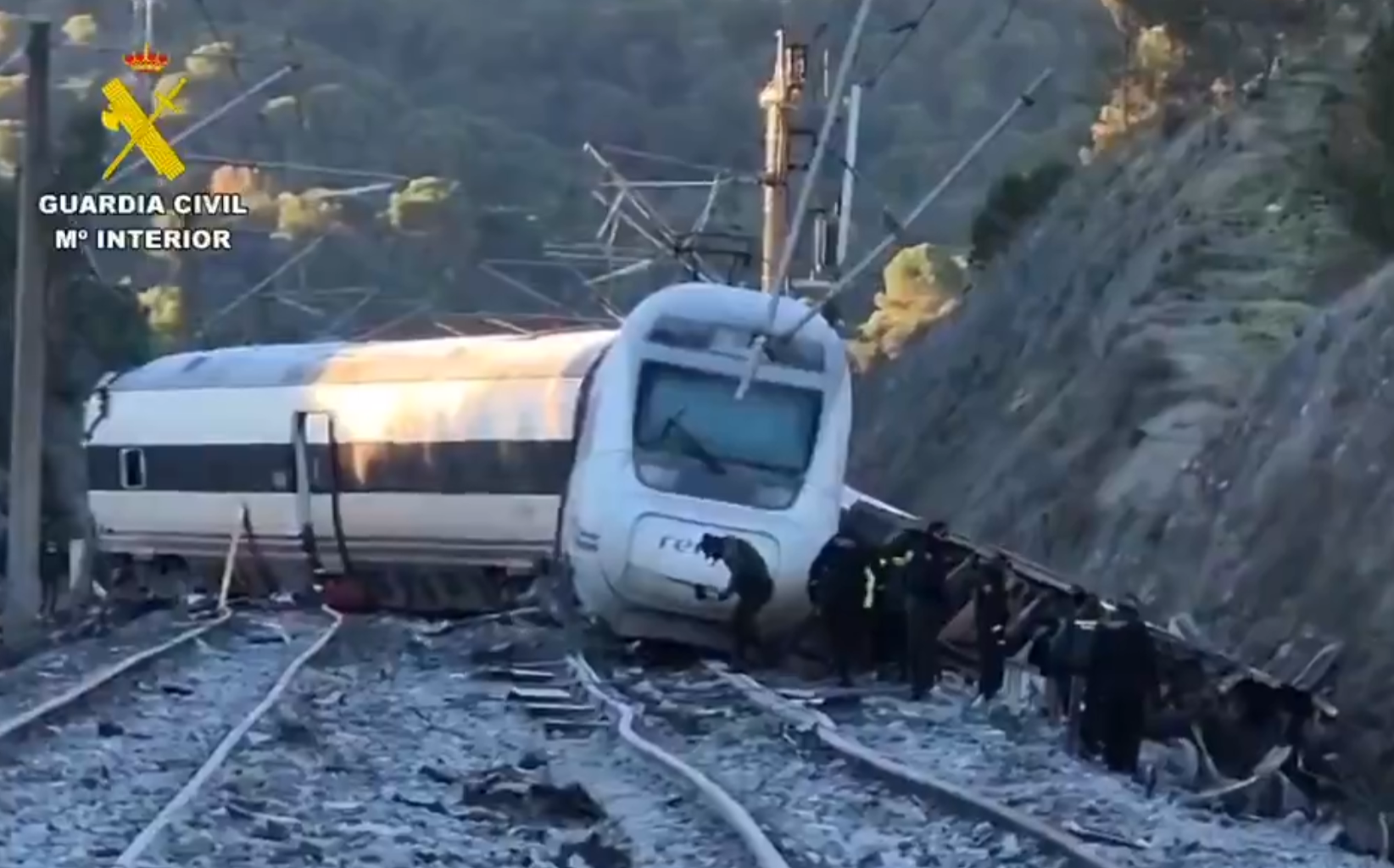
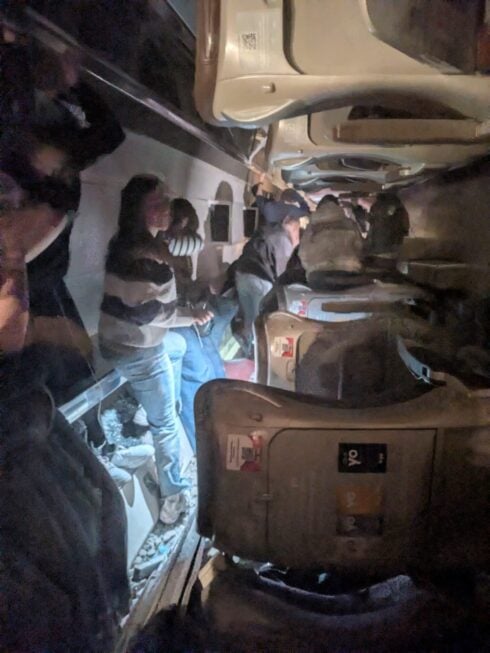
The crash happened yesterday evening (Sunday January 18), when an Iryo service travelling from Malaga to Madrid derailed and then struck a Renfe Alvia train heading from Madrid to Huelva, sending the Renfe train’s leading carriages down an embankment.
Initial reports said at least 21 people were killed and 75 injured, including 15 in serious condition, with emergency crews working through mangled wreckage as families waited for updates.
READ MORE: IN PICS: Death toll from horror high-speed train crash in southern Spain rises to 39 as rescue efforts continue
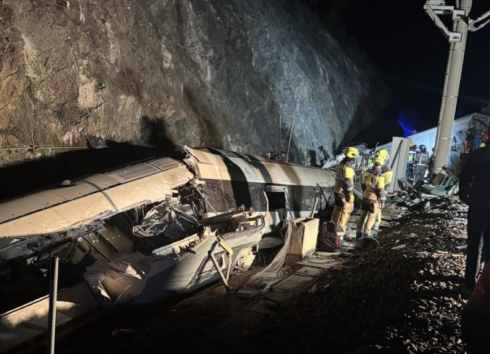
But the death toll rose to at least 39 overnight, with more than 150 people injured.
One passenger, Ana, who was travelling with her sister on the Iryo Malaga–Madrid service, told El Pais that badly injured people were in front of them and there was nothing they could do to help.
Her sister survived but remains under observation.

One of the most detailed early technical explanations so far has come from civil engineer Jose Trigueros, who said the two trains were so close together when the derailment happened that the timing may have left safety systems with too little margin to prevent impact.
Trigueros said images from the scene suggested the Madrid–Huelva train was already very near the point of collision when the other train’s carriages came off the rails, meaning automatic braking and protection systems may simply not have had time to stop the crash in the final moments.
He also pointed out that the affected stretch of line had been renewed in May 2025 and that modern systems are designed to prevent trains exceeding permitted speeds even without direct driver action, making a simple ‘speeding’ explanation less convincing on its own.

READ MORE: LATEST: At least 39 dead and over 150 injured after two high-speed trains derail in horror crash in southern Spain
While stressing it is far too early to assign blame, Trigueros said one hypothesis investigators may examine is whether there was a mechanical issue affecting the running of the Iryo train rather than a fundamental failure of the infrastructure.
The crash has triggered a wave of public anxiety, with high-speed rail passengers using social media to claim trains have felt noticeably rougher in recent months and even over a year compared to earlier periods.
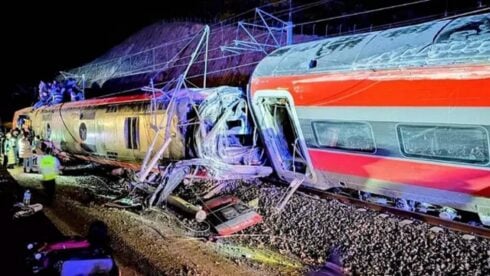
Some users said they had experienced strong side-to-side movement and vibrations on routes including Sevilla–Zaragoza, Madrid–Valencia and Ciudad Real–Alicante, describing journeys as unsettling and ‘not normal’.
The disaster has also reignited the wider question of whether Spain’s high-speed network is safe, in a country that has built one of the world’s largest modern rail systems outside of China, and where high-speed travel is part of daily life for millions of passengers.
Outside of rare disasters, Spain’s rail network has a relatively strong safety record.
READ MORE: Spain unveils new €60 pass granting unlimited travel on all trains and long-distance buses – all you need to know

In 2023, there were 24 rail fatalities nationwide – the majority not involving passengers or staff – and this was below the average for the past decade.
Official safety reports have characterised serious accidents on the network as uncommon.
The last catastrophic high-speed incident was the 2013 Santiago de Compostela – although they remain extremely rare.
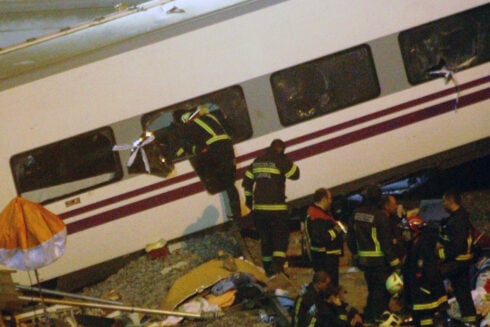
That crash – the worst on Spanish high-speed rail in decades – killed 79 people and prompted industry-wide reviews of safety systems, including automated protection technology.
EU safety statistics show railway fatalities across the European Union have fallen steadily over the past decade, dropping from more than 1,200 in 2010 to around 750 in 2024.
The European Union Agency for Railways has described the bloc’s rail system as having a ‘very high’ safety level, with rail considered the safest form of land transport in Europe and passenger fatality rates comparable to air travel.
Click here to read more Andalucia News from The Olive Press.