
A THREE-DAY nationwide strike that threatened to cripple Spain’s rail network has been cut short after union leaders thrashed out a deal with the government.
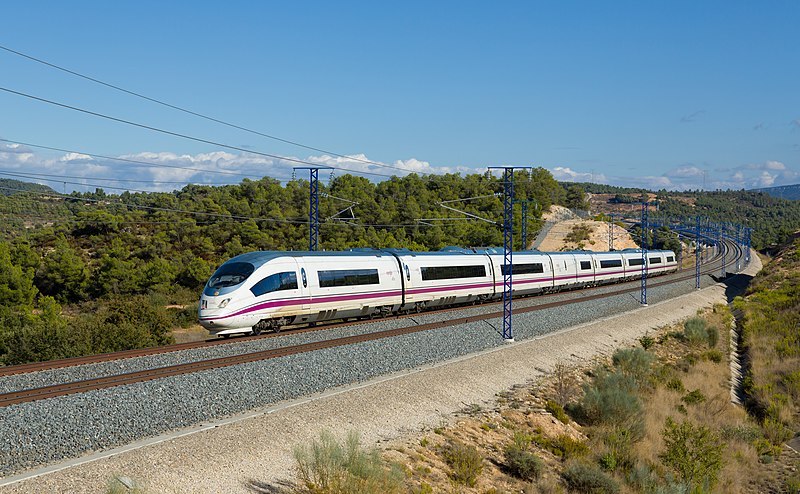
More than 330 high-speed train services were cancelled on Monday after Semaf, the train drivers’ union, spearheaded a walkout in protest at what it labelled as ‘the constant deterioration of the rail network’.
Commuter routes were also impacted, with trains operating at minimum service levels of between 75 per cent at peak times and 50 per cent during off-peak hours.
But the strike has been called off two days early after trade union representatives and officials from the transport ministry finally reached an agreement at the fourth attempt.
However, only Semaf, the Workers’ Commissions (CCOO) and the General Workers’ Union (UGT) have backed the deal, with three other unions – the General Confederation of Labour (CGT), Sindicato Ferroviario and Alferro – vowing to continue with strike action.
In a statement, the CGT said the agreement ‘does not represent a real change in the railway model’, but rather a ‘new patch aimed at defusing the conflict without addressing the causes that have led the sector to its current situation’.
A representative for Alferro said the deal was ‘not enough’, adding: “There are no real and immediate measures to reinforce safety: only bureaucracy and plans with no impact on daily operations.”
The divide means much of Spain’s rail network will continue to face disruption over the coming days, with around 20 per cent of staff affiliated with the three dissenting unions.
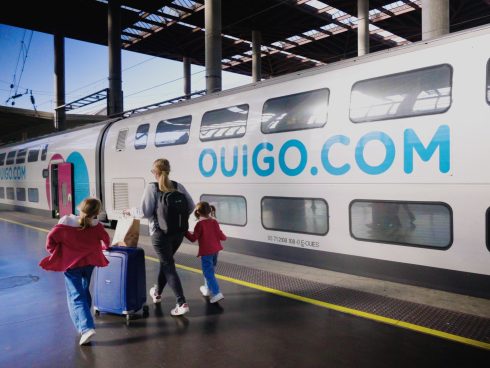
As a result, nearly 40 high-speed services run by operators Iryo and Ouigo will remain cancelled.
In Catalunya, the Rodalies commuter network announced that normal services were expected to resume, although it warned that ‘there may be disruptions at the start of the service’.
The strike was called by some of the country’s biggest trade unions after Spain was rocked by a string of fatal crashes last month.
On 18 January, two high-speed trains derailed in Adamuz, Cordoba in Spain’s deadliest rail accident since 80 people were killed in Santiago de Compostela in 2013.
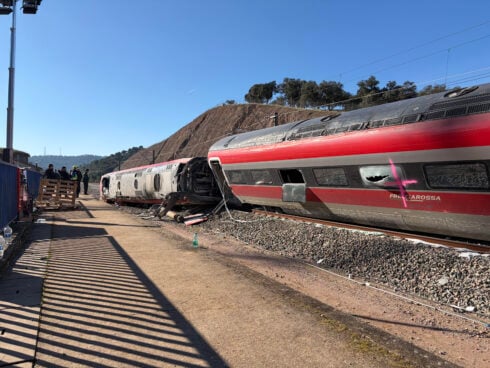
Some 46 people were killed and hundreds injured after the rear carriages on a Madrid-bound Iryo service carrying over 300 passengers flipped onto an adjacent line and collided with an oncoming train destined for Huelva.
A preliminary report published by the rail accident investigation commission suggested that the crash was caused by a 30cm fracture in the track.
Two days later, a train driver was killed and over 40 passengers hurt on Barcelona’s Rodalies network after a R4 line service came off the tracks between Gelida and Sant Sadumi.
The train derailed after colliding with a retaining wall that collapsed onto the line following a spell of heavy rain.
Two days later, six people were injured in Cartagena, Murcia after a passenger train collided with a crane arm that swung onto the track.
The spate of accidents have raised urgent questions about the state of infrastructure on Spain’s rail network – often hailed as one of Europe’s best – and intensified pressure on government figures including transport minister Oscar Puente.
Click here to read more Travel News from The Olive Press.