PERFECTLY preserved and completely encircled by stone ramparts, Avila feels like a city carved from honey-coloured rock and suspended in time.
A Unesco World Heritage Site just 100 km northwest of Madrid, it’s close enough to the capital for a day trip but staying overnight lets you experience its quieter, more atmospheric side.
Here’s how to spend 36 unforgettable hours in Avila.
DAY ONE
Late morning: Meet the Walls
If you come by train (around 1.5 hours from Madrid on the Renfe’s Media Distancia) then you’ll arrive at the eastern side of the more modern part of town. Keep walking west along the main road until you are stopped in your tracks by the site of an imposing fortification – the Medieval walls that surround and contain the oldest part of Avila.
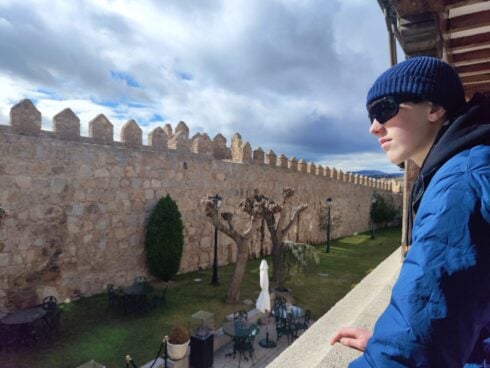
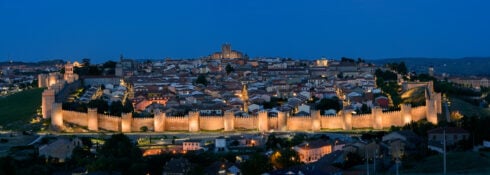
These impressive battlements rise 12 metres and will dominate your visit as you’ll want to walk around them, on them and within them. By day you’ll want to watch the vultures as they swirl above them, and gaze out across the vista of snow-dusted peaks of the Gredos mountains beyond them. At night, you can trace constellations in the sky above them and if you’re lucky, you’ll hear the deep sonorous hoot of an eagle owl resonate off them. In short, this city is all about the walls.

Forming a perimeter of 2.5km around the casco antiguo and punctuated by 82 towers and nine gates, these walls and the city they contain have been designated a Unesco heritage site since 1985.
Coming from the station, you’ll be met by the impressive Puerta de San Vicente, the main entrance to the oldest part of Avila, if you turn right and follow the walls along you’ll come to the Tourist Office and here you can climb up onto the wall itself and walk along the battlements.

The views are dramatic. You can walk around two-thirds of the perimeter of the walls, getting a birdseye view of the tiled rooftops of dwellings within the historic centre as well as the towering spires of the Cathedral, whose apse forms a part of the defensive wall.

Late Afternoon: No one expects the Spanish Inquisition
Seek out Romanesque splendour just outside the walls at the magnificent Basílica de San Vicente.
Dedicated to the siblings Vicente, Sabina and Cristeta, who were martyred during the reign of the Roman Emperor, Diocletian, this Romanesque church is one of Spain’s architectural treasures. Head first into the crypt to see the legendary burial site tied to their dramatic story. Upstairs, the vividly carved cenotaph recounts their martyrdom in painted stone.
From here, pass through the gate and wander into the old town and get lost in the maze of streets. You may stumble across the Jardin de Sefarad, the site of the old Jewish cemetery where the community buried their dead until the Catholic Reconquista of the 15th century.
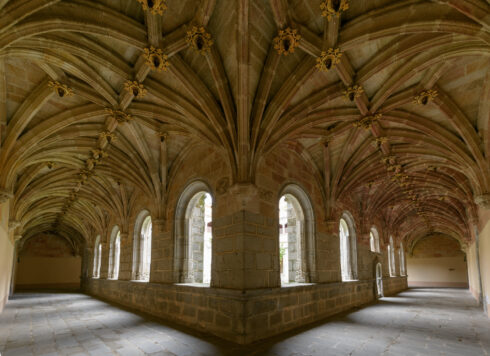
Or past the Real Monasterio de Santo Tomas, once the headquarters of the notorious gran Inquisitor Torquemada who was buried within the grounds until a mob ransacked his tomb and burned his remains somewhere outside the city walls.
Evening: Fine dining
Most visitors only pass through Avila on a day trip meaning they miss the chance to really see the city relax into the evening.
Make your way to Plaza del Mercado Chico, the medieval heart of Ávila. Arcaded buildings frame the square and if it’s warm, the plaza will be buzzing with outdoor tables which make a perfect spot for an aperitvo.

Then take an evening stroll along the Paseo del Rastro as the walls deepen in hue with the setting sun.
There’s fine dining to be found in Avila alongside more traditional posadas serving Chuleton de Avila and the hearty Judiones del Barco . Barro boasts the city’s only Michelin star but El Almacen and Caleña are both mentioned in the guide and offer tasting menus from creative young chefs.

Be sure to take a walk outside the walls as you head towards bed. The walls are illuminated against the night sky lending the scene a certain theatricality.
The night gets lively in the bars found on Avenida San Segundo, where recruits at the Spain’s National Police academy blow of steam.
DAY TWO
Morning: Follow in the Footsteps of Saint Teresa of Avila
Ávila is inseparable from its most famous daughter, Saint Teresa, a mystic, reformer and Doctor of the Church who founded the descalced Carlmelite order.
The city has marked up a mini pilgrimage of the sites associated with their patron saint beginning at the Iglesia-Convento de Santa Teresa, built on the site of her birth home. Inside, you’ll find the Chapel of Birth and relics associated with the saint: the sole of one of her sandals, a cord she used for self-flagellation and a finger from her right hand!
From here, you can follow sections of the Camino Teresiano, marked through the city in tribute to the convents she founded across Spain.

Mid-morning is a good time to seek out one of the city’s bakeries for a coffee and a nibble on some Yemas de Santa Teresa, the city’s famous egg-yolk sweets.
Then head to the imposing Cathedral de Avila. With parts that date back to the 11th century, you’ll see it blends Romanesque foundations with Gothic grandeur. Soaring vaults and lofty stained glass windows create an atmosphere designed to humble visitors before divine power.

Lunch: Hunk of beef
For lunch, try the traditional local fare, Chuleton de Avila — a thick cut, hunk of T-bone steak from the cattle you’ll see grazing the pastures beyond the walls.

Served so rare, it’s almost mooing, it’s offered in inns throughout the oldest part of town. We chose Casa de La Bruja, an old posada just off the Paseo del Rastro outside the city walls but with a fine view of them.
Afternoon: Celtic Echoes & Panoramic Farewell
Before leaving the walls, look for the ancient Verraco — a 2,500-year-old Celtic stone bull that predates Roman Ávila.

Head out of the western most gate past the old tanneries on the river bank and the pilgrim lodgings and find your way over the Roman bridge, Puende del Adaja, across the river to the Mirador de los Cuatro Postes.
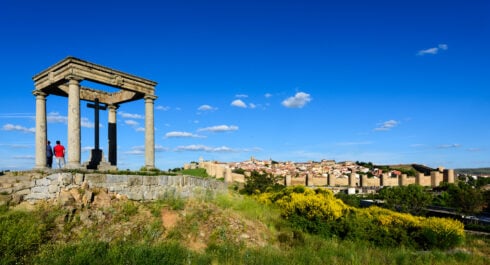
The structure of four granite pillars marks a panoramic viewpoint that is hard to beat. Pause a moment to contemplate the walled city before you head back to Madrid.
Where to stay:
For a really special stay choose La Casa del Presidente, the city’s only luxury boutique hotel within the city walls. In the shadow of the ramparts, this former home of Adolfo Suarez, the prime minister who navigated Spain’s transition to democracy after the dictatorship of Gen Francisco Franco offers a country house stay that is teeming with history.
READ MORE:
- Transition to luxury: A five-star stay steeped in history at the former home of Adolfo Suarez in Avila
- 36 hours in Segovia: Join The Olive Press’ Fiona Govan on a whirlwind tour of its ancient wonders, medieval charm and Castillian traditions
Click here to read more Olive Press Travel News from The Olive Press.