
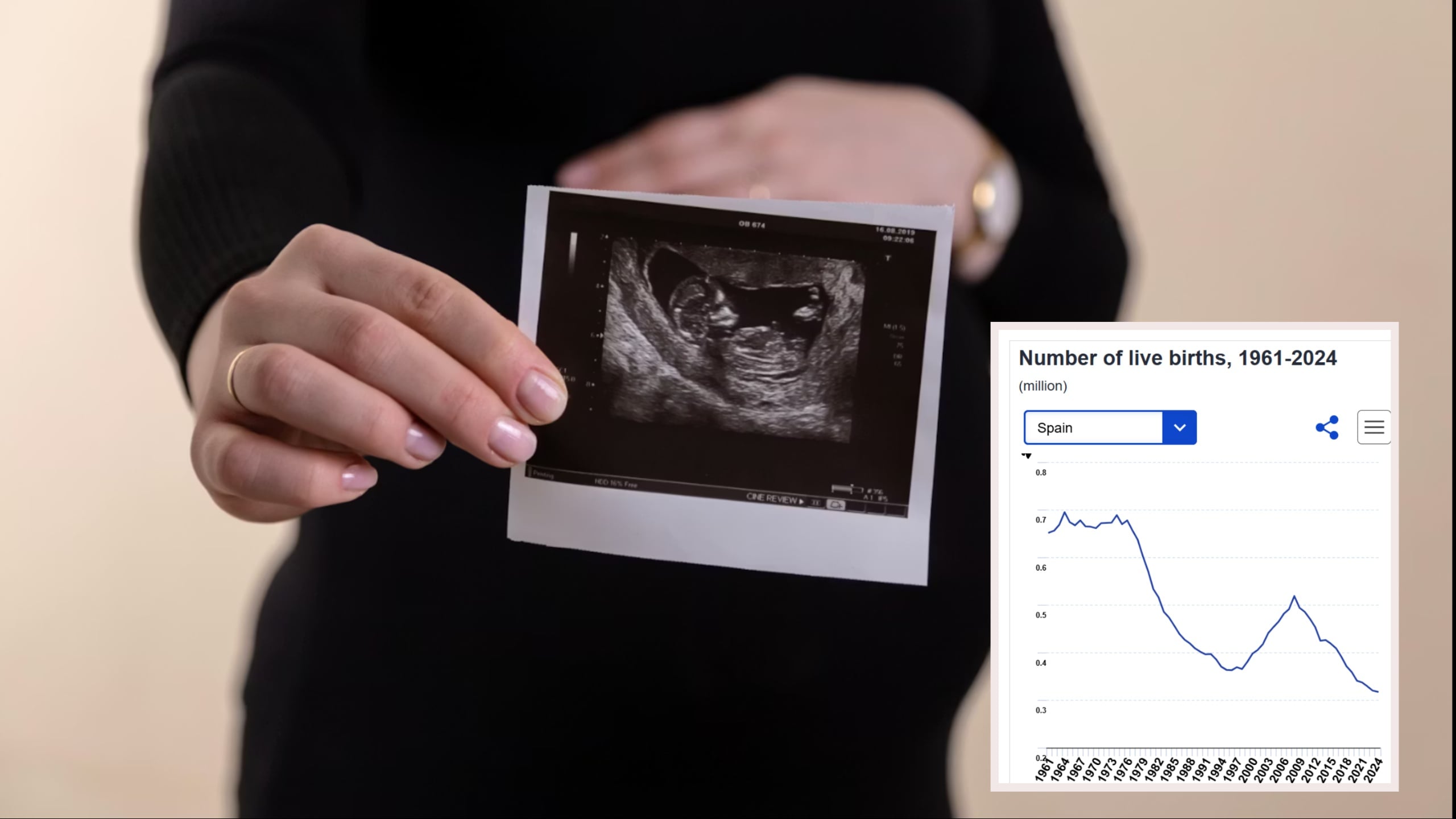
SPAIN has recorded one of the lowest birth rates in Europe, according to newly released figures, highlighting concerns about the country’s long-term demographic decline.
New data from Eurostat shows Spain’s fertility rate fell to 1.10 children per woman in 2024, placing the country second-lowest in the European Union, ahead of only Malta at 1.01 births per woman.
Demographers generally consider 2.1 births per woman to be necessary to maintain a stable population without immigration.
Spain’s current rate is roughly half the replacement level, meaning the population would shrink dramatically over the coming generations if the trend continues.
Experts warn that persistently low birth rates could accelerate population ageing, placing growing pressures on pensions, healthcare systems and the future workforce.
READ MORE: READ MORE: Spain has the highest number of births to mothers over 40 in Europe – how the housing crisis, tourism and cost of living has pushed the figure ever upwards
Specialists have pointed to socioeconomic aspects as the main reason behind low Spanish birth rates.
Unemployment, housing, education, and health issues are all common variables for people not having kids.
When the decision to reproduce is put off due to financial or structural aspects, the age of motherhood is then delayed, and can cause issues in terms of fertility.
READ MORE: Spain’s deputy prime minister accuses Germany of being a ‘vassal state’ after the German chancellor failed to defend Madrid during Trump rant
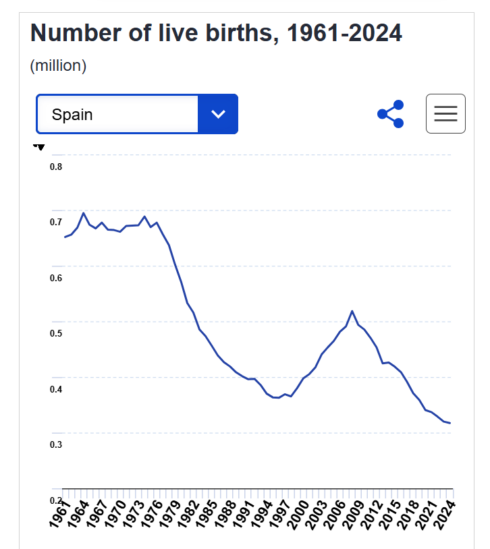
The full extent of Spain’s fertility crisis has become apparent after it was revealed that more than one in ten children are born to mothers aged 40 or over – the highest figure of any country in Europe.
It’s also been noted that there have been more deaths than births in Spain every year since 2015. This is the same case for the United Kingdom, which recorded more deaths than births for the first time since the 1970s.
The overall fertility rate was lower across the EU, with a 3.3% drop from the previous year to only 3.55 million babies born in 2024.
It is the lowest level recorded since comparable EU data began in the early 2000s.
Despite the continuous decline of new generations being born in Spain, the country still has one of the longest life expectancies in the EU at 84 years, due to healthier lifestyles and access to public health care.
Click here to read more Spain News from The Olive Press.