
ONE year ago today, at 12.33pm, the Iberian Peninsula lost power in under five seconds.
The great apagón (blackout) of 28 April, 2025, remains the most severe blackout to hit the European grid in over two decades.
Twelve months on, the lights are back, but the regulator is preparing fines of up to €60 million and the lawsuit blame game is starting.
Fortunately, the typical Spanish household has not had to foot the bill, having only paid a meagre €15 extra over the course of the year.
Which may seem a small price to pay after more than 50 million people across Spain, Portugal, parts of southern France and Andorra lost power.
READ MORE: European report blames ‘lack of voltage control’ for causing Spain’s electricity blackout last April

A day to remember
Spain’s grid shed 15 gigawatts in five seconds – around half of the electricity demand on an average day.
On April 28, 2025, it was around 60% of supply at the moment of collapse.
It began with substation failures in Granada, Badajoz and Sevilla. The interconnection with France decoupled within seconds.
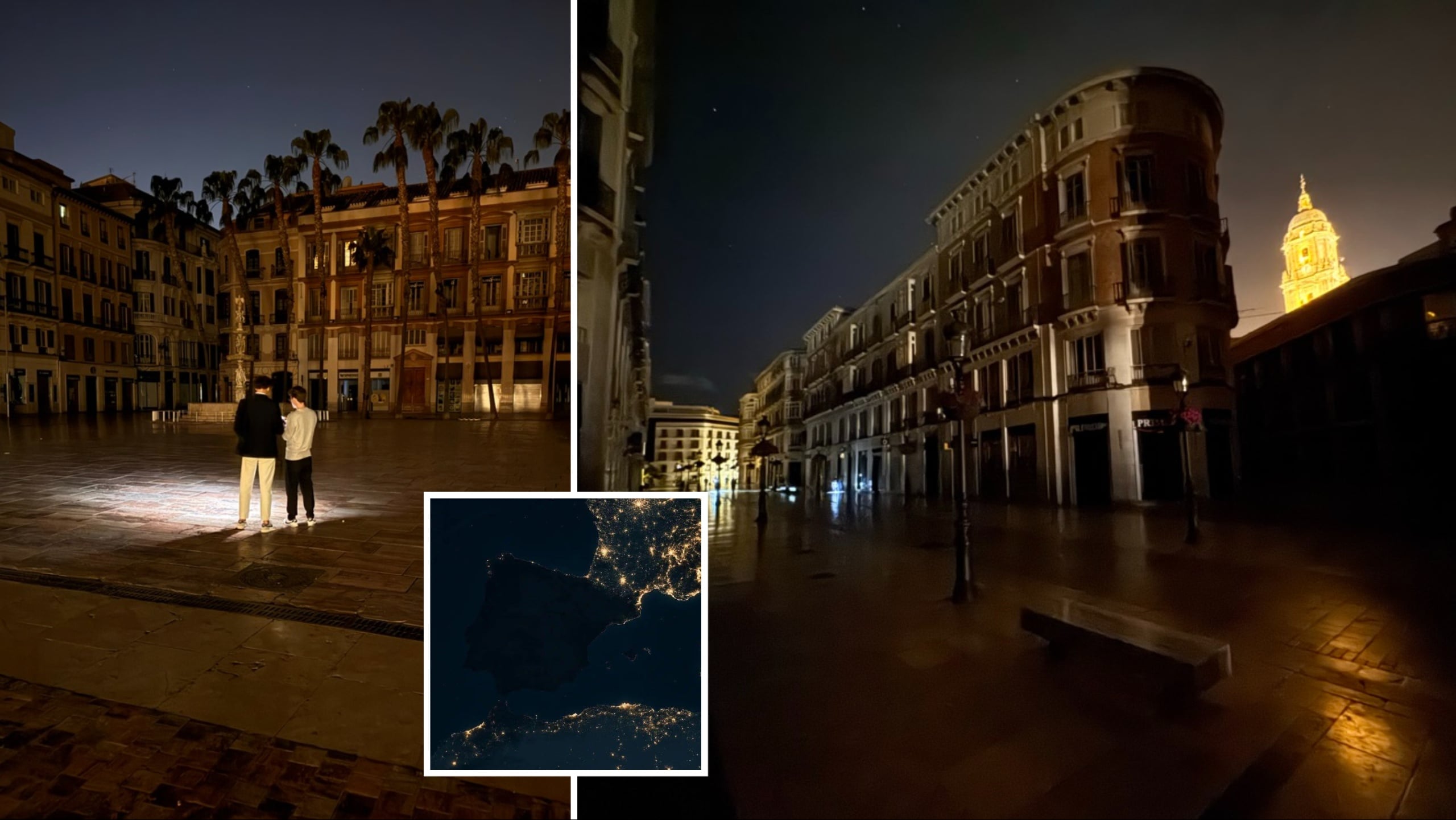
By 12.34pm, the national grid was gone. Trains found themselves stopped mid-tunnel in the pitch black. Drivers encountered lifeless traffic lights that were no longer driving the flow of cars.
Mobile networks started dropping out, cutting people off from loved ones. Cash became king again as card payments failed.
The Madrid Open was suspended mid-match. Hospitals switched to generators. Petrol pumps would not work. Supermarkets emptied as people queued for cash and torches.
Around 4pm, Red Eléctrica de España (the national grid) estimated it would take ‘between six and ten hours’ to restore service.
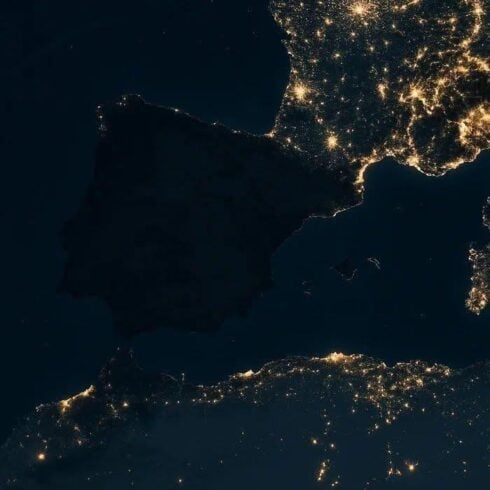
Power began returning to the north first, including the Basque Country, parts of Catalonia and Galicia, drawing on the French interconnector and the Aldeadavila hydroelectric plant in Salamanca, which has black-start capability.
Madrid, Valencia and Murcia followed in the late afternoon. The south waited longer.
NASA’s Black Marble satellite imagery captured Andalucía still mostly dark in the early hours of April 29, with rural pockets enduring outages of 10 to 18 hours, and some up to 24.
Power reached 99% of demand by 7am on April 29. Full normality was declared at 11am.
While the immediate drama was over for most, it was time to start picking up the pieces.
The fallout
Seven deaths in Spain were directly linked to the blackout. Six were in Galicia, including three members of the same family who died of carbon monoxide poisoning in Taboadela from a faulty petrol generator.
One died in a house fire in Madrid. A 77-year-old woman in Portugal died when her home ventilator’s battery ran out.
Eleven months of investigation produced a dissatisfying, multilayered answer, while the narrative war was in full swing.
Was it down to renewables? Would this apagón be the final nail in the coffin of the so-called Green Transition?

The battle to find answers
The final report of the European grid operators’ panel ENTSO-E, published on 20 March 2026, concluded that the blackout was the result of multiple failures stacking on top of each other.
Voltage in parts of the grid began rising out of control. The mechanisms designed to hold it steady were inadequate or inconsistently applied across operators.
When power plants started tripping offline as a safety response, each disconnection triggered the next, and the cascade ran through the system in seconds.
At the briefing, the chair of ENTSO-E’s board of directors stated that ‘the problem is not renewable energy, but voltage control, regardless of the type of generation’.
Jorge Morales, director of Próxima Energía, told Cadena SER that the system failed because it had been left without the equivalent of suspension that one might find on a car or bicycle.
He compared it to ‘a car that was working perfectly, but it was running without shock absorbers’.
Roads have bumps, Morales said, and cars are supposed to have shock absorbers to deal with them.
At the first bump for Spain’s electricity grid, the car swerved off the road.
Spain’s competition regulator, the CNMC, has now opened 55 sanction proceedings.
Red Eléctrica faces a ‘very serious’ infraction charge under the Electricity Sector Law, with a possible fine of up to €60 million.
Several energy companies face lesser charges and fines of up to €6 million each.
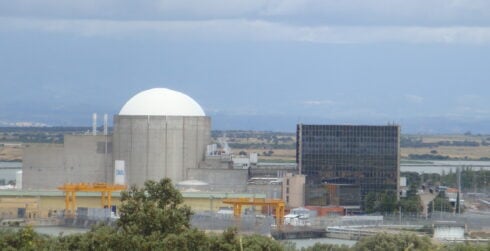
Almaraz-Trillo, the nuclear plant association, faces its own ‘very serious’ charge for unauthorised reduction of supply capacity.
Who will pay?
Today is also the disputed legal deadline for civil damages claims.
Last Friday, Repsol, Moeve (formerly Cepsa) and the high-speed rail operator Iryo all served formal legal notice of their intent to sue.
That stops the one-year deadline for damages claims from expiring while they prepare their cases.
Repsol alone has signalled court claims worth up to €125 million.
But for ordinary consumers, the realistic route to compensation runs through their insurers.
The Occident insurance group has said it will pursue legal action to recover what it has paid out for damaged appliances, lost food and business interruption.
Whatever the courts eventually decide, ordinary consumers are already absorbing the cost of preventing another collapse.
Red Eléctrica says operating the grid – in ‘reinforced’ mode since the blackout, leaning away from renewables and more heavily on gas-fired plants and nuclear for stability – has cost an extra €666 million between May 2025 and March 2026.
Gas consumption for electricity rose 24% year-on-year in the first quarter of 2026.

For a typical household of three or four on the regulated PVPC tariff, that works out at around €0.04 a day, or roughly €15 over the year.
The CNMC has proposed adding a separate small charge of between €0.14 and €0.21 per megawatt-hour to recover the cost of restarting the grid on the day itself.
The wider industry argues the real cost is far higher.
An observation tool launched yesterday by major electricity companies, energy-intensive users and retailers puts adjustment service costs at €1.8 billion in 2026 alone, and is calling on the CNMC for greater oversight.
READ MORE: Spain blackout seen from space in eerie NASA satellite images
What changes have been made?
Structurally, the lessons are clear and slow.
A royal decree passed in June last year set out new rules on storage, demand participation and grid reinforcement.
Meanwhile, the Bay of Biscay interconnector with France is advancing, designed to ease the Iberian Peninsula’s status as what one MIT analysis called an ‘electrical island’.
Portugal has extended black-start capability at the Tapada do Outeiro plant to at least 2030 and is adding the same to two more sites.
ENTSO-E’s panel was also clear that even significantly higher grid inertia would not have prevented the cascade given the specific sequence of events on 28 April 2025.
A year on, Spain knows in extraordinary technical detail what happened. Who pays for it, and how much, are questions the courts will now answer.
Click here to read more News from The Olive Press.