

BRITISH tourists are holding their breath to see if Spain will follow suit after Greece, Portugal and Italy all moved to ease new biometric border controls.
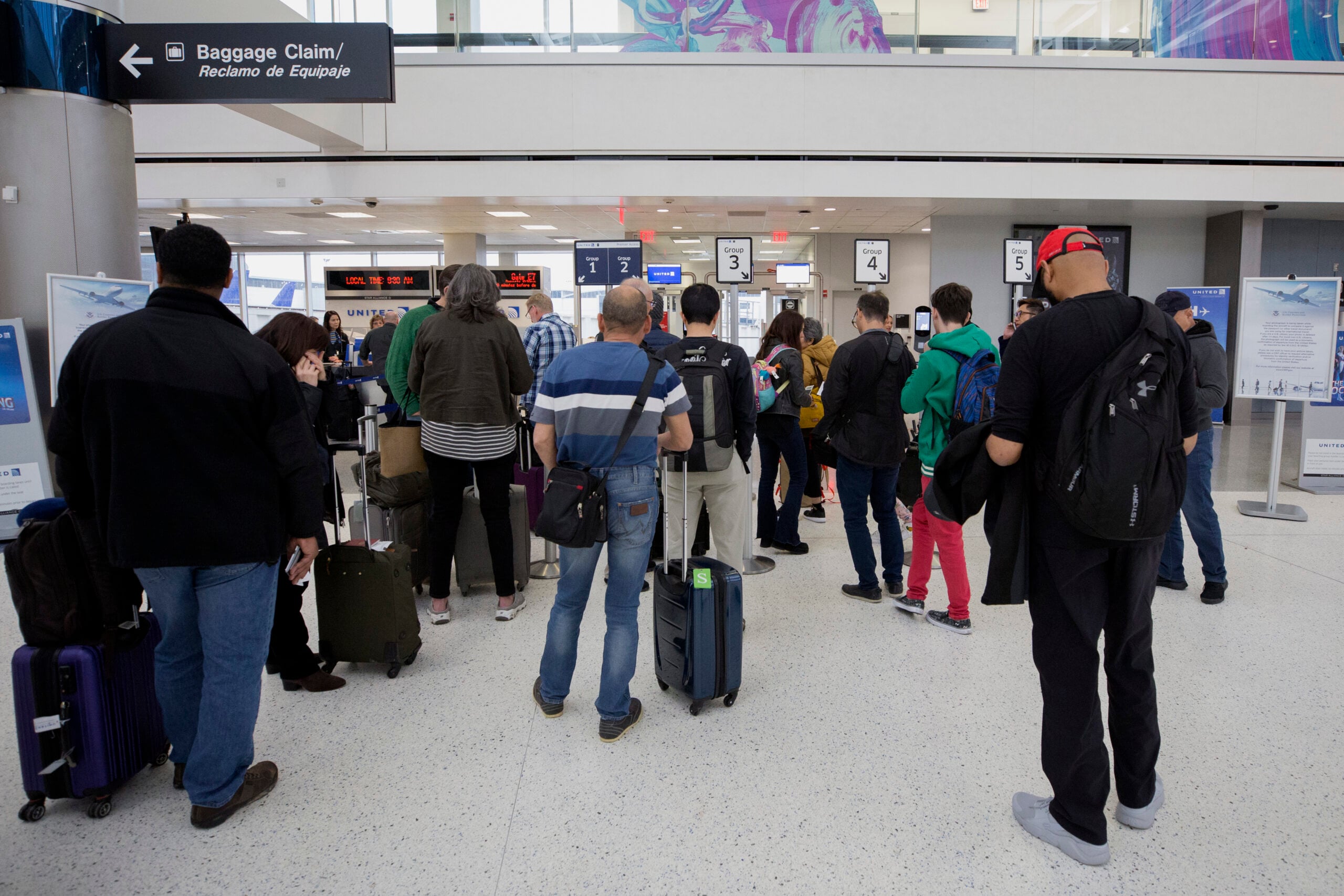
Since its launch, the EU’s new Entry/Exit System (EES) has generated widespread queues and delays at major European airports for British and other third-country nationals.
Greece was the first to act to cut wait times, driven in part by the estimated €3.5 billion Brits spend in the Greek economy.
READ MORE: Ryanair urges Spain to scrap EES rollout to avoid summer of border queue chaos
Portugal and Italy have since followed. Portugal has adopted an informal policy of waving passengers through when queues exceed 15 minutes.
Italy is expected to revert to a simple passport stamp for UK arrivals until September.
France and Croatia are said to be considering similar measures, though neither has made a formal announcement.
But so far Spain has made no such move.
READ MORE: Spanish airports introduce new rules to help families amid EES border queue chaos
British travellers flying into Malaga, Alicante and Palma — three of the country’s busiest international airports — face the full EES process, with reports of delays of up to three hours at Palma over the recent Bank Holiday weekend.
The chaos has drawn fierce criticism from the travel industry.
Ryanair chief executive Neil McMahon called the rollout ‘a half-baked IT system deployed during the busiest travel period’, urging the EU to suspend checks until September.
The Travel Association ABTA said passengers’ experience had been ‘mixed,’ with some facing no issues while others encountered queues and technical failures.
“The ambition of a project like EES means it was never going to go completely smoothly,” ABTA chief executive Mark Tanzer said.
“However, what is frustrating is that border authorities have it within their power to ease queues and deal with issues as they arise — but that doesn’t seem to be happening across the board.”
The pressure on Spain is significant.
Malaga airport handled 26.7 million passenger movements in 2025, while Alicante processed 19.95 million. Both set all-time highs.
With the UK representing the single largest source of international arrivals at both airports, the commercial stakes of prolonged EES delays mirror those that pushed Greece to act first.
EU legislation does allow member states to temporarily suspend biometric checks during periods of high traffic.
The flexibility window runs for 90 days from April 10, with an optional 60-day extension — meaning the mechanism to follow Greece, Portugal and Italy remains available to Madrid through the height of summer.
Spain’s Foreign Ministry has been contacted for a request for comment.
Click here to read more Travel News from The Olive Press.