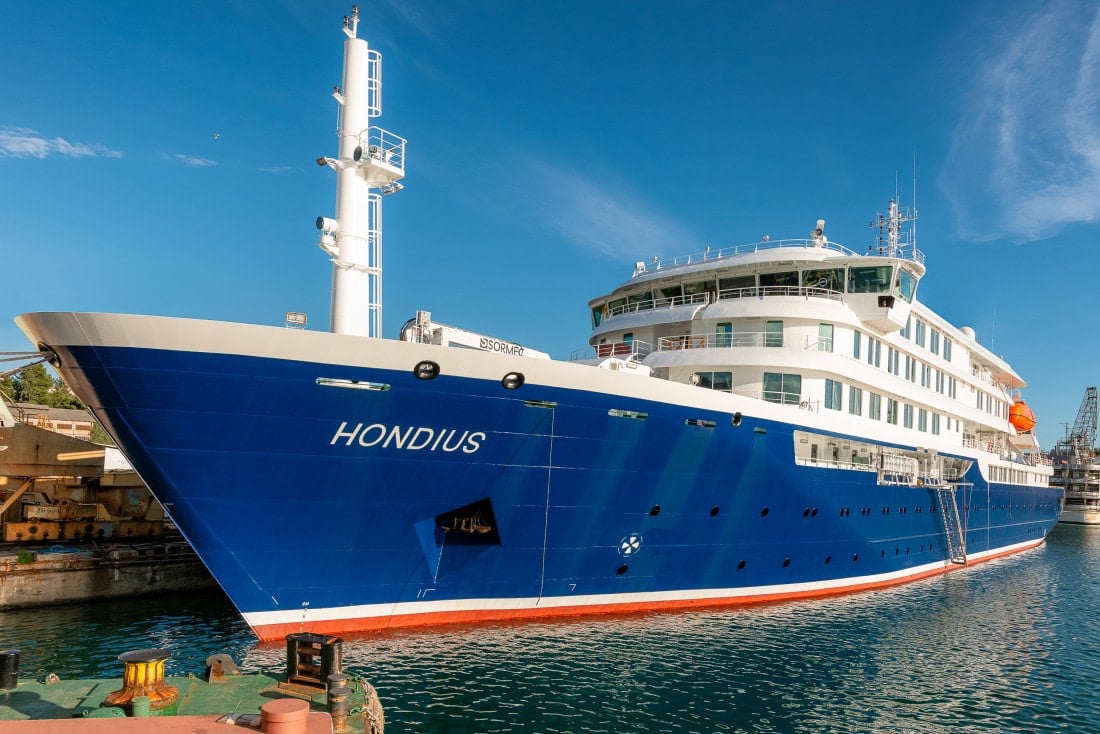
THREE people have died following a suspected hantavirus outbreak aboard a cruise ship bound for the Canary Islands.
A total of six passengers fell ill on the MV Hondius before the vessel was detained off Cape Verde, around 990 miles from the Canary Islands, on Sunday.
Spanish media reported that the Canary Islands were the ship’s final destination, though it remains unclear whether it will attempt to continue there.
According to Cape Verdean outlet A Nacao, the president of the country’s Public Health Institute (INSP), Maria da Luz, said the ship should ‘continue its route’ and that passengers will not be disembarking in Cape Verde.
The World Health Organisation (WHO) has launched an investigation after confirming that a 69-year-old British passenger – now in intensive care in Johannesburg, South Africa – had contracted the deadly respiratory disease.
The other suspected cases include three Dutch nationals, all of whom have died, and two crew members who now require urgent care – though Cape Verdean authorities said they did not authorise their disembarkation for treatment.
Hantavirus is typically transmitted to humans by rodents via their urine, feces, or saliva. Person-to-person transmission is also possible, but rare.
The virus can trigger a severe respiratory illness that is fatal in approximately 38% of cases, and there is no specific treatment.
A South African health official told the BBC that one of the victims, aged 70, developed fever, headache, abdominal pain, and diarrhea before dying on the island of St Helena, a British territory in the South Atlantic.
The man’s wife, 69, was evacuated to South Africa, where she later died in a Johannesburg hospital.
Authorities remain on high alert as the ship, operated by Oceanwide Expeditions, appears to have been stationary off Cape Verde for at least 24 hours, according to marine tracking websites.
The MV Hondius departed Argentina on March 20 and was scheduled to stop in Cape Verde before continuing to the Canary Islands.
It remains unclear how long the ship will remain in quarantine off the West African coast, though microbiologist Siouxsie Wiles told the BBC that symptoms of the disease can appear up to eight weeks after exposure.
Click here to read more Health News from The Olive Press.