

SPAIN has recorded its warmest April since records began in 1950, with an average temperature of 15.1C, according to AEMET, surpassing the previous record set in 2023 as unusually high temperatures dominated nearly the entire month across the country.
The State Meteorological Agency confirmed that April 2026 was more than 3C above normal, marking a significant deviation from historical averages.
Temperatures remained consistently above seasonal norms throughout most of the month, with only a brief cooler spell recorded between April 11 and 13.
Six individual days in April, the 10th, 18th, 19th, 20th, 21st and 22nd, each set new records as the warmest ever for those specific dates across Spain since at least 1950.
READ MORE: Sevilla’s famous April Feria is set to kick off with ‘early summer’ heat and highs of 34C
Meteorologists say this clustering of record breaking days highlights not just isolated spikes, which means the heat is not coming in short bursts but is lasting over longer periods, and instead points to a sustained pattern of elevated temperatures across the country.
AEMET warned that the first four months of 2026 have been dominated by warmer than usual conditions rather than balanced fluctuations between warm and cool periods.
This trend has made the opening stretch of the year the third warmest on record, behind only 1997 and 2024.
In total, twelve record breaking hot days have already been registered in 2026, a figure that sharply exceeds expectations in a stable climate.
Under normal conditions, only around five record hot days would be expected across an entire year.
The Canary Islands continued their record breaking streak from previous years, with the eastern islands reaching a monthly average of 20.4C.
Northern Spain also saw unusual heat, with typically cooler coastal cities like Gijon recording early month peaks exceeding 28C, exceptionally high for the Cantabrian coast in early spring.
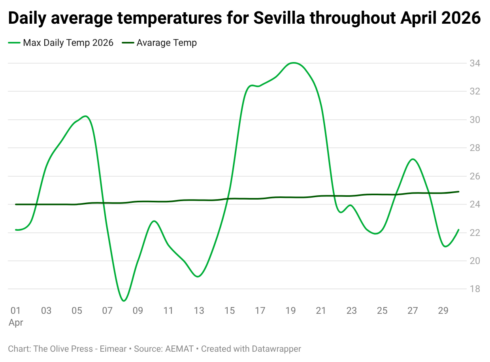
In Sevilla, a brutal mid month spike saw temperatures climb between 34C and 36C during the Feria de Abril, intensifying already warm conditions.
Experts suggest this acceleration in extreme temperature events points to broader shifts in climate behaviour.
The data reinforces concerns that spring, traditionally a transitional season, is increasingly resembling early summer in parts of Spain.
Scientists continue to monitor whether these anomalies will persist into the peak summer months, raising the risk of more intense heatwaves and prolonged dry conditions.
The latest figures add to growing evidence that temperature records are being broken with increasing frequency, rather than as rare outliers.
Authorities are expected to assess the potential implications for water resources, agriculture and public health as the year progresses.
Click here to read more Spain News from The Olive Press.