
SPAIN’S controversial new emergency car beacon is ‘here to stay’, the country’s traffic chief has warned, amid growing calls to bring back the classic roadside warning triangles.
The head of Spain’s DGT traffic authority, Pere Navarro, has firmly rejected demands to make V-16 emergency lights ‘optional’, insisting there was ‘no going back’.
The row erupted after right-wing party Vox submitted a proposal to parliament calling for the return of emergency triangles, which were phased out on January 1, and allowing motorists to choose between the two systems.
Speaking at a road safety forum in A Coruña last week, Navarro doubled down on the new rule, describing the V-16 beacon as an ‘important and mandatory’ safety measure for drivers across Spain.
“You don’t have to get out of your vehicle to use them, and they light up – unlike triangles,” he said.
V-16 beacons became compulsory on January 1, with drivers facing fines of up to €200 for failing to carry one.
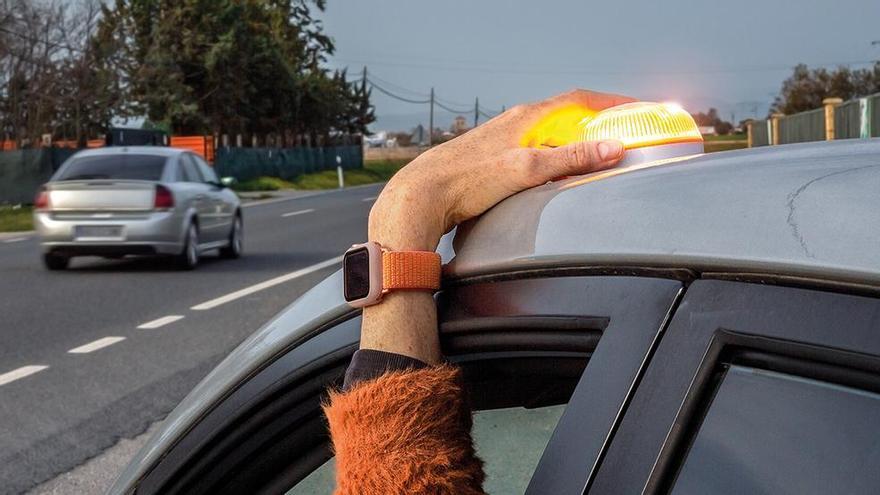
The pocket-sized devices emit a flashing 360-degree amber light and can be stored easily in a glovebox. In the event of a breakdown, motorists simply place the beacon on the roof – or magnetically attach it to the door – without stepping onto the road.
The devices are also linked to the DGT’s new online platform. Once activated, they automatically transmit the vehicle’s location to traffic authorities, triggering an emergency alert response.
Officials insist the beacons are a major road safety upgrade, but critics claim they are difficult to spot on busy roads and motorways.
The controversy has also taken a political turn, with opposition parties accusing the ruling left-wing PSOE of using the scheme as a cash grab, claiming sales of the devices could rake in more than €300 million in VAT revenue.
In February, the European Commission warned the V-16 rollout may breach EU law, arguing Spain failed to notify Brussels before making the devices mandatory.
But despite the backlash, the flashing beacons remain compulsory for drivers across mainland Spain – and the DGT appears determined to keep them that way.
Click here to read more Spain News from The Olive Press.