
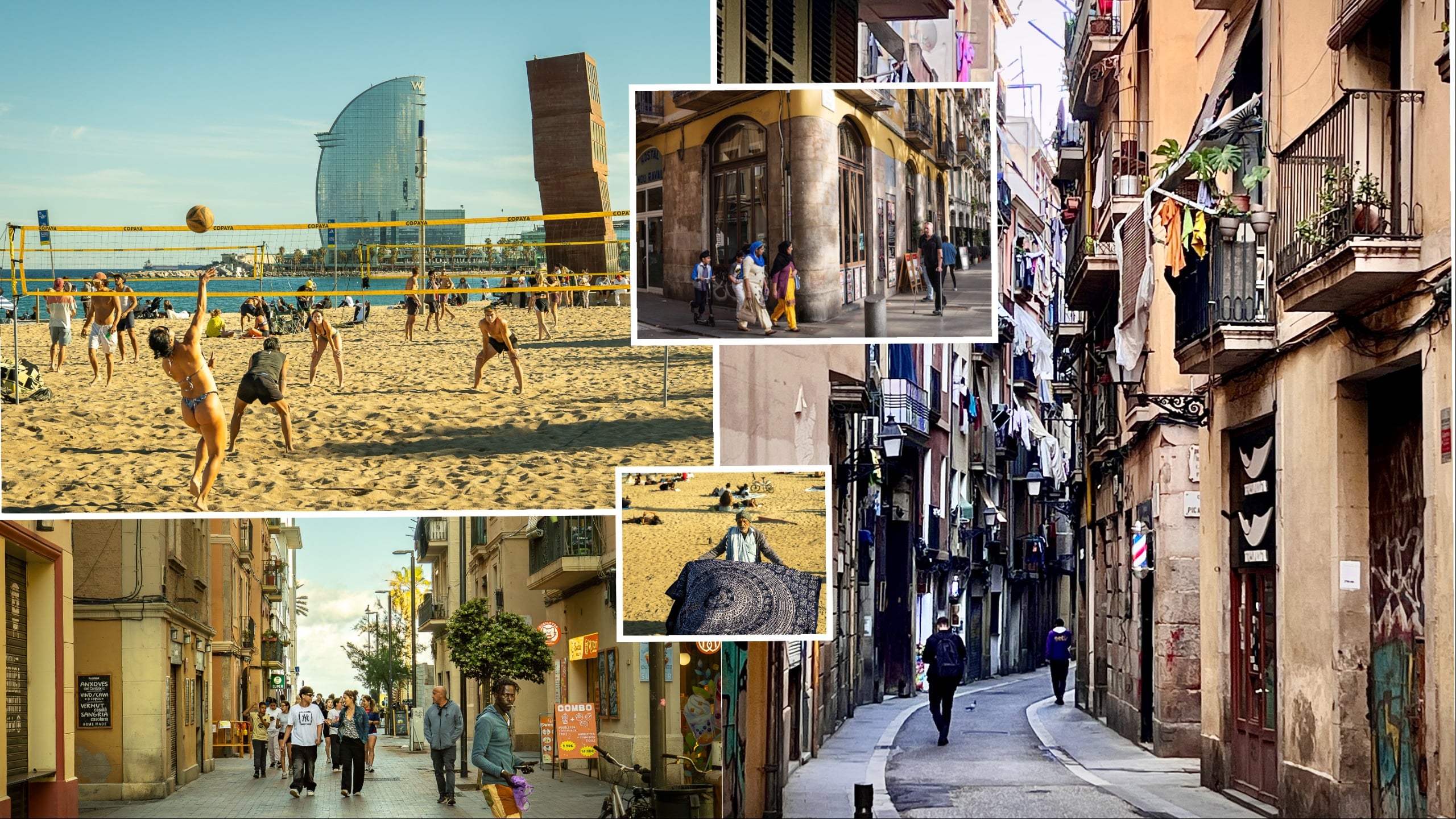
THE true jewel of the Mediterranean, it comes as a surprise that two of Barcelona’s best-known barrios also have the worst reputations.
While full of gothic treasures and modernist miracles, the underbellies of El Raval and La Barceloneta are statistically in the top ten most crime infested areas of Spain.
Increasingly known for their muggers and drug dealers, numerous social media posts have helped to malign the pair, scaring off some of the city’s 150,000 daily tourists, particularly at night.
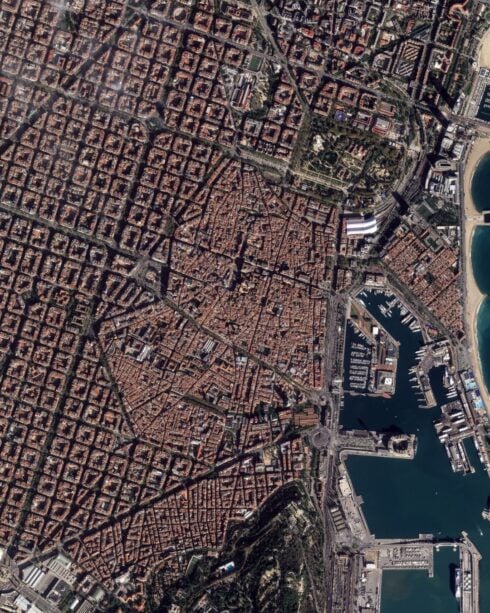
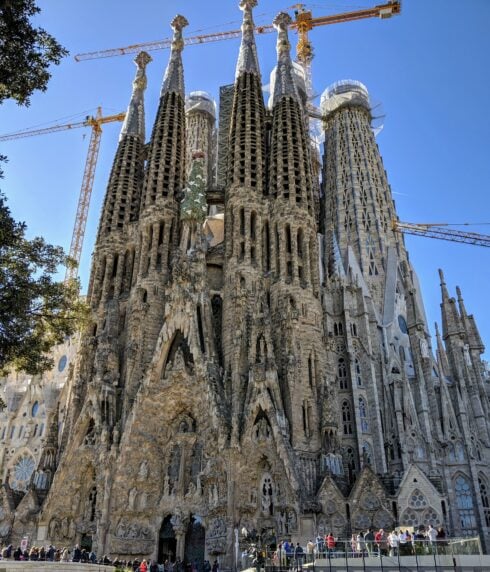
And what a pity as these barrios and their narrow, claustrophobic streets serve as a time capsule to Barcelona’s glorious architectural legacy. It is here many of the city’s jaw-dropping wonders appeared during a golden age spanning from 1860 to 1920, after which a period of strife, fascism and repression gripped the city until its renaissance with the 1992 Olympics.
So rather than skip them, take a local Olive Press tour of the two magical barrios and let us show you where to go, where to eat and drink, and where to avoid.
La Barceloneta
La Barceloneta is often the first port of call for visitors, whether to sit in a chiringuito, work on your tan or play a round of volleyball on the beach.
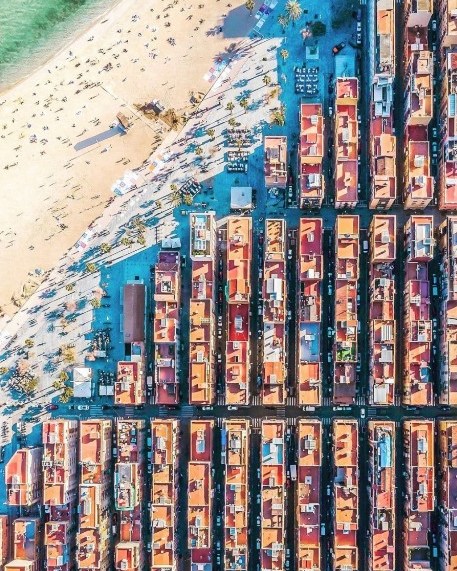
The barrio however has seen one of the sharpest transformations since being redeveloped from a poor fishing village into a beachside mecca after 1992.
It’s hard to believe that, prior to Freddie Mercury belting out the hit Barcelona and the arrival of mass tourism, Barceloneta was a dreary, working-class rabbit warren of narrow streets and local bars.
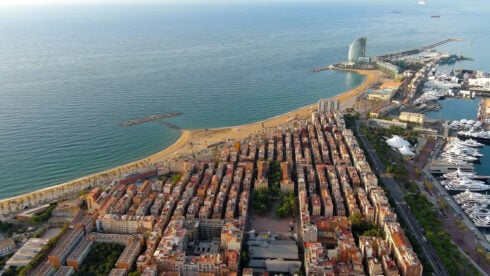
During this period, it was often said by urban planners that Barcelona lived ‘d’esquena al mar‘ (with its back to the sea).
Despite being a Mediterranean port, the coastline was largely cut off from the public by industrial warehouses, obsolete factories, and a maze of railway lines that ran along the shore.
Barceloneta may have been one of the few places that still maintained a connection to the water, but even there, the beaches were often neglected or occupied by shanties (barracas) and industrial plants like the Catalana de Gas. There was nary a tourist in sight.
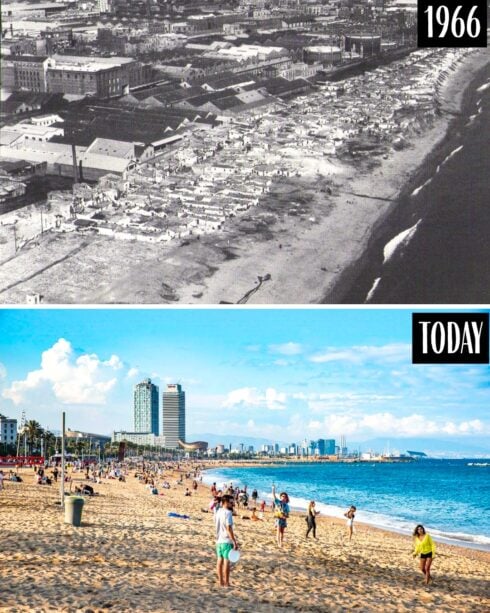
Today, it couldn’t be more different. It is a transformation that has ramped up over the years – and is still accelerating.
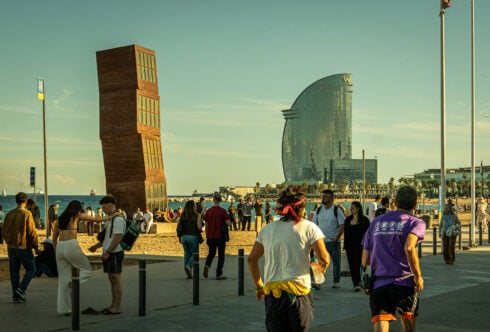
Around 15,000 residents occupy this acute triangle of reclaimed land, bookended by the now-iconic Hotel Vela – sometimes known as the W Hotel – in one corner and the twin towers of the Hotel Arts and the Torre Mapfre in another.
Not to mention the lively Port Olympic or the bizarre bronze sculpture known as El Peix (The Fish) by artist Frank Gehry.
Within these boundaries stands a neat grid of narrow streets and cramped apartments, home to a population balance of around 55% Catalan-Spanish to 45% foreign residents.
How many of those homes are now Airbnbs is a source of constant arguments, as the traditional residents of the barrio rub shoulders with constant waves of outsiders, from hordes of tourists to young so-called expats and families from Morocco and Pakistan.
The distinctive blue and yellow flag of the Barceloneta barrio is now a common sight dangling from balconies, a nod to the fierce, almost sovereign-like pride the residents feel for it in the face of constant gentrification.
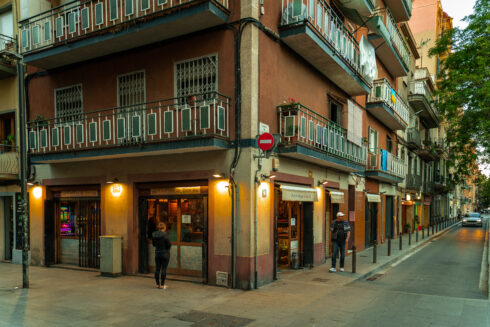
Flying the flag has become just one way that the locals mark their territory in a battle against mass tourism and the rise of holiday rentals.
One of the most melancholy symptoms of this has been the gradual disappearance of the traditional bars and bodegas which gave the barrio its character.
They are fast being replaced by souvenir shops and ice-cream parlours, giving a sort urgency to the neighbourhood, to enjoy it now before it’s entirely swallowed up into the belly of the mass tourism beast.
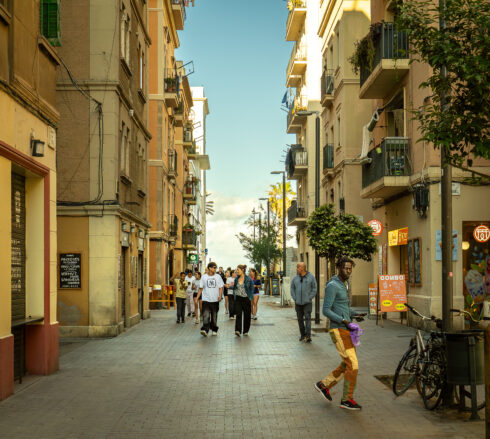
But a few gems and undiscovered treasures remain.
The neighbourhood is usually approached from the north.
Passeig Joan de Borbo is the main thoroughfare that spans one of the three sides.
Here you’ll find the most obvious tourist traps and fast food joints where waiters stand outside trying to beckon you in.
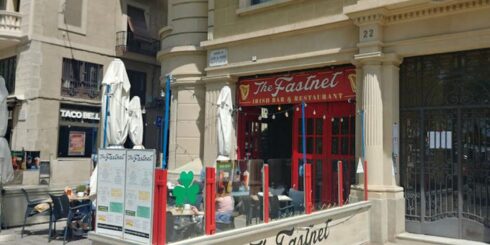
Sailor’s favourite the Fastnet is a genuine Irish bar that pre-dates the tourism boom and earns the right to be mentioned among the barrio’s most venerable establishments.
At the other end of the strip, Makamaka came in on the tourism wave but has cemented itself as one of the best terraces for a cool beer and bite to eat, situated as it is between Port Vell and the beach.
Venture into the barrio and it is a mishmash of residential streets and pedestrianised alleyways lined with bars and shops.

Legendary Uruguayan steakhouse La Maladrina, where this writer was introduced to the joys of chimichurri sauce, competes with a lesser-known Portuguese rival called Bistro 42, while La Cova Fumada is probably the last remaining cash-only, family-run restaurant.
The notoriously confined El Vaso de Oro is a traditional eatery where you can squeeze past the local businessfolk as they enjoy their lunch, and Salamanca is the most famous beachfront restaurant where the bowtied waiters serve one of the best value menu del dias around (but be careful ordering from the menu).
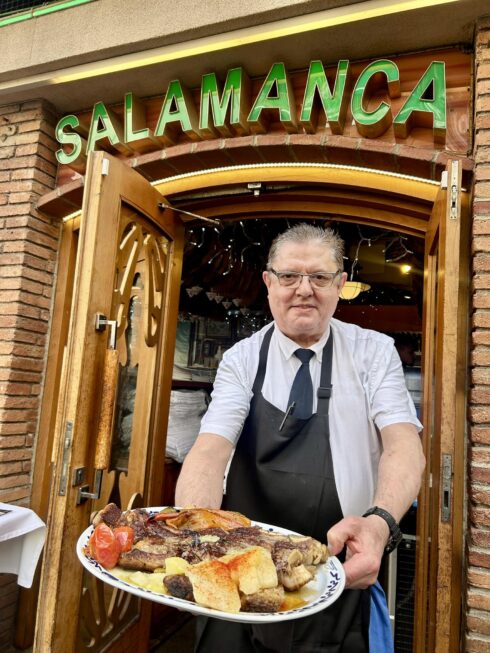
Bung them a nice tip and they’ll leave the bottle of Pacharan on the table for you.
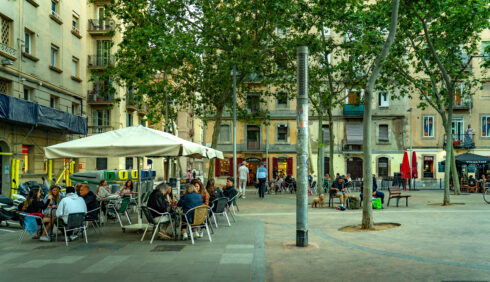
In the heartland of Barceloneta you will find the Plaça del Poeta Bosca, home to the local market, ping pong tables and children playing, where Bar Ke is one of the best spots to settle in and sink a few cañas and Aperol Spritz.
It’s in this area that you might uncover a couple more oldschool bodegas. That is the true joy of Barceloneta – escaping off into the side streets and being bold with the small bars and restaurants you find hidden away.
Of course, with Barcelona, wherever you find tourists, you find petty crime.
The beach itself is considered a must avoid by the locals, where your bag can get pinched even if you’re sitting next to it.
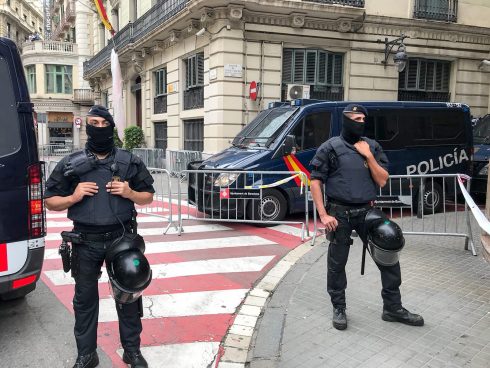
Vendors pester beachgoers to buy blankets or beer, and the Mossos d’Esquadra police make constant patrols. Even that isn’t enough to staunch the flow of thefts, and after dark it is so much worse.
“I don’t know how many times I got robbed when I lived in Barceloneta,” one Swedish expat told The Olive Press.
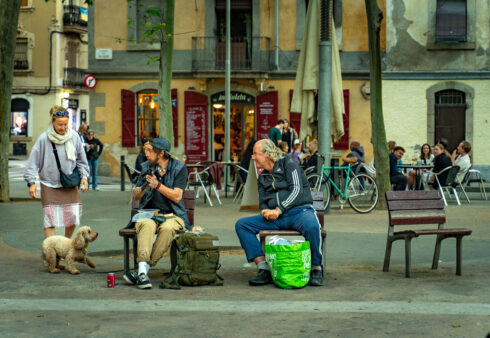
“Eventually, when I was returning home from work late and I saw them coming for me, I would just hand over my bag to them and not even say anything.”
Now she lives one hour up the coast and can walk home at night without being accosted.
Another resident told The Olive Press photographer to be careful with his camera as he took photos at 5pm in the afternoon.
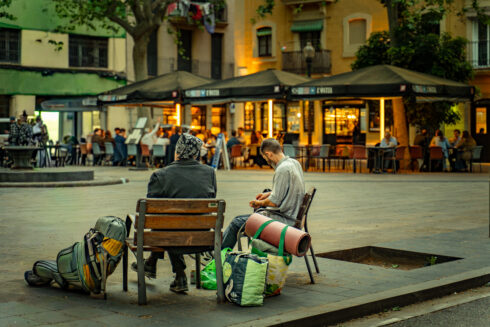
Dark, isolated streets are where the danger is most acute, and the police are notorious for doing little for the city’s victims of street crime.
In the summer months thieves prowl the beach at night looking for people passed out or sleeping rough to rob, and Barceloneta Park next to Hospital del Mar is a place to avoid.
El Raval
Venture around the port and past the Rambla and the daring visitor will find themselves in barrio Raval – labyrinthine and dangerous; harbouring the city’s secrets and its dispossessed.
Sometimes mocked as Ravalistan, its position next to La Rambla, the city’s most famous boulevard, coupled with its bars, hotels and glimpses of beauty finds many a hapless tourist enticed its dark underbelly.
At first glance, the casual viewer may be perplexed as to why nobody wants to live in a barrio that sits right at the heart of Barcelona old town.
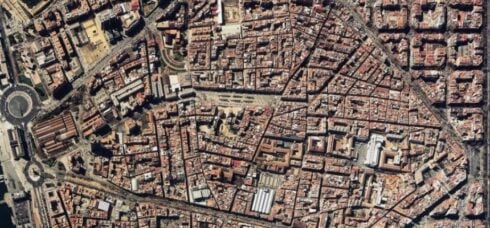
But it’s for good reason. The neighbourhood is seen as a scar in the city’s fabric, a place that swallows the light from the main boulevard – one that refuses to be reformed or cleaned up.
Petty crime is rampant in the barrio, with thefts, muggings and disturbances reported every week.
But the risk to reward ratio is high and this writer lived there for two very happy years. But knowing where to go – and where to not set foot – is crucial.

This time we’ll enter from the south, as if coming from Barceloneta.
One of the first finds may actually come as a surprise – Gaudi’s first major work in Barcelona, the Palau Güell, lies on Carrer Nou de la Rambla (a street that often appears in videos on social media, as concerned residents film street brawls or night time muggings from their balcony).
The palace was commissioned in 1888 as a family residence and social venue for Gaudi’s patron.
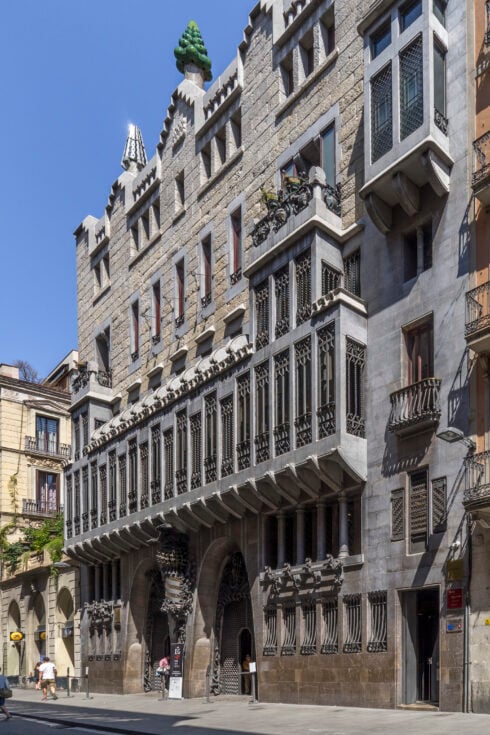
The choice of location was unusual as most of the bourgeoisie of the time were setting up home in the new Eixample.
Move on up through the dark alleyways to the curving Carrer de San Pau, and you might notice the Grand Theatre of Liceu, a historic and elegant landmark that has been putting on stage plays since 1847.
But it’s time for us to head into the dark interior.
Following San Pau and we come to Bar Marsella, located inauspiciously between the countless phone shops that line the street.
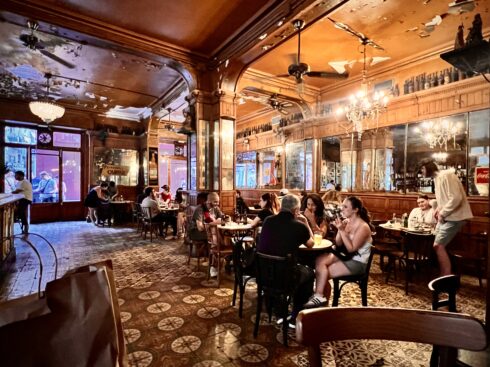
A once-famed drinking hole that lays claim to having luminaries such as Ernest Hemingway, Dali and Pablo Picasso as patrons, its doors are still open but the streets around it are not safe after dark.
From Bar Marsella we find ourselves at the foot of Rambla Raval – the city’s great, failed, stab at cleaning the barrio up.
A broad and tree-lined boulevard borne from the demolition of 3,000 slum tenements at enormous cost between 1996-2001, it is home to the famous Botero cat sculpture, the Filmoteca de Catalunya, and the Barcelo Raval hotel.
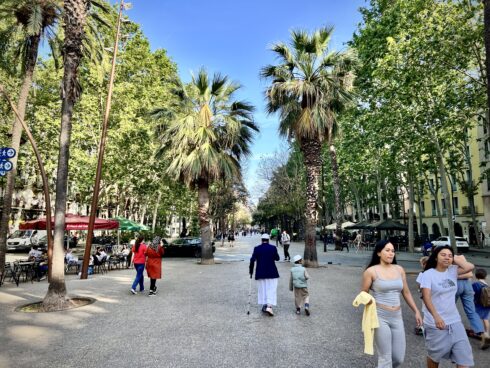
And indeed while the boulevard is lined with some trendy bars and restaurants, the development has not worked out as intended.
Spend any amount of time sitting at one of them and sooner or later you will hear police car sirens and see foot chases between the cops and robbers, as habitual thieves and petty criminals scurry off into the side streets where the serious problems concentrate.
Which brings us to genuine no-go Barcelona.
While during the day you’ll probably be okay, the narrow streets between Rambla Raval to the east and Ronda de San Pau to the west are genuinely feral, home to drug dens and prowling pickpockets.
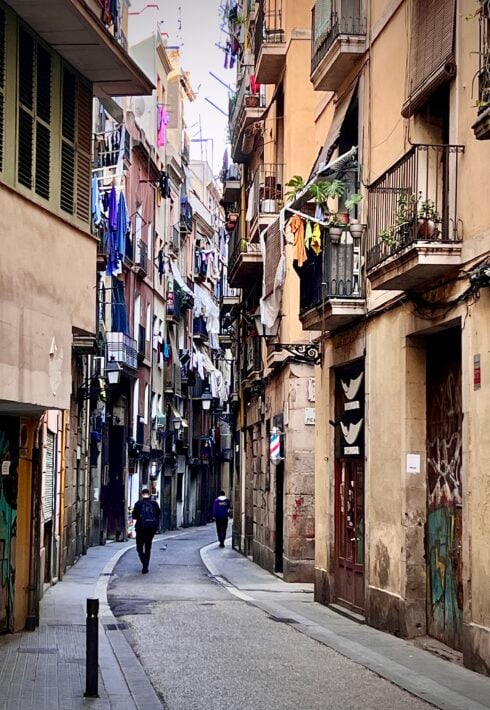
The most at risk will be females both solo and in groups, lone men, tourists and, of course, drunk people.
Perhaps the most notorious street in the entire barrio is Carrer d’En Robadors – literally Robbers’ Street – that is often considered the true ‘heart of darkness’ in Raval.
Taking a stroll through here can inject a brief surge of adrenaline during the day – at night it is not advised if you’re unfamiliar with the area.
Junkies will amble between prostitutes of all varieties who loiter among men of a very unsavoury appearance in an alleyway littered with trash and old abandoned furniture.
Local residents have become famous for their ‘Raval Resiste’ (Raval Resists) campaign, hanging banners from their balconies to protest against both the drug dealers and the investment funds that buy up buildings and leave them empty, which often leads to squats or drug dens.
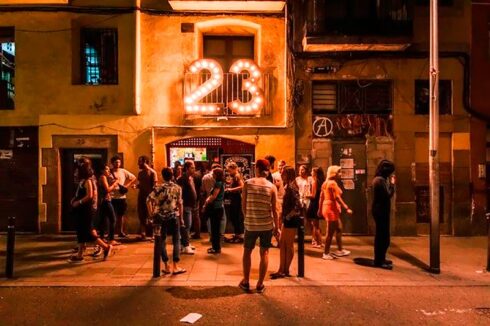
But for those with the cojones, Robadors is perhaps the only part of Barcelona old town still home to authentic bars and nightlife, where no tourist dares tread.
23 Robadors is a tiny, inconspicuous bar where you can see raw, improvisational flamenco and jazz without the ‘tourist trap’ prices or atmosphere.
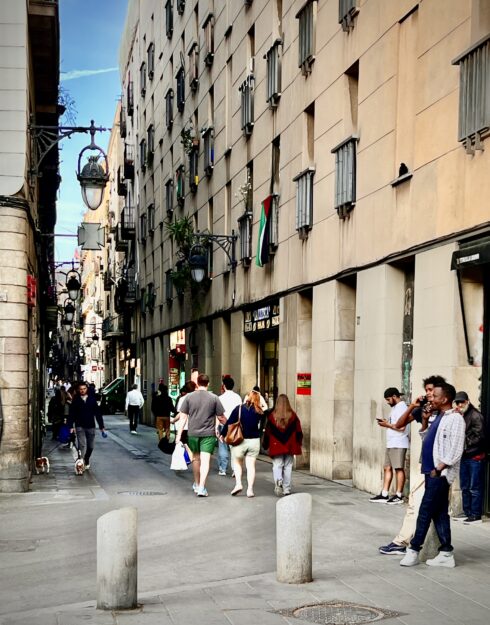
Bar Pipa is another local institution that represents the street’s bohemian side, serving as a sanctuary for musicians and locals.
But for those with less risk tolerance, is it not until you move on up north through the Rambla Raval that things start to change for the better.
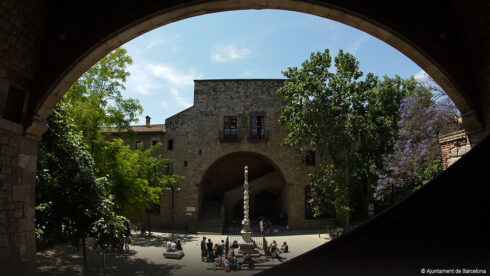
Skip Carrer Hospital and its loitering thieves and head to Carrer Carme, where you enter a calm and beautiful oasis of secret monasteries and gothic hospitals carved out from the wider chaos of Raval.
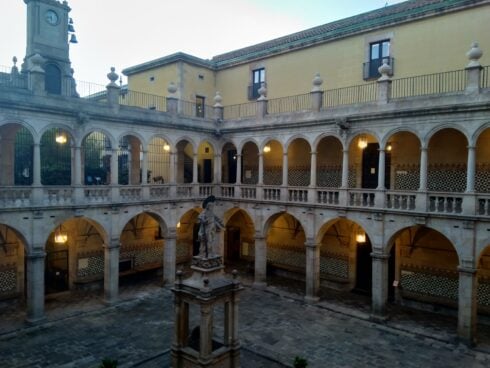
One must-see is the Old Hospital de la Santa Creu, a 15th-century former hospital complex lined with trees and benches where one can escape the madding crowds.
Then why not potter around the famous La Boqueria market which, despite becoming something of a tourist trap, is still home to a number of worthy bars and cafes.
From there, make your way up Carrer dels Angels; a lush, beautiful, tree-lined street a seeming world away from the seedy backalleys and you find yourself in an area that I once heard referred to as Le Petite Eixample.
Suddenly there will be something beautiful wherever you turn, including the incredible Institut d’Estudis Catalans and a secret garden in the La Central del Raval bookshop.
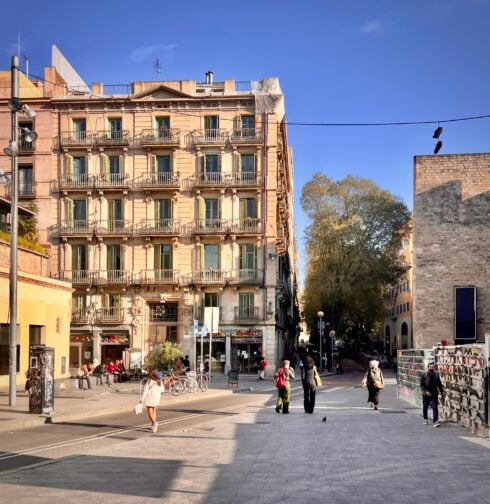
Granja M Viader is a traditional cafe serving churros that has been around for 150 years, while the best kebab in the city is found at Bismillah Kebabish on Carrer de Joaquin Costa.
Joaquin Costa is itself one of the liveliest streets in all of Barcelona, full of bars and restaurants such as the cocktail bar Two Schmucks, which cheerfully announces on the door ‘Come on in, we’re c***s’.
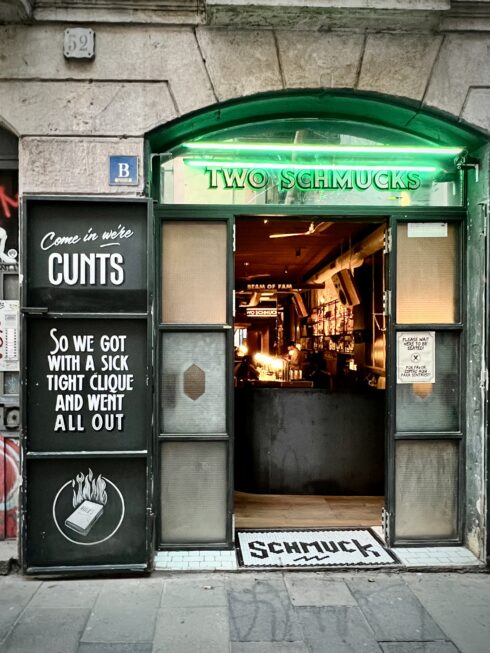
A night out can be had without ever leaving the same street – and well might you not.
Joaquin Costa also marks the hard border of nice Raval; venture into the side streets and you are back into a world of narco flats and pickpockets.
The centre piece of nice Raval revolves around the MACBA Museu d’Art Contemporani de Barcelona (Museum of Contemporary Art of Barcelona); a wide open concrete space long colonised by skateboarders and dropouts.
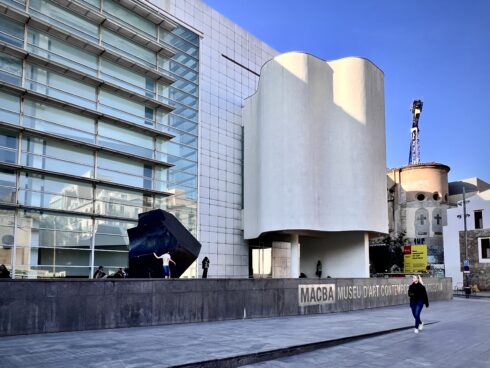
This, along with the CCCB Centre de Cultura Contemporània de Barcelona (Centre for Contemporary Culture of Barcelona) and several new university buildings which arrived in the 1990s, have driven a largely successful revitalisation for this little corner of Raval.
Thousands of university students and academics have brought the air of youth and vitality to the quarter, while the side streets around here don’t feel quite as dangerous as the rest of the barrio.
If you’ve made it this far you’ll definitely make it the rest of the way.
Placa Universitat is both the gateway to Raval and to the Eixample depending on your direction of travel; where you escape the hothouse conditions and return to the organised city blocks made famous in aerial photos of Barcelona.
Worth the danger?
Are the dangers of Raval overblown? Possibly. Social media and camera phones amplify incidents and skew perceptions.
Stick with friends, walk in a straight line, hold your head high – cross your fingers and ignore the recent knife crime epidemic – and you’ll be fine.
Click here to read more Olive Press Travel News from The Olive Press.